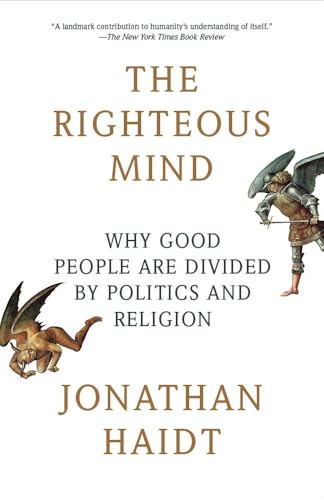
The Righteous Mind is the book authors turn to when they need to explain why moral and political disagreements feel so intractable, and its influence spans evolutionary biology, political philosophy, storytelling, and criminal justice. Robert Sapolsky engages with Haidt's moral foundations in Behave, David Sloan Wilson treats them as evidence for multilevel selection in This View of Life, and Will Storr uses them in The Science of Storytelling to explain why readers demand heroes who embody their in-group's sacred values.
Bryan Stevenson's Just Mercy resonates with Haidt's argument that moral intuitions drive punitive politics, while Michael Sandel extends it in The Tyranny of Merit to argue that meritocracy has become its own blinding moral framework. Readers praise the book for building genuine empathy across political divides, finding it one of the rare works that helps people understand -- rather than demonize -- those they disagree with.