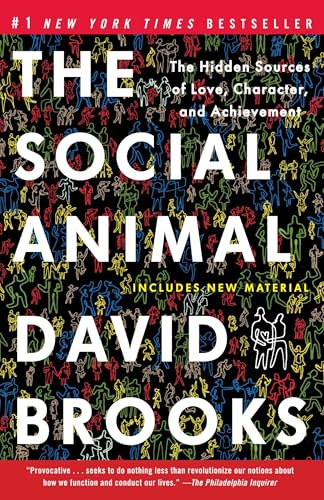
The Social Animal

The Social Animal

by David Brooks

star3.9

Brooks argues that character is built not through rational planning but through deep emotional and social bonds. The unconscious mind drives our most important decisions and relationships.

Published:
Pages:
448
Buy on Amazon

In the Conversation

In this collection, The Social Animal references 2 other books and is cited by 3 other books.

It draws on Thinking, Fast and Slow and Outliers.

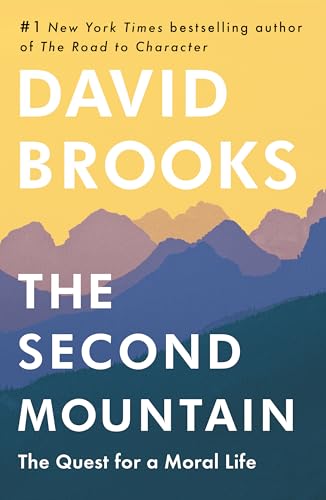
It’s picked up by The Righteous Mind, The Second Mountain: The Quest for a Moral Life and Influence.

Scroll down to read the exact passages where other authors reference this book and what they say about it.

What The Social Animal Draws On

2

The books Brooks references and why each one mattered to the argument.

Brooks draws on same studies as Gladwell's Outliers.

Outliers

References

Outliers

by Malcolm Gladwell

Buy

What Other Authors Say About It

3

The exact passages where other authors bring up “The Social Animal” and what they take from it.

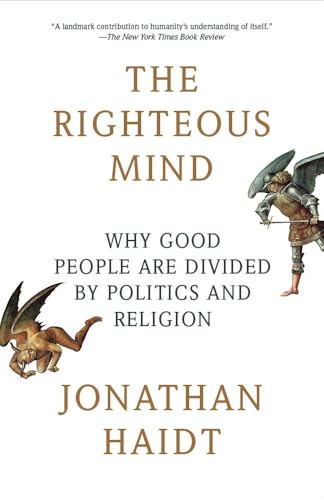
Haidt references Brooks's The Social Animal on unconscious social influences.

The Righteous Mind

Cited in

The Righteous Mind

by Jonathan Haidt

Buy

Cialdini calls Elliot Aronson's The Social Animal "one of the most important social science books" in the field. He draws on Aronson's research on cognitive dissonance and his famous "jigsaw classroom" studies throughout the commitment and consistency chapter.

Influence

Cited in

Influence

by Robert Cialdini

Buy

Intellectual Lineage

How ideas flow through the citation network. Ancestors are books this title builds on; descendants are books that build on it.

Unexpected Connections

Books from completely different categories that share citation overlap with this one. These are the reads you would not find by browsing a single shelf.

If you liked this, try

Books with the highest citation overlap within the same categories.

Citation Network

This book and its direct connections. Hover a node to see its title, click to visit.

Books this book cites
Books that cite this book
Larger dot = more connections
Thinking, Fast and SlowInfluence

Hover a node to highlight its connections. Click to open the book page. Node size reflects total citation links.