The Blank Slate
by Steven Pinker
star4.2
Pinker dismantles the blank slate doctrine - the idea that culture alone shapes human nature. Acknowledging innate traits doesn't undermine equality; it grounds social policy in reality.
- Published:
- Pages:
- 528
by Steven Pinker
Pinker dismantles the blank slate doctrine - the idea that culture alone shapes human nature. Acknowledging innate traits doesn't undermine equality; it grounds social policy in reality.
In this collection, The Blank Slate references 1 other book and is cited by 6 other books.
It draws on The Selfish Gene.
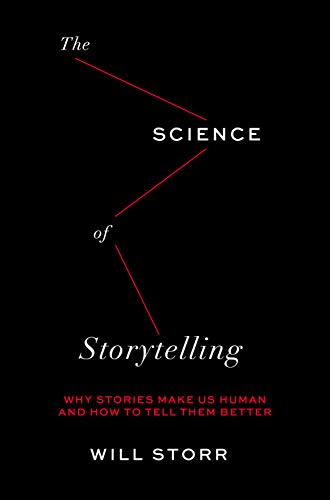
It’s picked up by Enlightenment Now, The Science of Storytelling: Why Stories Make Us Human, and How to Tell Them Better and The Sense of Style: The Thinking Person's Guide to Writing in the 21st Century and 3 others.
Scroll down to read the exact passages where other authors reference this book and what they say about it.
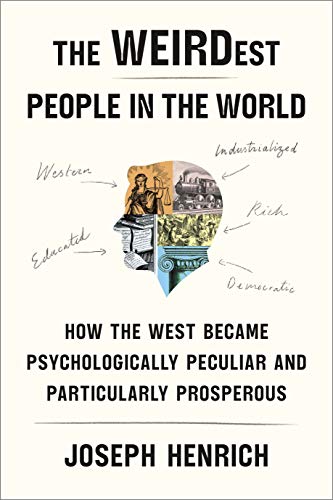
The Blank Slate is widely cited as a bold, thoroughly argued case that human nature is real, innate, and politically consequential. Will Storr draws on Pinker's argument to explain why narrative archetypes recur across cultures, while Alison Gopnik offers a nuanced counterpoint, proposing that children are neither blank slates nor rigidly programmed but evolved learning systems. Joseph Henrich challenges Pinker's universalist assumptions by showing how many 'innate' psychological traits are actually products of culturally specific Western environments.
Readers praise the book for tackling a taboo topic with intellectual rigor and moral seriousness, though critics -- including Ibram X. Kendi -- argue Pinker underestimates how environmental and policy factors shape group differences.
The books Pinker references and why each one mattered to the argument.
Pinker extensively discusses Dawkins's Selfish Gene on human nature.
The exact passages where other authors bring up “The Blank Slate” and what they take from it.
Pinker repeatedly cites his own Blank Slate to ground the book's argument that human nature contains cognitive tools for moral and scientific progress, not a romantic pre-civilized harmony.
Storr draws on Pinker's Blank Slate argument that human nature is a fixed evolved architecture, using it to explain why narrative archetypes recur across cultures
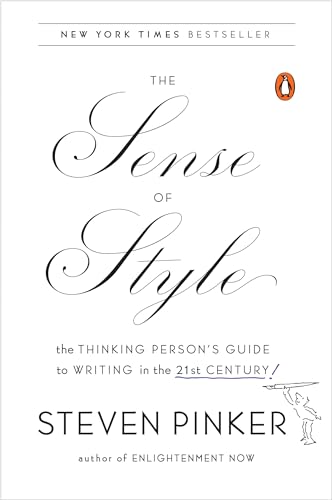
Pinker extends The Blank Slate's argument that many common-sense beliefs are empirically wrong to debunk zombie grammar rules that persist without evidence
Cited in
The Sense of Style: The Thinking Person's Guide to Writing in the 21st Centuryby Steven Pinker
Engages Pinker's Blank Slate debate over biology and behavior, arguing against biological hierarchies and for environmental and policy-based explanations of group differences
Gopnik responds to Pinker's Blank Slate argument about nature versus nurture, offering a third way: children are neither blank slates nor rigidly programmed, but evolved learning systems whose development depends on the rich, variable environments that caregiving provides
Challenges Pinker's universalist assumptions in The Blank Slate by demonstrating that many psychological traits assumed to be innate human nature are actually products of culturally specific WEIRD environments
How ideas flow through the citation network. Ancestors are books this title builds on; descendants are books that build on it.
Directly cites
Directly cited by
2 steps forward
Books from completely different categories that share citation overlap with this one. These are the reads you would not find by browsing a single shelf.

Tools of Titans
Tim Ferriss

Poor Charlie's Almanack
Charlie Munger
The Almanack of Naval Ravikant
Eric Jorgenson

Superintelligence
Nick Bostrom
Why Nations Fail
Daron Acemoglu and James A. Robinson
Books with the highest citation overlap within the same categories.
The Righteous Mind
Jonathan Haidt
4 shared citations
How the Mind Works
Steven Pinker
3 shared citations
Thinking, Fast and Slow
Daniel Kahneman
3 shared citations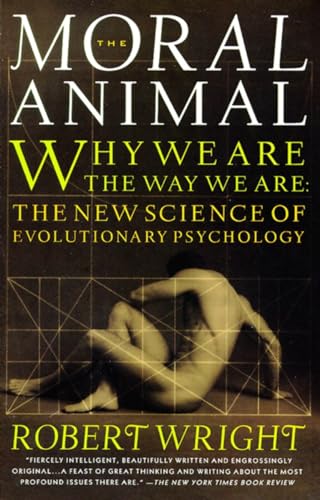
The Moral Animal
Robert Wright
2 shared citations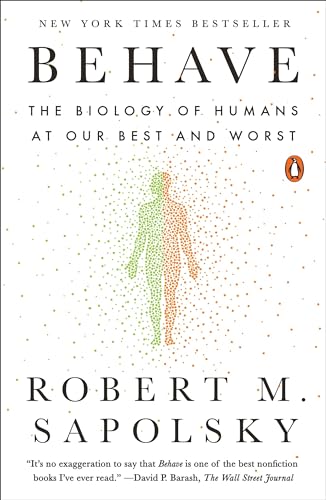
Behave
Robert Sapolsky
2 shared citations
The Better Angels of Our Nature
Steven Pinker
2 shared citationsThis book and its direct connections. Hover a node to see its title, click to visit.
Hover a node to highlight its connections. Click to open the book page. Node size reflects total citation links.