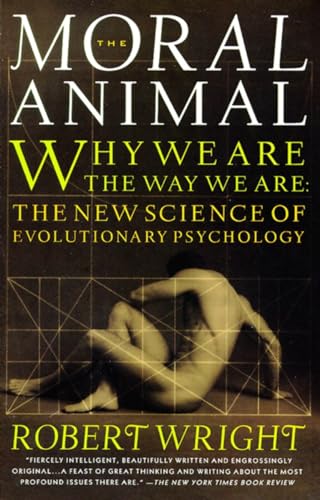
The Moral Animal

The Moral Animal

by Robert Wright

star4.1

Wright uses evolutionary psychology to explain human nature, from jealousy to self-deception. Our moral intuitions are strategies shaped by natural selection to serve genetic interests, not gifts.

Published:
Pages:
496
Buy on Amazon

In the Conversation

In this collection, The Moral Animal references 2 other books and is cited by 6 other books.

It draws on The Selfish Gene and The Origin of Species.

It’s picked up by Darwin's Dangerous Idea: Evolution and the Meanings of Life, How the Mind Works and In Defense of Food: An Eater's Manifesto and 3 others.

Scroll down to read the exact passages where other authors reference this book and what they say about it.

What People Say

The Moral Animal is widely recognised as a landmark introduction to evolutionary psychology, explaining human emotions and social behavior as products of natural selection. Steven Pinker draws on Wright's work extensively when mapping mental modules, and Daniel Dennett engages with it as a key application of adaptationist thinking to human psychology. Michael Pollan uses Wright's evolutionary arguments to explain modern dietary cravings, while Ibram X.

Kendi pushes back on adaptationist readings of group differences, reflecting the book's capacity to provoke productive debate. Readers appreciate Wright's accessible, story-driven style and his willingness to apply Darwinian logic unflinchingly to topics like jealousy and self-deception, though some caution that the field has evolved significantly since its publication.
What The Moral Animal Draws On

2

The books Wright references and why each one mattered to the argument.

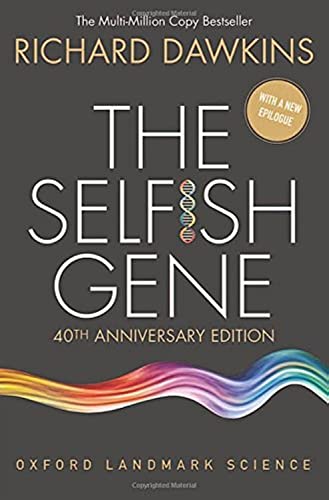
Wright draws heavily on Dawkins' Selfish Gene framework to explain human social behaviour through gene-level selection

The Selfish Gene

References

The Selfish Gene

by Richard Dawkins

Buy

References Darwin's Origin of Species and sexual selection theory as the foundation for evolutionary psychology

The Origin of Species

References

The Origin of Species

by Charles Darwin

Buy

What Other Authors Say About It

6

The exact passages where other authors bring up “The Moral Animal” and what they take from it.

Pinker draws on Wright's Moral Animal and the broader evolutionary-psychology program to explain human emotions and social behavior as adapted mental modules.

How the Mind Works

Cited in

How the Mind Works

by Steven Pinker

Buy

Pollan draws on Wright's evolutionary-psychology arguments to explain why humans crave sugar, fat, and salt despite modern abundance making these signals harmful

Engages Wright's Moral Animal evolutionary psychology claims, pushing back on adaptationist readings of group difference

How to Be an Antiracist

Cited in

How to Be an Antiracist

by Ibram X. Kendi

Buy

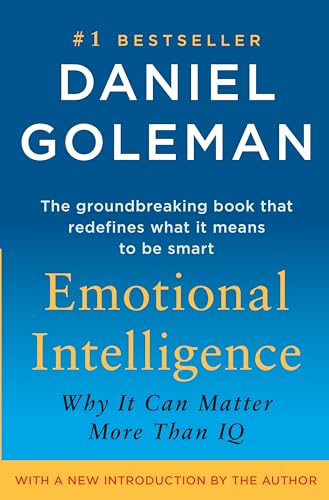
Goleman draws on Robert Wright's evolutionary psychology to explain why human emotions exist in the first place — as adaptive responses shaped by selection pressures, not bugs in a rational system.

Emotional Intelligence

Cited in

Emotional Intelligence

by Daniel Goleman

Buy

Intellectual Lineage

How ideas flow through the citation network. Ancestors are books this title builds on; descendants are books that build on it.

Unexpected Connections

Books from completely different categories that share citation overlap with this one. These are the reads you would not find by browsing a single shelf.

If you liked this, try

Books with the highest citation overlap within the same categories.

Citation Network

This book and its direct connections. Hover a node to see its title, click to visit.

Books this book cites
Books that cite this book
Larger dot = more connections
Emotional IntelligenceThe Selfish GeneThe Origin of Species

Hover a node to highlight its connections. Click to open the book page. Node size reflects total citation links.