Sapiens

Sapiens

by Yuval Noah Harari

star4.4

Harari traces how Homo sapiens conquered the planet not through physical strength but through shared fictions, money, religion, nations. These collective myths let strangers cooperate at scales no other species can match.

Published:
Pages:
443
Buy on Amazon

In the Conversation

In this collection, Sapiens references 3 other books and is cited by 8 other books.

It draws on Thinking, Fast and Slow, Influence and Justice.

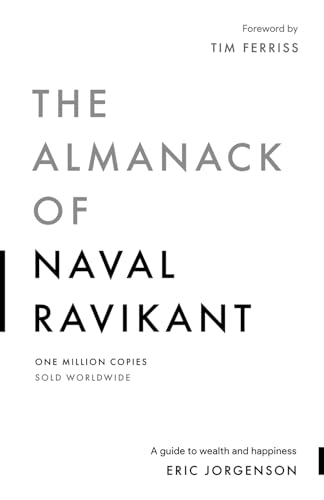
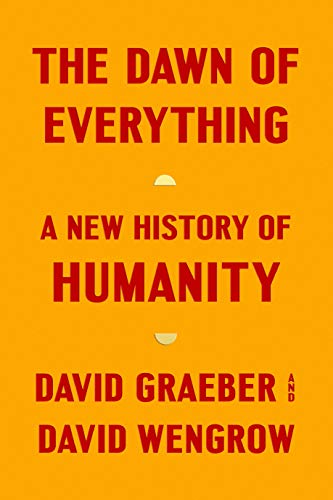
It’s picked up by The Almanack of Naval Ravikant, The Dawn of Everything and The Precipice and 5 others.

Scroll down to read the exact passages where other authors reference this book and what they say about it.

What People Say

Sapiens is one of the most frequently recommended big-picture history books, consistently cited as a worldview-shaping read. Naval Ravikant calls it essential, Tim Ferriss's Tools of Titans guests recommend it repeatedly, and Toby Ord uses its deep-time perspective in The Precipice to argue for taking humanity's long-term future seriously. The book has also drawn serious scholarly pushback -- David Graeber and David Wengrow wrote The Dawn of Everything as an explicit rebuttal, arguing that Harari flattens archaeological diversity into neat myths, and Joseph Henrich offers more granular cultural-evolutionary mechanisms for the transformations Harari surveys broadly.

Readers tend to love its sweeping ambition and accessible storytelling, while critics from academia find it oversimplified. It remains the default starting point for anyone wanting a single narrative of how humanity got here, with the caveat that its grand claims deserve follow-up reading.
What Sapiens Draws On

3

The books Harari references and why each one mattered to the argument.

Harari draws on Kahneman's cognitive bias research to argue that human decision-making is fundamentally irrational, undermining the Enlightenment assumption of the rational individual.

Thinking, Fast and Slow

References

Thinking, Fast and Slow

by Daniel Kahneman

Buy

Harari references Cialdini's research on social influence to explain how shared myths and collective beliefs, not rational self-interest, hold human societies together.

Influence

References

Influence

by Robert Cialdini

Buy

Harari engages with Sandel's moral philosophy to explore whether concepts like justice and human rights are objective truths or useful fictions that enable large-scale cooperation.

Justice

References

Justice

by Michael Sandel

Buy

What Other Authors Say About It

8

The exact passages where other authors bring up “Sapiens” and what they take from it.

The book is explicitly framed as a rebuttal to Harari's Sapiens, whose sketch of a universal shift from foragers to farmers to states Graeber and Wengrow reject as myth-making that flattens archaeological diversity.

The Dawn of Everything

Cited in

The Dawn of Everything

by David Graeber and David Wengrow

Buy

Ord situates his long-view within the tradition of Harari's Sapiens, using the deep-time perspective on humanity's emergence to motivate why our descendants' potential dwarfs present concerns.

The Precipice

Cited in

The Precipice

by Toby Ord

Buy

Parallels Harari's Sapiens as a grand synthesis of human history, but replaces Harari's cognitive-revolution frame with a geographic one centreed on the Silk Roads as the true arteries of civilization

Harari's Sapiens is recommended across multiple Tools of Titans guest interviews

Tools of Titans

Cited in

Tools of Titans

by Tim Ferriss

Buy

Intellectual Lineage

How ideas flow through the citation network. Ancestors are books this title builds on; descendants are books that build on it.

Unexpected Connections

Books from completely different categories that share citation overlap with this one. These are the reads you would not find by browsing a single shelf.

If you liked this, try

Books with the highest citation overlap within the same categories.

Citation Network

This book and its direct connections. Hover a node to see its title, click to visit.

Books this book cites
Books that cite this book
Larger dot = more connections
Thinking, Fast and SlowInfluence

Hover a node to highlight its connections. Click to open the book page. Node size reflects total citation links.