Good to Great
by Jim Collins
star4.6
Collins studied why some good companies become great and others do not. The answer: disciplined people, disciplined thought, and disciplined action, not bold transformation programmes.
- Published:
- Pages:
- 320
by Jim Collins
Collins studied why some good companies become great and others do not. The answer: disciplined people, disciplined thought, and disciplined action, not bold transformation programmes.
In this collection, Good to Great references 3 other books and is cited by 43 other books.
It draws on Built to Last, The Effective Executive and Man's Search for Meaning.
It’s picked up by Essentialism, Start with Why and Ego Is the Enemy and 40 others.
Scroll down to read the exact passages where other authors reference this book and what they say about it.
Collins's study of why some companies make the leap from good to great has become required reading in business schools and boardrooms, with concepts like Level 5 Leadership, the Hedgehog Concept, and the Flywheel entering the standard management lexicon. Verne Harnish calls pages 114-116 on the strategic council 'the three most important pages ever written in business,' while authors from Patrick Lencioni to Gene Kim weave Collins's principles into their own leadership and operations frameworks.
The book's methodology has drawn pointed criticism - Chris Bradley and colleagues argue it selects on the dependent variable and lacks testable hypotheses - and several of Collins's 'great' companies have since stumbled. Despite these challenges, the frameworks remain remarkably sticky: practitioners consistently report finding the mental models useful even when the underlying research is debated.
The books Collins references and why each one mattered to the argument.
Good to Great is the direct follow-up to Collins's earlier Built to Last. The study explicitly frames itself as answering the question Built to Last left open — what about companies that had to transform themselves from merely good to genuinely great, rather than being built that way from the start?
Collins cites Peter Drucker on the psychology of mergers and acquisitions. Drucker argued that the drive to do deals often comes less from sound strategy and more from the fact that dealmaking feels more stimulating than the day-to-day work of running a business.
Viktor Frankl opens the chapter on the Stockdale Paradox. Collins pairs Frankl's wartime experience with Admiral Stockdale's to argue that great companies share the same mental discipline — unwavering faith in eventual success combined with clear-eyed confrontation of present reality.
The exact passages where other authors bring up “Good to Great” and what they take from it.
McKeown directly quotes Collins, warning against "the undisciplined pursuit of more" that derails companies after initial success. Essentialism applies this principle to individual productivity.
“We must avoid what Jim Collins calls the undisciplined pursuit of more.”
Sinek builds on Collins's research into what makes companies endure. While Collins asked "what makes a company great?", Sinek asks the deeper question: "why do some companies inspire while others don't?"
p. 29
Holiday quotes Collins directly to warn against ego-driven expansion after success. "We must avoid what Jim Collins terms the undisciplined pursuit of more" appears as a cautionary principle.
“We must avoid what the business strategist Jim Collins terms the undisciplined pursuit of more.”
p. 151
Kim weaves Collins's management principles into the novel's plot, showing how the IT transformation mirrors the Good to Great journey from reactive chaos to disciplined execution.
References Collins' Good to Great research methodology and Level 5 leadership when contrasting innovation leadership styles
Collins explicitly builds on and extends the Good to Great research framework and methodology
How ideas flow through the citation network. Ancestors are books this title builds on; descendants are books that build on it.
Directly cited by
Books from completely different categories that share citation overlap with this one. These are the reads you would not find by browsing a single shelf.

Mindset
Carol Dweck
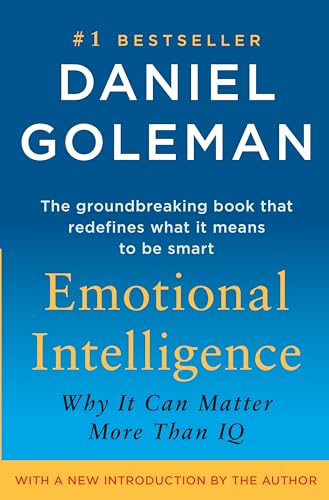
Emotional Intelligence
Daniel Goleman

Thinking, Fast and Slow
Daniel Kahneman
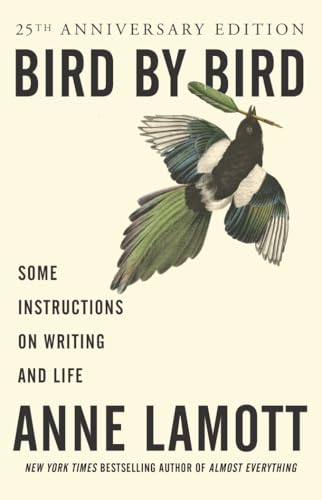
Bird by Bird: Some Instructions on Writing and Life
Anne Lamott
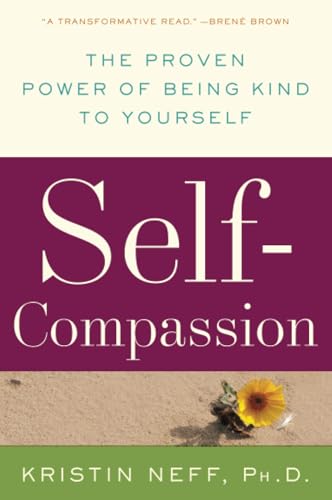
Self-Compassion: The Proven Power of Being Kind to Yourself
Kristin Neff
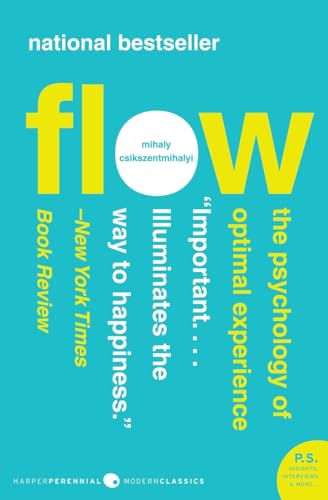
Flow
Mihaly Csikszentmihalyi
Books with the highest citation overlap within the same categories.

Built to Last
Jim Collins
9 shared citations
The Innovator's Dilemma
Clayton Christensen
8 shared citations
The Effective Executive
Peter Drucker
7 shared citationsMindset
Carol Dweck
6 shared citations
High Output Management
Andrew Grove
4 shared citations
The 7 Habits of Highly Effective People
Stephen Covey
4 shared citationsThis book and its direct connections. Hover a node to see its title, click to visit.
Hover a node to highlight its connections. Click to open the book page. Node size reflects total citation links.