Dare to Lead
by Brene Brown
star4.7
Brown's research shows that vulnerability is not weakness but the foundation of courageous leadership. Leaders who embrace discomfort build more trusting, innovative teams.
- Published:
- Pages:
- 320
by Brene Brown
Brown's research shows that vulnerability is not weakness but the foundation of courageous leadership. Leaders who embrace discomfort build more trusting, innovative teams.
In this collection, Dare to Lead references 14 other books and is cited by 2 other books.
It draws on Mindset, Man's Search for Meaning and Emotional Intelligence.
It’s picked up by Set Boundaries, Find Peace: A Guide to Reclaiming Yourself and Maybe You Should Talk to Someone: A Therapist, HER Therapist, and Our Lives Revealed.
Scroll down to read the exact passages where other authors reference this book and what they say about it.
Dare to Lead is praised for translating Brene Brown's extensive shame and vulnerability research into a practical leadership framework. Nedra Glover Tawwab extends Brown's ideas on vulnerability and courage into interpersonal boundary-setting, while Lori Gottlieb identifies Brown's concepts of shame resilience as the core emotional work unfolding in therapy sessions.
Readers appreciate that Brown grounds her advice in data rather than platitudes, making a compelling case that embracing discomfort is what separates courageous leaders from those who play it safe. Some readers note that the book occasionally feels repetitive for those already familiar with Brown's earlier work, but newcomers consistently find it transformative for rethinking what strong leadership actually looks like.
The books Brown references and why each one mattered to the argument.
Brown cites Dweck's growth mindset for courageous leadership.
Brown references Frankl on choosing one's response to suffering.
Brown discusses Goleman's EI for empathy and leadership.
Brown's first book, referenced in the note from Brene that opens the book. She describes The Gifts of Imperfection (2010) as her first attempt to translate her research on wholehearted living into a practical framework, and cites it for her definition of "engaging in our lives from a place of worthiness".
Introduction, The Armory
Daring Greatly is cited repeatedly as the foundation for Dare to Lead. Brown references her earlier framework on vulnerability and courage, quotes passages on feedback, and uses its Theodore Roosevelt epigraph ("the man in the arena") to frame the entire book.
Introduction, Living into Values
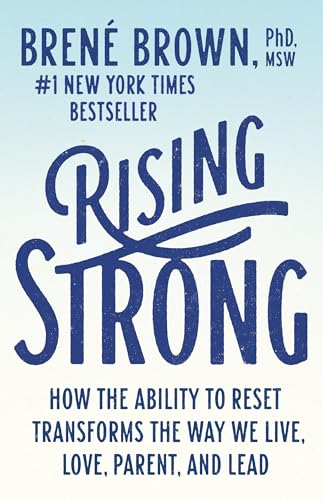
Rising Strong provides the "reckoning, rumble, revolution" framework that Brown extends throughout Dare to Lead. She calls it her "followup to Daring Greatly" and uses it as the structural backbone for the Learning to Rise section.
Introduction, Learning to Rise
The exact passages where other authors bring up “Dare to Lead” and what they take from it.
Extends Brene Brown's Dare to Lead work on vulnerability and courage into the interpersonal domain, arguing boundaries are the operational form of self-respect
Engages Brene Brown's Dare to Lead ideas on vulnerability and shame resilience as the core emotional work happening in her patients' sessions

Cited in
Maybe You Should Talk to Someone: A Therapist, HER Therapist, and Our Lives Revealedby Lori Gottlieb
How ideas flow through the citation network. Ancestors are books this title builds on; descendants are books that build on it.
Directly cites
Directly cited by
Books from completely different categories that share citation overlap with this one. These are the reads you would not find by browsing a single shelf.

The Body Keeps the Score
Bessel van der Kolk

The Intelligence Trap
David Robson

Born a Crime: Stories from a South African Childhood
Trevor Noah

Hillbilly Elegy: A Memoir of a Family and Culture in Crisis
J.D. Vance

The Second Mountain: The Quest for a Moral Life
David Brooks

Hold Me Tight: Seven Conversations for a Lifetime of Love
Sue Johnson
Books with the highest citation overlap within the same categories.
The Body Keeps the Score
Bessel van der Kolk
4 shared citations
Tools of Titans
Tim Ferriss
3 shared citations
Self-Compassion: The Proven Power of Being Kind to Yourself
Kristin Neff
3 shared citations
Emotional Intelligence
Daniel Goleman
3 shared citations
Mindset
Carol Dweck
3 shared citations
Atomic Habits
James Clear
2 shared citationsThis book and its direct connections. Hover a node to see its title, click to visit.
Hover a node to highlight its connections. Click to open the book page. Node size reflects total citation links.