Marks echoes Taleb's Antifragile thesis in arguing that the investor's job is not to predict cycles but to build portfolios that benefit from volatility and reversion
Goal
What should I read to think straight about money?
Finance, investing, and psychology-of-money books that other authors cite when explaining wealth.
The conversation
15 passagesThe exact passages where one book references another on this topic. These are the connections, not our commentary.
Newport references his own Digital Minimalism (2019) as a complementary investigation into technology's effect on attention. Both books were sold to Portfolio at the same time, though Digital Minimalism was published first.

Clear draws on Meadows' systems thinking to argue that habits are not isolated behaviours but interconnected systems where small changes compound into remarkable results.
Seneca's letters provide the second major philosophical source for The Daily Stoic. Holiday draws on Seneca's practical advice on manageing emotions, wealth, and mortality.
Munger references The Selfish Gene as foundational to his understanding of evolutionary psychology, which he considers essential for sound investment thinking.
Cites Cialdini's commitment and consistency principle when explaining why people escalate losing investments

Collins directly extends his Good to Great framework, investigating what happens when great companies fail

Zuboff references Kahneman on surveillance capitalism exploiting biases.
Draws explicitly on Cialdini's reciprocity principle from Influence to explain why generosity-first networking compounds into trust and favors owed

Cites Ariely's Predictably Irrational research on anchoring and emotional decision-making to justify why facts alone cannot persuade investors
Lewis's portrait of investor psychology echoes Ariely's Predictably Irrational account of how anchoring and social proof distort financial judgement
Marks devotes an entire chapter on luck, skill, and randomness that opens by quoting Taleb's Fooled by Randomness, citing it as one of the most important books an investor can read
Marks repeatedly invokes Taleb's Black Swan concept of rare, high-impact events when explaining why manageing risk (not chasing return) is the investor's essential task
Marks draws on Kahneman-style behavioural insights about heuristics and overconfidence to explain why the crowd routinely misprices assets and why contrarianism pays
Marks explicitly aligns himself with the Buffett-Munger value-investing tradition chronicled in Poor Charlie's Almanack, citing Munger's aphorisms on market psychology throughout
Books in this conversation
12Books that appear most often in citations on this topic, or that other authors reference when writing about it.
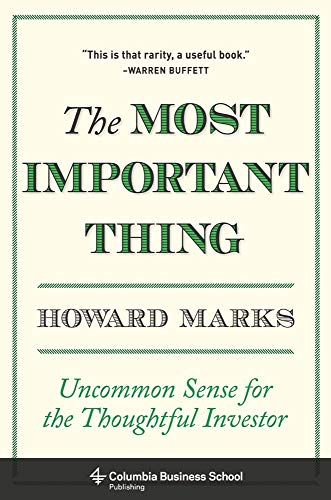
The Most Important Thing: Uncommon Sense for the Thoughtful Investor
by Howard Marks
Referenced in 4 citations on this topic
More Than You Know: Finding Financial Wisdom in Unconventional Places
by Michael J. Mauboussin
Referenced in 4 citations on this topic
The Age of Surveillance Capitalism
by Shoshana Zuboff
Referenced in 4 citations on this topic
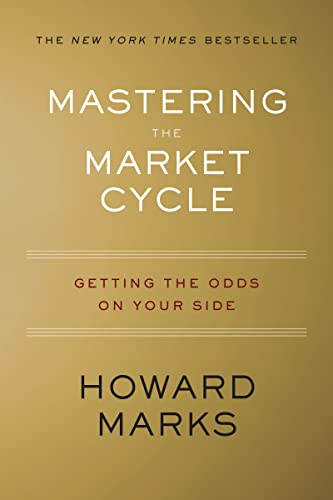
Mastering the Market Cycle: Getting the Odds on Your Side
by Howard Marks
Referenced in 4 citations on this topic
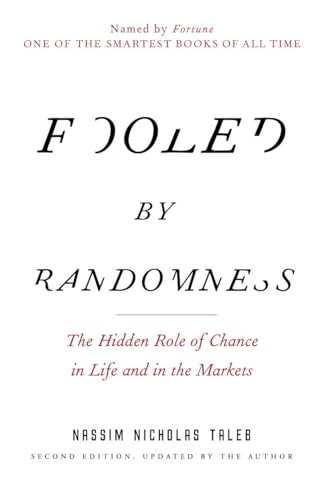
Fooled by Randomness
by Nassim Nicholas Taleb
Referenced in 3 citations on this topic

Atomic Habits
by James Clear
Referenced in 3 citations on this topic
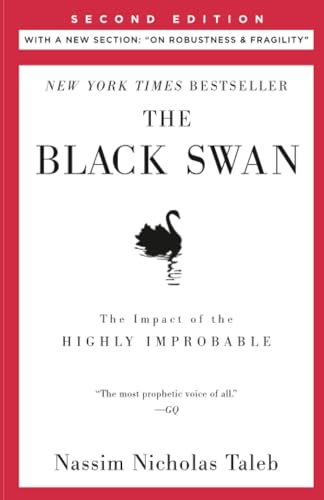
The Black Swan
by Nassim Nicholas Taleb
Referenced in 3 citations on this topic
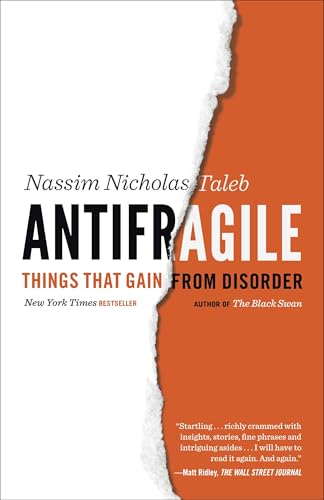
Antifragile
by Nassim Nicholas Taleb
Referenced in 2 citations on this topic

Poor Charlie's Almanack
by Charlie Munger
Referenced in 3 citations on this topic

Thinking, Fast and Slow
by Daniel Kahneman
Referenced in 3 citations on this topic

Predictably Irrational
by Dan Ariely
Referenced in 2 citations on this topic
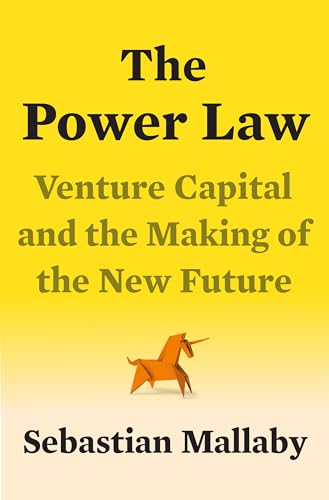
The Power Law: Venture Capital and the Making of the New Future
by Sebastian Mallaby
Referenced in 2 citations on this topic