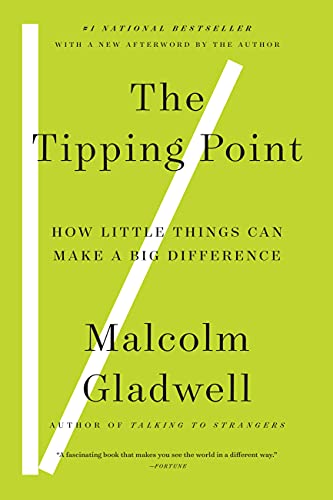
The Tipping Point
by Malcolm Gladwell
Gladwell identifies the three forces that make ideas spread like epidemics: the right people, the right stickiness, and the right context. Small changes can trigger massive social shifts.
- Published:
- Pages:
- 301

by Malcolm Gladwell
Gladwell identifies the three forces that make ideas spread like epidemics: the right people, the right stickiness, and the right context. Small changes can trigger massive social shifts.
In this collection, The Tipping Point references 2 other books and is cited by 5 other books.
It draws on Influence and Emotional Intelligence.
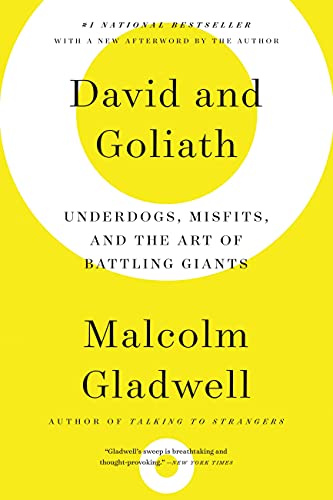
It’s picked up by Outliers, Purple Cow and David and Goliath and 2 others.
Scroll down to read the exact passages where other authors reference this book and what they say about it.
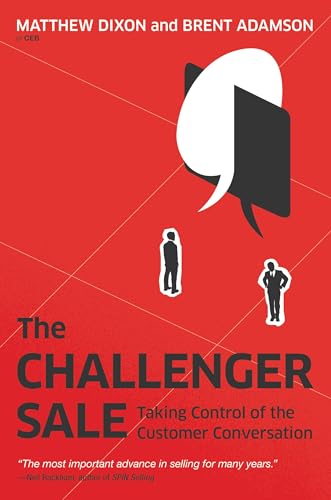
The Tipping Point is widely cited as the book that gave marketers, salespeople, and social scientists a shared vocabulary for how ideas spread. Seth Godin builds directly on Gladwell's concepts of mavens and connectors in Purple Cow, renaming them 'sneezers,' and Matthew Dixon draws on the same framework in The Challenger Sale to explain why certain sales rep profiles tip complex deals.
Gladwell himself reuses the epidemic-threshold logic in later books like David and Goliath and Outliers. Readers enjoy the narrative style and memorable case studies, though the book has attracted criticism for oversimplifying social contagion and for some claims that have not held up under closer empirical scrutiny -- Dan Gardner references it in Risk to show how fears cascade through attention epidemics, a use Gladwell likely did not intend.
The books Gladwell references and why each one mattered to the argument.
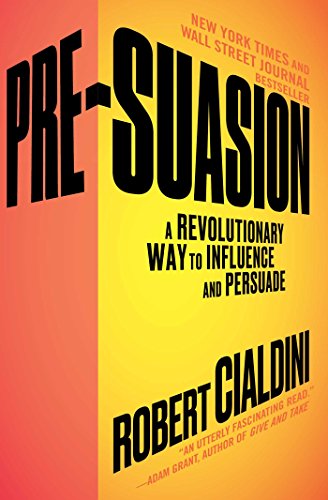
Gladwell references Cialdini on the stickiness factor.
Gladwell references Goleman's EI on connectors.
The exact passages where other authors bring up “The Tipping Point” and what they take from it.
Gladwell references his own earlier work, building on The Tipping Point's analysis of social epidemics to explore why some people succeed at extraordinary levels in Outliers.
Builds on Gladwell's Tipping Point concepts of mavens and connectors, renaming them sneezers who carry a remarkable idea into their networks
Gladwell reuses the epidemic-threshold logic of The Tipping Point when analyzing classroom-size U-curves and diminishing returns from apparent advantages.
Draws on Gladwell's Tipping Point ideas of mavens and salesmen when explaining why only a specific rep profile tips complex deals toward the close
Draws on Gladwell's The Tipping Point to explain how fears cascade socially through epidemics of attention and news coverage
How ideas flow through the citation network. Ancestors are books this title builds on; descendants are books that build on it.
Directly cites
Directly cited by
Books from completely different categories that share citation overlap with this one. These are the reads you would not find by browsing a single shelf.

Bowling Alone: The Collapse and Revival of American Community
Robert D. Putnam

Atomic Habits
James Clear

Sapiens
Yuval Noah Harari

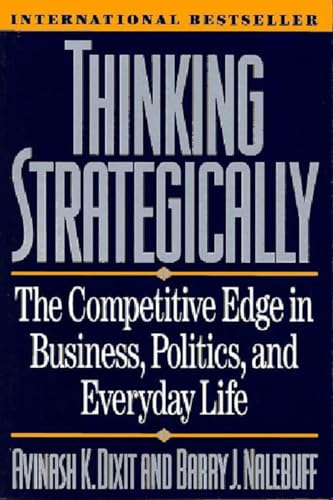
Thinking Strategically
Avinash Dixit

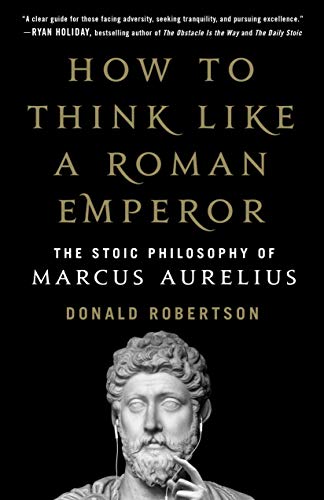
How to Think Like a Roman Emperor
Donald Robertson
Books with the highest citation overlap within the same categories.

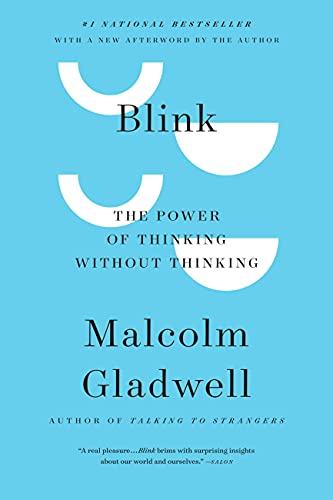
Blink
Malcolm Gladwell
3 shared citations
Outliers
Malcolm Gladwell
2 shared citations
Switch
Chip Heath
2 shared citations
The Power of Habit
Charles Duhigg
2 shared citations
Predictably Irrational
Dan Ariely
2 shared citations
Bowling Alone: The Collapse and Revival of American Community
Robert D. Putnam
2 shared citationsThis book and its direct connections. Hover a node to see its title, click to visit.
Hover a node to highlight its connections. Click to open the book page. Node size reflects total citation links.