The Lean Startup
by Eric Ries
star4.4
Ries argues most startups fail by building products nobody wants. The solution: treat your business as an experiment, measure validated learning, and pivot before you run out of cash.
- Published:
- Pages:
- 336
by Eric Ries
Ries argues most startups fail by building products nobody wants. The solution: treat your business as an experiment, measure validated learning, and pivot before you run out of cash.
In this collection, The Lean Startup references 4 other books and is cited by 29 other books.
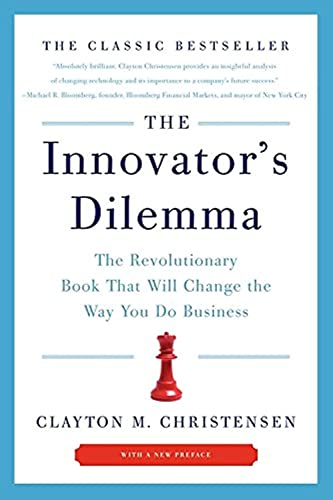
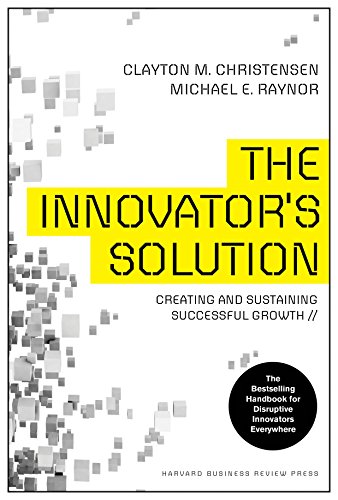
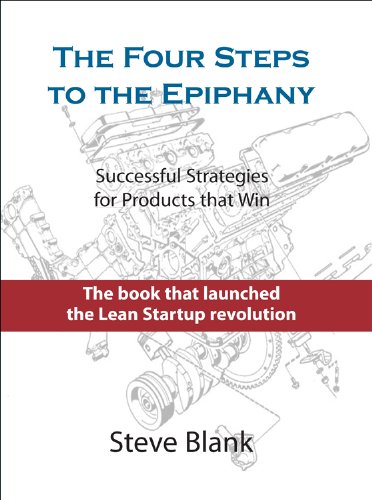
It draws on The Innovator's Dilemma, The Innovator's Solution and The Four Steps to the Epiphany.
It’s picked up by The Lean Enterprise, The Startup Owner's Manual and Running Lean and 26 others.
Scroll down to read the exact passages where other authors reference this book and what they say about it.
Ries's methodology of validated learning, minimum viable products, and build-measure-learn loops has become the shared vocabulary between founders, VCs, and product teams in Silicon Valley and beyond. Nicole Forsgren and colleagues treat lean experimentation as the foundation of DevOps in Accelerate, while Teresa Torres extends the build-measure-learn loop into continuous product discovery habits. The book's influence is concrete - Scott Kupor notes that Lean Startup concepts like MVP and pivot are now the standard language between founders and venture capitalists evaluating early traction.
Some practitioners push back: Rand Fishkin argues lean methodology has limits in audience-driven businesses, and Ali Tamaseb's data shows that many billion-dollar companies skipped the classic lean playbook entirely. Still, it remains the starting point for most modern startup methodology.
The books Ries references and why each one mattered to the argument.
Ries draws heavily on Clayton Christensen's The Innovator's Dilemma. He quotes the framework directly and uses Christensen's distinction between sustaining and disruptive innovation to explain why established companies struggle with breakthrough products.
The Innovator's Solution is listed in Ries's Recommended Reading as a companion to The Innovator's Dilemma. Ries uses Christensen's later work on how to practice disruption, not just diagnose it.
Ries calls Steve Blank's The Four Steps to the Epiphany "the original book" on customer development. Blank was his early investor and mentor, and Lean Startup explicitly builds on Blank's framework for searching rather than executing business models.
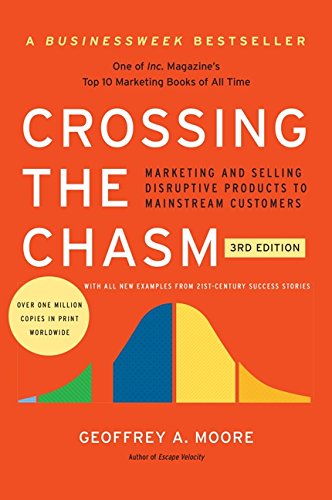
Ries references Geoffrey Moore's Crossing the Chasm for the later-stage pivots he calls the Chasm, the Tornado and the Bowling Alley — terms that come from Moore's technology adoption lifecycle.
The exact passages where other authors bring up “The Lean Startup” and what they take from it.
Builds directly on Ries' Lean Startup methodology, extending validated learning to enterprise contexts
Blank's customer development framework directly influenced the Lean Startup; he references Ries throughout
Maurya explicitly builds on Ries' Lean Startup, adapting the build-measure-learn loop into actionable steps
References Ries' Lean Startup methodology and validated learning as core to modern product development
Thiel references lean startup methodology, critiquing iterating without bold vision.
Doerr references Ries's Lean Startup as complementary to OKRs.
How ideas flow through the citation network. Ancestors are books this title builds on; descendants are books that build on it.
Directly cites
2 steps back
Directly cited by
Books from completely different categories that share citation overlap with this one. These are the reads you would not find by browsing a single shelf.
Books with the highest citation overlap within the same categories.
This book and its direct connections. Hover a node to see its title, click to visit.
Hover a node to highlight its connections. Click to open the book page. Node size reflects total citation links.