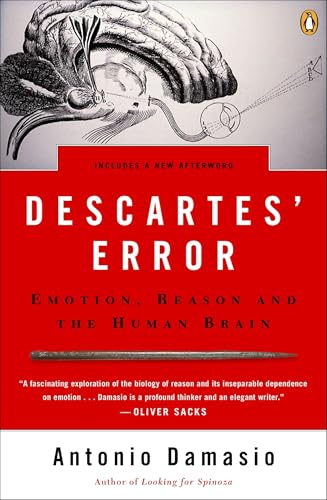
Descartes' Error
by Antonio Damasio
star4.1
Damasio overturns the idea that reason and emotion are separate. His neuroscience research shows that feelings are essential to rational decision-making, not obstacles to it.
- Published:
- Pages:
- 336
by Antonio Damasio
Damasio overturns the idea that reason and emotion are separate. His neuroscience research shows that feelings are essential to rational decision-making, not obstacles to it.
In this collection, Descartes' Error is cited by 8 other books.
It’s picked up by Wired for Story: The Writer's Guide to Using Brain Science to Hook Readers from the Very First Sentence, Unconditional Parenting: Moving from Rewards and Punishments to Love and Reason and The Whole-Brain Child: 12 Revolutionary Strategies to Nurture Your Child's Developing Mind and 5 others.
Scroll down to read the exact passages where other authors reference this book and what they say about it.
No verified citations found yet.
The exact passages where other authors bring up “Descartes' Error” and what they take from it.
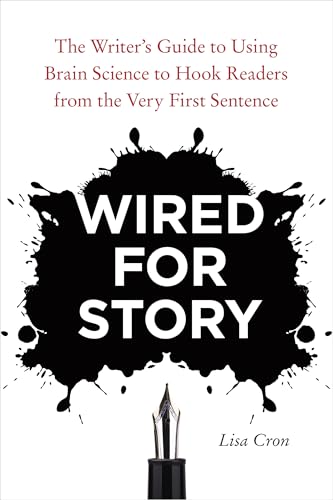
Cron leans on Damasio's Descartes' Error to show that emotion is not opposed to reason but the mechanism by which readers weigh meaning, making feeling central to every scene
Kohn references Damasio's neuroscience research from Descartes' Error on the integration of emotion and reason, supporting his argument that parenting approaches separating feelings from behavior misunderstand how the brain actually works
Cited in
Unconditional Parenting: Moving from Rewards and Punishments to Love and Reasonby Alfie Kohn
Siegel builds on Damasio's Descartes' Error framework showing that emotion and cognition are neurologically inseparable, applying this insight to explain why parents must help children integrate their emotional and rational brain systems rather than suppress feelings
Cited in
The Whole-Brain Child: 12 Revolutionary Strategies to Nurture Your Child's Developing Mindby Daniel J. Siegel and Tina Payne Bryson
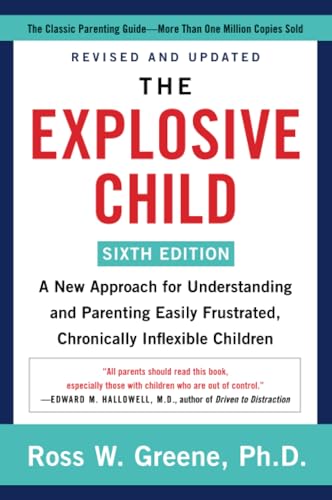
Greene draws on Damasio's neuroscience from Descartes' Error to explain how emotion and cognition are intertwined in the brain, supporting his argument that explosive children have neurological deficits in emotional processing that drive their inflexible behavior
Didion's account of how grief hijacks rational thought patterns connects to Antonio Damasio's thesis in Descartes' Error that emotion and reason are inextricably linked, and that disruption of emotional processing fundamentally alters decision-making and cognition.
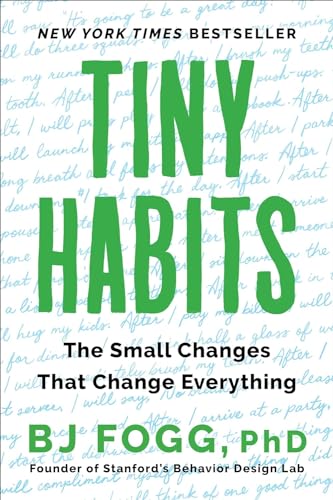
Clear cites Damasio's research (via The Strange Order of Things) for "Feelings of pleasure and disappointment" being the foundation of decisions — used to support his argument that emotions, not logic, drive habit change.
Chapter 5 (notes)
How ideas flow through the citation network. Ancestors are books this title builds on; descendants are books that build on it.
Directly cited by
Books from completely different categories that share citation overlap with this one. These are the reads you would not find by browsing a single shelf.
Books with the highest citation overlap within the same categories.
This book and its direct connections. Hover a node to see its title, click to visit.
Hover a node to highlight its connections. Click to open the book page. Node size reflects total citation links.