Bargaining for Advantage

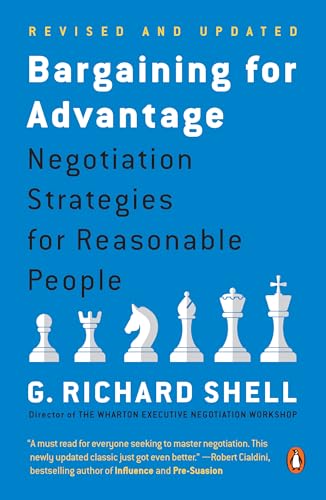
Bargaining for Advantage

by G. Richard Shell

star4.5

Shell argues that effective negotiators start by knowing their own bargaining style, then use six foundations: style, goals, standards, relationships, interests, and leverage. He explicitly built the book as a negotiation complement to social-psychology research, telling readers that the goal is informed self-awareness rather than a single universal tactic.

Published:
Pages:
286
Buy on Amazon

In the Conversation

In this collection, Bargaining for Advantage references 3 other books.

It draws on Influence, The Art of War and How to Win Friends and Influence People.

Scroll down to read the exact passages where other authors reference this book and what they say about it.

What This Book Draws On

3

The books Shell references and why each one mattered to the argument.

Shell states he was inspired by Cialdini's Influence to write a negotiation book blending social-scientific research with storytelling, and uses Cialdini's reciprocity and consistency throughout the leverage chapters

Influence

References

Influence

by Robert Cialdini

Buy

Draws repeatedly on Sun Tzu's Art of War to frame the role of preparation, information, and timing in competitive bargaining situations

The Art of War

References

The Art of War

by Sun Tzu

Buy

References Dale Carnegie's How to Win Friends and Influence People when describing the relationship foundation and how rapport multiplies bargaining power

What Other Authors Say About It

No books citing this title yet.

Intellectual Lineage

How ideas flow through the citation network. Ancestors are books this title builds on; descendants are books that build on it.

Unexpected Connections

Books from completely different categories that share citation overlap with this one. These are the reads you would not find by browsing a single shelf.

If you liked this, try

Books with the highest citation overlap within the same categories.

Citation Network

This book and its direct connections. Hover a node to see its title, click to visit.

Books this book cites
Books that cite this book
Larger dot = more connections
Influence

Hover a node to highlight its connections. Click to open the book page. Node size reflects total citation links.