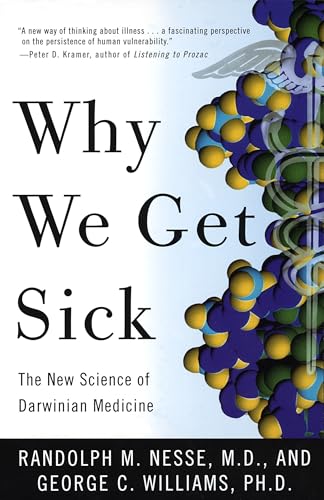
Why We Get Sick
by Randolph M. Nesse
star4.1
Nesse applies Darwinian thinking to medicine, arguing symptoms like fever and anxiety are evolved defenses, not malfunctions. Evolution explains why we're vulnerable to disease.
- Published:
- Pages:
- 291
by Randolph M. Nesse
Nesse applies Darwinian thinking to medicine, arguing symptoms like fever and anxiety are evolved defenses, not malfunctions. Evolution explains why we're vulnerable to disease.
In this collection, Why We Get Sick references 2 other books and is cited by 6 other books.
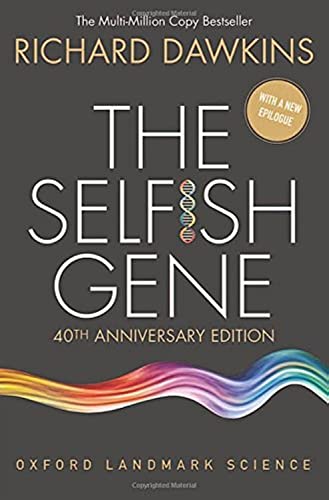
It draws on The Selfish Gene and The Origin of Species.
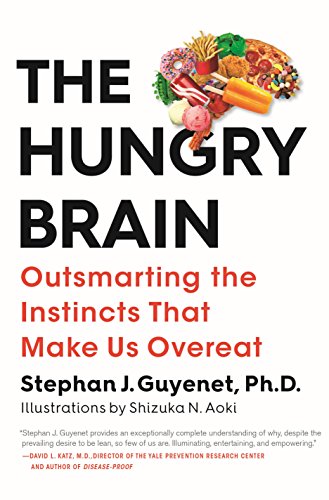
It’s picked up by The Hungry Brain: Outsmarting the Instincts That Make Us Overeat, The Circadian Code: Lose Weight, Supercharge Your Energy, and Transform Your Health from Morning to Midnight and The Longevity Diet: Discover the New Science Behind Stem Cell Activation and Regeneration to Slow Aging, Fight Disease, and Optimize Weight and 3 others.
Scroll down to read the exact passages where other authors reference this book and what they say about it.
Why We Get Sick is recognised as a founding text of evolutionary medicine, and its central insight -- that symptoms like fever and anxiety are evolved defenses, not malfunctions -- has become a lens that health authors across disciplines now routinely apply. Stephan Guyenet builds on Nesse's framework in The Hungry Brain to explain obesity as an evolutionary mismatch, Satchin Panda invokes it to explain why round-the-clock eating breaks ancient digestive rhythms, and Valter Longo argues our genes expect periodic food scarcity.
Matt Richtel extends the mismatch idea to autoimmune disease in An Elegant Defense, framing it as an immune system evolved for parasites now idling in sterile environments. Readers praise the book for fundamentally reframing how they think about illness, though the Darwinian lens can feel overly speculative when applied to specific conditions.
The books Nesse references and why each one mattered to the argument.
Nesse quotes Dawkins's selfish replicators concept from The Selfish Gene.
Nesse positions Darwinian medicine as application of Darwin's evolutionary theory.
The exact passages where other authors bring up “Why We Get Sick” and what they take from it.
Guyenet builds on Nesse's Darwinian-medicine framing that our appetites evolved for calorie scarcity, making the mismatch with modern food the root of obesity
Panda invokes Nesse's evolutionary-medicine framing to explain that modern round-the-clock eating mismatches the fasting rhythms our digestive clocks evolved for
Longo builds on Nesse's evolutionary-medicine framework, arguing our genes expect periodic food scarcity and that constant feeding breaks ancient repair programs
Sapolsky's thesis is a founding text of the Darwinian-medicine tradition Nesse develops, treating modern disease as evolutionary mismatch
Cited in
Why Zebras Don't Get Ulcers: The Acclaimed Guide to Stress, Stress-Related Diseases, and Copingby Robert Sapolsky
Greger invokes Nesse's evolutionary-mismatch thesis to argue that chronic diseases stem from a diet our genome never encountered

Cited in
How Not to Die: Discover the Foods Scientifically Proven to Prevent and Reverse Diseaseby Michael Greger
Richtel invokes Nesse's evolutionary-medicine perspective to argue that autoimmune disease reflects an immune system evolved for parasites now idling in sterile modern environments
How ideas flow through the citation network. Ancestors are books this title builds on; descendants are books that build on it.
Directly cites
2 steps back
Directly cited by
Books from completely different categories that share citation overlap with this one. These are the reads you would not find by browsing a single shelf.
This View of Life
David Sloan Wilson

Tools of Titans
Tim Ferriss
Poor Charlie's Almanack
Charlie Munger

The Righteous Mind
Jonathan Haidt
The Almanack of Naval Ravikant
Eric Jorgenson
Books with the highest citation overlap within the same categories.
This book and its direct connections. Hover a node to see its title, click to visit.
Hover a node to highlight its connections. Click to open the book page. Node size reflects total citation links.