Reading Guide

Understand Human Nature

Why you do what you do, explained by evolution, neuroscience, and culture

Human nature is not one thing; it is the product of evolutionary pressures, neurological architecture, cultural programming, and individual development, all interacting simultaneously. This guide sequences the books from the deepest layer (genes and evolution) through neuroscience and psychology up to the cultural and social forces that shape behaviour. By the end, you will have a layered model of why humans behave the way they do, drawn from multiple disciplines rather than a single framework.

Who is this for

This guide is for readers who want a deep, scientific understanding of human behaviour rather than self help platitudes. It suits anyone fascinated by questions like why we cooperate, why we lie, why we create art, and why our emotions so often override our reason. You should be comfortable with books that reference primary research.

Time to complete

About 8 weeks at one book per week

Prerequisites

None, though a basic comfort with scientific thinking will help

Phase 1: The Evolutionary Foundations

To understand human behaviour, you must first understand the forces that shaped the hardware. These books cover the evolutionary logic that produced the human brain, body, and social instincts over millions of years.

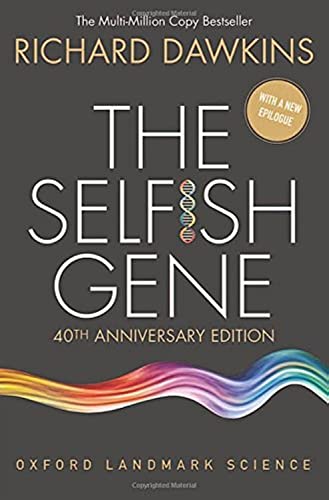
  1. The Selfish Gene1

    The Selfish Gene

    by Richard Dawkins

    Dawkins' classic reframes evolution from the perspective of the gene rather than the individual or the species, and this shift in perspective is essential for everything that follows. It explains altruism, aggression, and cooperation in terms of genetic self interest, which is counterintuitive but enormously clarifying. Starting here gives you the deepest explanatory layer.

    Key takeaway

    Bodies (including human bodies) are vehicles built by genes to propagate themselves; once you see behaviour through this lens, much of what seems irrational becomes perfectly logical.
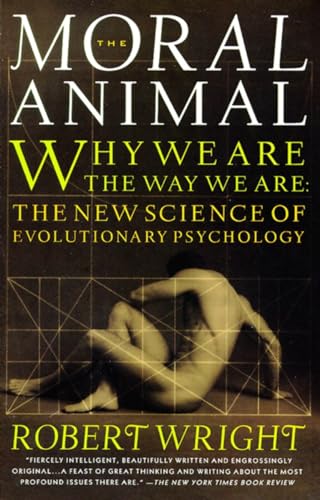
  2. The Moral Animal2

    The Moral Animal

    by Robert Wright

    Wright applies evolutionary psychology directly to human social and sexual behaviour, covering jealousy, status seeking, morality, and self deception. It is more accessible than academic texts and does an excellent job connecting Darwinian logic to the texture of everyday human life. It bridges the gap between gene level theory and the messy reality of human relationships.

    Key takeaway

    Many of our most intense emotions and moral intuitions are evolutionary adaptations designed to solve specific social problems faced by our ancestors, not rational responses to our current environment.

Phase 2: The Brain and Its Tricks

Evolution built the hardware; neuroscience reveals how it works. These books explore the machinery of emotion, decision making, and social cognition inside the human brain.

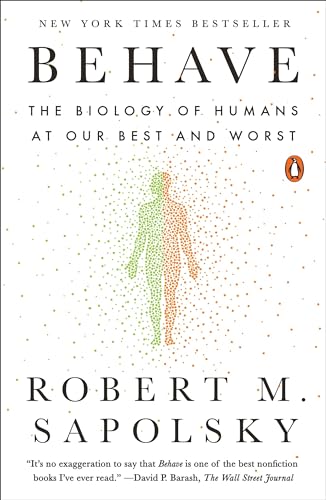
  1. Behave3

    Behave

    by Robert Sapolsky

    Sapolsky's magisterial book is the most comprehensive single volume on the biology of human behaviour, covering neuroscience, endocrinology, genetics, and evolutionary biology in one sweep. It is long but astonishingly well written, and it provides the scientific backbone for this entire guide. Every chapter connects brain mechanisms to real world behaviours like violence, empathy, and tribalism.

    Key takeaway

    Human behaviour is never caused by a single factor; it is always the product of interactions between genes, hormones, neural circuits, childhood experience, and cultural context, unfolding across multiple timescales.

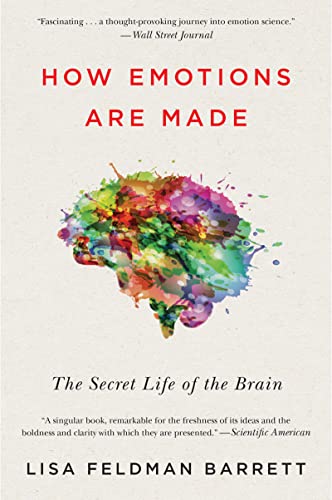
  2. How Emotions Are Made: The Secret Life of the Brain4

    How Emotions Are Made: The Secret Life of the Brain

    by Lisa Feldman Barrett

    Barrett overturns the classical view that emotions are hardwired circuits triggered by the world, arguing instead that the brain constructs emotions on the fly using prediction and past experience. This is one of the most important recent advances in affective neuroscience, and it changes how you think about emotional regulation, empathy, and even legal responsibility. It belongs after Sapolsky because it challenges and refines several assumptions he presents.

    Key takeaway

    Emotions are not reactions you have; they are predictions your brain makes about what your body will need next, constructed from experience, culture, and context rather than triggered by fixed neural circuits.

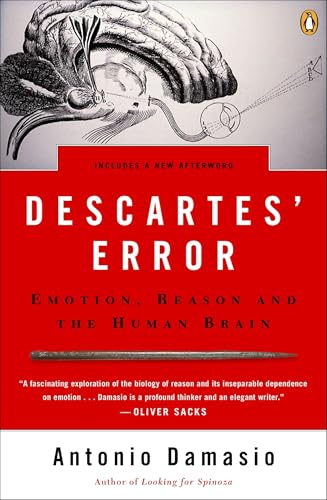
  3. Descartes' Error5

    Descartes' Error

    by Antonio Damasio

    Damasio's landmark work demolished the idea that reason and emotion are opponents, showing through clinical evidence that people who lose the ability to feel emotions also lose the ability to make decisions. It is a shorter, more focused book than the previous two, and it delivers one of the most important insights in the guide. It cements the idea that the thinking brain and the feeling brain are not separable systems.

    Key takeaway

    Emotion is not the enemy of reason; it is a prerequisite for it. Without emotional signals from the body, the rational mind cannot weigh options or commit to a course of action.

Phase 3: The Social and Cultural Animal

Humans are not isolated brains; they are profoundly social creatures shaped by culture, morality, and group identity. These books explore the forces that operate above the level of individual neuroscience.

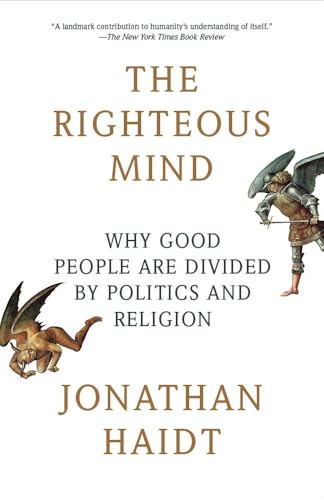
  1. The Righteous Mind6

    The Righteous Mind

    by Jonathan Haidt

    Haidt's work on moral psychology explains why people with identical intelligence and access to the same facts can reach opposite moral conclusions. His moral foundations theory is one of the most powerful frameworks for understanding political disagreement, cultural conflict, and the tribal nature of human morality. It belongs in the social phase because it shows how moral intuitions are shaped by group membership, not individual reasoning.

    Key takeaway

    Moral judgements come first and reasons come after; we do not reason our way to moral positions but instead use reason to justify positions we arrived at through intuition and social conditioning.

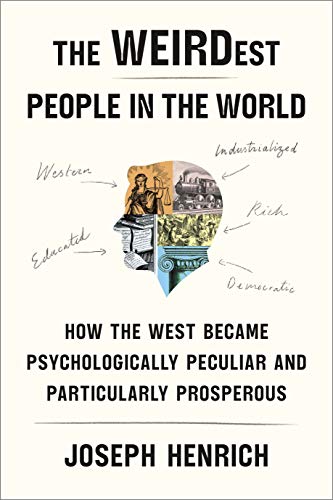
  2. The WEIRDest People in the World: How the West Became Psychologically Peculiar and Particularly Prosperous7

    The WEIRDest People in the World: How the West Became Psychologically Peculiar and Particularly Prosperous

    by Joseph Henrich

    Henrich argues that Western, Educated, Industrialised, Rich, and Democratic societies are psychologically unusual, not the default human condition, and that much of psychology has mistakenly generalised from this narrow sample. This book is essential for understanding how culture literally reshapes cognition, perception, and social norms. It is the best single book on the interaction between culture and psychology.

    Key takeaway

    The psychological traits that Westerners consider universal, such as individualism, analytical thinking, and guilt based morality, are actually the product of specific cultural and institutional histories, not human nature in general.

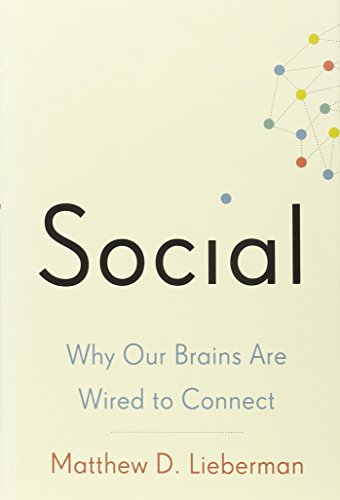
  3. Social: Why Our Brains Are Wired to Connect8

    Social: Why Our Brains Are Wired to Connect

    by Matthew Lieberman

    Lieberman draws on neuroscience to show that the human brain's default mode is social thinking, and that our need for social connection is as fundamental as our need for food and water. It provides the neuroscientific grounding for why loneliness is so damaging, why social rejection activates pain circuits, and why belonging shapes behaviour so powerfully. It is the perfect closing book because it ties the evolutionary, neurological, and cultural threads together.

    Key takeaway

    The human brain is wired for connection to such a degree that social pain uses the same neural circuitry as physical pain, which means social needs are not luxuries but biological imperatives.

Common mistakes to avoid

  • Do not fall into genetic determinism; genes influence behaviour but they do not dictate it, and every serious author in this guide emphasises the interaction between nature and environment.

  • Avoid reading evolutionary psychology as a justification for the status quo; understanding why a behaviour evolved does not make it moral, inevitable, or desirable.

  • Be wary of pop science summaries that flatten nuance into catchy headlines; if a finding sounds too clean and simple, the original research is almost certainly messier.

  • Do not assume that Western psychological findings are universal; Henrich\'s book exists precisely because this mistake has distorted decades of research.

  • Resist the urge to reduce human behaviour to a single explanatory framework, whether evolutionary, neurological, or cultural; the whole point of this guide is that all three layers interact.

How to work through this guide

If you want the shortest path through this guide, read The Selfish Gene, Behave, and The Righteous Mind. Those three cover evolution, neuroscience, and culture in one pass. The Selfish Gene is dense in places but can be skimmed in the later chapters without losing the core argument. Behave is long but every chapter stands alone, so you can read the ones that interest you most and return to the rest later. The most important principle this guide teaches is that human behaviour is always multi causal, and anyone who tells you it comes down to one thing, whether genes, upbringing, or culture, is selling you a simplification.

BookGraph is an Amazon Associate. If you buy through the links above we may earn a small commission at no extra cost to you. All book selections and editorial reasoning are our own.

Other Reading Guides