Reading Guide

Sharpen Your Focus

Reclaim attention in a distracted world

The problem is not that you lack discipline. The problem is that you are surrounded by systems specifically designed to capture your attention and sell it to advertisers. These books diagnose why focus is harder than it used to be, explain the cognitive science behind attention, and offer practical frameworks for rebuilding it. They range from philosophical (why depth matters at all) to tactical (what to actually do tomorrow morning).

Who is this for

Knowledge workers, students, or creatives who feel their attention fragmenting. You know what deep work looks like but cannot sustain it. You pick up your phone without deciding to. You finish the day unsure what you actually accomplished.

Time to complete

About 8 weeks. Several of these books are substantial and reward slow reading.

Prerequisites

Consider reading the "Get More Organised" guide first if you do not yet have a basic task management system in place.

Phase 1: Why Focus Matters

Before changing your behaviour, understand what is at stake. These books make the case that the ability to focus deeply is both increasingly rare and increasingly valuable.

  1. Deep Work1

    Deep Work

    by Cal Newport

    The foundational text. Newport argues that deep, focused work is the superpower of the knowledge economy, and that most professionals have unwittingly structured their days to make it impossible. Read first so the rest of the list has somewhere to land.

    Key takeaway

    Deep work is the ability to focus without distraction on a cognitively demanding task. It is rare because most workplaces reward shallow responsiveness. It is valuable because it produces the kind of output that cannot be replicated by anyone who is constantly checking email.
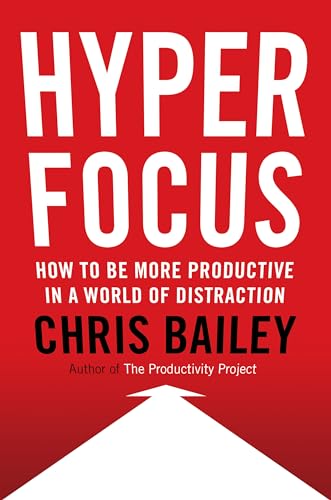
  2. Hyperfocus: How to Be More Productive in a World of Distraction2

    Hyperfocus: How to Be More Productive in a World of Distraction

    by Chris Bailey

    Goes deeper on the cognitive science of attention. Bailey distinguishes between hyperfocus (intentional concentration) and scatterfocus (mind-wandering), and argues that both are essential. Useful for understanding why different focus strategies work for different brains and tasks.

    Key takeaway

    Your brain has two productive attention modes: hyperfocus for executing tasks and scatterfocus for connecting ideas. Manage both deliberately. Set a specific intention before each work block and you will sustain focus significantly longer.

Phase 2: Understanding the Enemy

Focus is not just a personal skill problem. The attention economy is a structural force working against you. These books explain the system so you can design around it.

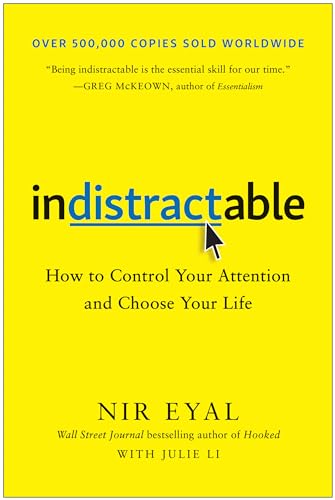
  1. Indistractable3

    Indistractable

    by Nir Eyal

    The behavioural-design angle. Eyal (who literally wrote the book on making products addictive, Hooked) now explains how to defend against those same techniques. Less about willpower, more about removing the triggers that pull on your attention in the first place.

    Key takeaway

    Distraction is not a character flaw but a design problem. Identify internal triggers (boredom, anxiety, loneliness) that drive you to seek distraction, then redesign your environment to make the distracting option harder to access than the focused one.

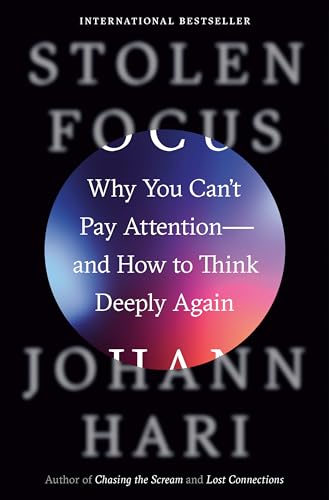
  2. Stolen Focus4

    Stolen Focus

    by Johann Hari

    A broader cultural diagnosis. Hari argues that the focus crisis is systemic, driven by technology design, diet, pollution, and overwork. Read this when you start to suspect the problem is bigger than your personal habits.

    Key takeaway

    Individual fixes are necessary but not sufficient. The attention crisis has structural causes (invasive technology, sleep deprivation, processed food, childhood overscheduling) that require collective solutions alongside personal ones.

Phase 3: Practical Systems

Theory is useful but you also need a plan for tomorrow. These books provide concrete, implementable systems.

  1. Digital Minimalism5

    Digital Minimalism

    by Cal Newport

    The practical tech-detox playbook. Newport provides a 30-day digital declutter process followed by a set of operating procedures for reintroducing technology intentionally. Pairs naturally with the diagnosis from the previous section.

    Key takeaway

    Digital minimalism is not about rejecting technology but about being intentional with it. Remove all optional technology for 30 days. Reintroduce only what serves a specific value you have defined in advance.

  2. Make Time: How to Focus on What Matters Every Day6

    Make Time: How to Focus on What Matters Every Day

    by Jake Knapp and John Zeratsky

    A tactical day-shaping guide for people who already buy the theory and just want a working system. Knapp and Zeratsky provide a framework for choosing a daily "highlight", managing your energy (not just your time), and reflecting on what worked.

    Key takeaway

    Each day, choose one priority (your highlight) before checking email. Design your environment for energy (caffeine timing, movement, food quality). At the end of the day, reflect on what worked and adjust.

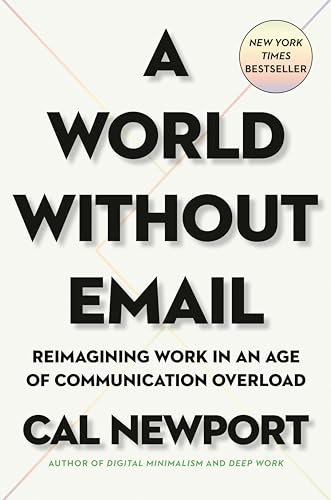
  3. A World Without Email: Reimagining Work in an Age of Communication Overload7

    A World Without Email: Reimagining Work in an Age of Communication Overload

    by Cal Newport

    The organisational counterpart to the personal focus books. Newport argues that knowledge work is broken at the workflow level, not just the individual level. Email, Slack, and constant messaging create a "hyperactive hive mind" that makes deep work structurally impossible.

    Key takeaway

    Most knowledge work communication defaults (email threads, real-time chat) are actively hostile to focused work. Replace ad hoc messaging with structured processes: shared boards, office hours, batched communication windows.

Common mistakes to avoid

  • Blaming yourself for a systemic problem. If your workplace rewards constant responsiveness, no amount of personal focus tricks will fix it. Read Newport's A World Without Email for the structural argument.

  • Going cold turkey on technology without a plan for what replaces it. The 30-day digital declutter only works if you have identified what you will do instead.

  • Confusing busyness with depth. Clearing your inbox feels productive but rarely produces meaningful output. Track your deep work hours for a week and you will likely be shocked.

  • Ignoring sleep and exercise. Focus is downstream of physical health. If you are sleeping six hours and never moving, no focus technique will compensate.

How to work through this guide

These books overlap heavily because the underlying research is the same. The disagreement is about scale: whether the fix is personal (better routines), behavioural (removed temptations), or structural (different workflows and tools). Reading three or four is enough to get the full picture. Start with Newport, add one tactical book (Knapp or Bailey), and one diagnostic book (Hari or Eyal). That combination gives you the why, the what, and the how.

BookGraph is an Amazon Associate. If you buy through the links above we may earn a small commission at no extra cost to you. All book selections and editorial reasoning are our own.

Other Reading Guides