Reading Guide

Sleep Better

What the science actually says about rest

Sleep advice online is mostly noise. Blue-light glasses, sleep supplements, binaural beats: very little of it is supported by the research. These books assemble the current scientific consensus and converge on a surprisingly small number of structural changes that actually matter. Read them in order because each one addresses a different layer of the problem.

Who is this for

Anyone sleeping fewer than seven hours, waking unrefreshed, or relying on caffeine to function. Also useful for people who sleep enough hours but still feel tired, which often points to timing or anxiety rather than duration.

Time to complete

About 3 weeks. These are shorter, science-focused books that read quickly.

Prerequisites

None. The first book provides all the background you need.

The Science Foundation

Start with the evidence base. Walker provides the most comprehensive survey of sleep research published in the last decade, covering everything from why we dream to how sleep deprivation impairs judgement.

  1. Why We Sleep1

    Why We Sleep

    by Matthew Walker

    The single most cited modern book on sleep science. Walker makes an overwhelming case that sleep is the foundation of physical and mental health, not a luxury. Some of his claims have been disputed by other researchers, but the core message is well supported: chronic sleep deprivation is far more damaging than most people realise.

    Key takeaway

    Sleep is not optional. Eight hours is not aspirational. Every major disease in the developed world has a causal link to insufficient sleep. Prioritise your sleep window above almost everything else.

Timing and Environment

Once you understand why sleep matters, the next question is when and how. These books address the circadian timing of your day and the physical habits that quietly undermine rest.

  1. The Circadian Code: Lose Weight, Supercharge Your Energy, and Transform Your Health from Morning to Midnight2

    The Circadian Code: Lose Weight, Supercharge Your Energy, and Transform Your Health from Morning to Midnight

    by Satchin Panda

    A natural follow-up that focuses on the timing side. Panda explains how your circadian clock governs not just sleep but metabolism, immunity, and mood. His practical framework (time-restricted eating, light exposure scheduling) gives you environmental levers that complement the sleep hygiene basics from Walker.

    Key takeaway

    When you eat and move matters as much as what you eat and how much you move. Restrict eating to a consistent 10-12 hour window. Get bright light exposure within 30 minutes of waking and dim lights 2-3 hours before bed.

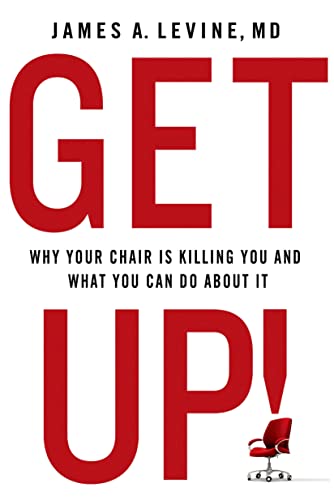
  2. Get Up!: Why Your Chair Is Killing You3

    Get Up!: Why Your Chair Is Killing You

    by James A. Levine

    Less about sleep directly and more about the daytime habit that quietly wrecks it. Nestor explores how modern breathing patterns (shallow, through the mouth, at a desk all day) contribute to poor sleep quality. A useful angle that the other books miss entirely.

    Key takeaway

    How you breathe during the day affects how you sleep at night. Nasal breathing, slower respiratory rates, and regular movement breaks are low-cost interventions with measurable sleep benefits.

When the Problem Is Anxiety, Not Sleep

For many people, poor sleep is a symptom of unaddressed stress or anxiety. This final book addresses the root cause rather than the symptom.

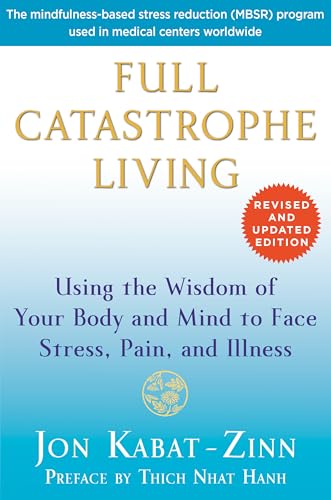
  1. Full Catastrophe Living: Using the Wisdom of Your Body and Mind to Face Stress, Pain, and Illness4

    Full Catastrophe Living: Using the Wisdom of Your Body and Mind to Face Stress, Pain, and Illness

    by Jon Kabat-Zinn

    A capstone for anyone whose sleep problems are really anxiety problems. Kabat-Zinn developed the Mindfulness-Based Stress Reduction programme used in hospitals worldwide. His approach treats the racing mind directly rather than trying to fix the downstream effect on sleep.

    Key takeaway

    You cannot force yourself to sleep. But you can learn to observe anxious thoughts without engaging with them. A consistent mindfulness practice (even 10 minutes daily) measurably improves both sleep onset and sleep quality.

Common mistakes to avoid

  • Buying supplements before fixing behaviour. Melatonin, magnesium, and CBD are not substitutes for consistent sleep timing and light exposure.

  • Optimising sleep without addressing caffeine. Most sleep researchers recommend no caffeine after midday. This is the single highest-impact change for most people and the one they resist most.

  • Using the alarm clock as the problem. If you need an alarm to wake up, you are not sleeping enough. Adjust your bedtime, not your alarm.

  • Reading about sleep instead of sleeping. The irony of this guide is that the best thing you can do right now is put the book down and go to bed.

How to work through this guide

Most "sleep hacks" promoted online are not supported by these books. The actionable consensus is simple: protect your sleep window, fix your light exposure, move during the day, stop eating 3 hours before bed, and address the anxiety underneath. Everything else is noise. If you only read one book, read Walker. If sleep is not the real problem, skip straight to Kabat-Zinn.

BookGraph is an Amazon Associate. If you buy through the links above we may earn a small commission at no extra cost to you. All book selections and editorial reasoning are our own.

Other Reading Guides