Reading Guide

Negotiate & Persuade

The science behind why people say yes

Most people approach persuasion backwards. They start with their argument and try to make it louder. The research consistently shows that what happens before the argument matters more than the argument itself: how you frame the conversation, what the other person is feeling, and whether they trust you. These books cover both sides of the table: how to make a case that lands, and how to read what the other side actually wants. The authors here have shaped every negotiation course taught in business schools over the last 40 years.

Who is this for

Anyone who needs to influence outcomes: salary negotiations, client conversations, team decisions, or even persuading a partner on holiday plans. This is not manipulation. It is understanding how decisions actually get made so you can participate more effectively.

Time to complete

About 5 weeks. The first three books are fast reads. The last two are denser.

Prerequisites

None. Cialdini assumes no prior knowledge.

The Foundations of Influence

These two books by the same author provide the research base that every other negotiation book references. Read them in order.

  1. Influence1

    Influence

    by Robert Cialdini

    The foundational survey of compliance research. Cialdini identifies six (now seven, in the expanded edition) principles that explain why people say yes: reciprocity, commitment, social proof, authority, liking, scarcity, and unity. Every other book on this list either builds on these principles or argues with them.

    Key takeaway

    People do not make decisions rationally. They rely on mental shortcuts (heuristics) that can be understood and ethically leveraged. Learn to recognise these six patterns and you will see them everywhere.
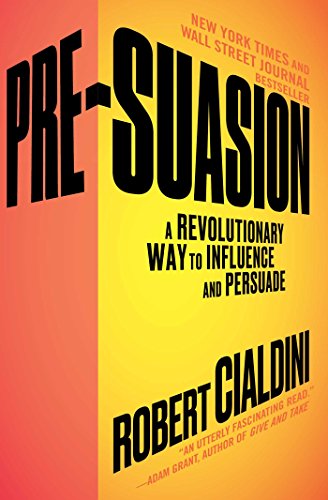
  2. Pre-Suasion2

    Pre-Suasion

    by Robert Cialdini

    The follow-up that focuses on what happens before the message. Cialdini calls this "pre-suasion": the art of arranging for recipients to be receptive to a message before they encounter it. The key insight is that attention is directional, and what people are focused on at the moment of decision shapes the decision itself.

    Key takeaway

    The moment before your request matters more than the request itself. Directing someone's attention to a concept (trust, quality, community) primes them to weigh that concept more heavily in the decision that follows.

Tactical Application

Now apply the principles to real conversations. These two books are full of concrete techniques you can use immediately.

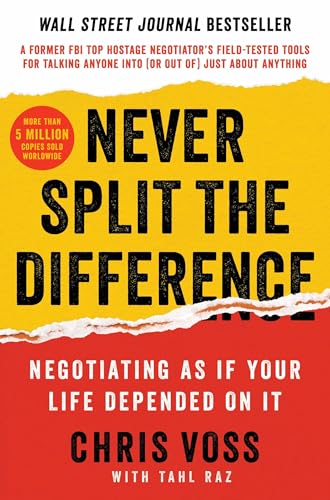
  1. Never Split the Difference3

    Never Split the Difference

    by Chris Voss

    The most actionable book of the bunch. Voss, a former FBI hostage negotiator, provides techniques (tactical empathy, mirroring, labelling, calibrated questions) that work in salary negotiations, client meetings, and family disagreements alike. The book reads fast and the techniques are usable the same day.

    Key takeaway

    Never split the difference. Instead, use calibrated questions ("How am I supposed to do that?") to make the other side solve your problem. Label their emotions before addressing their position. Mirror their last few words to keep them talking.

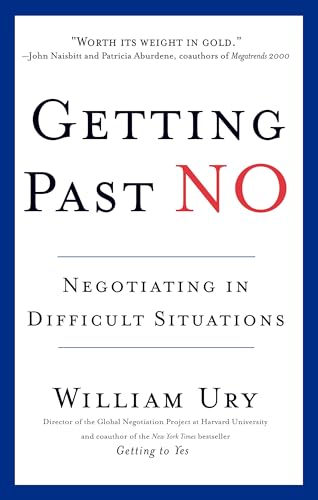
  2. Getting Past No4

    Getting Past No

    by William Ury

    For the moments when the other side will not engage. Ury provides a structured framework for breaking deadlocks without escalating. Particularly useful when you are negotiating with someone who has more power than you.

    Key takeaway

    When the other side says no, do not push harder. Build them a "golden bridge" to retreat across. Reframe positions as interests. Make it easy for them to say yes without losing face.

Going Deeper

For readers who want the underlying theory or who need to teach negotiation to others.

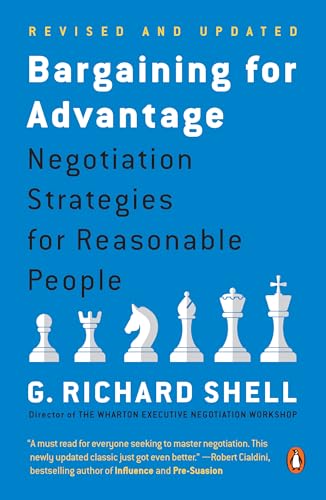
  1. Bargaining for Advantage5

    Bargaining for Advantage

    by G. Richard Shell

    A more academic treatment that covers the underlying game theory and decision science. Best read last, once you can recognise the patterns the tactical books describe. Particularly useful for complex, multi-party negotiations.

    Key takeaway

    Negotiation is investigative. Your job is not to convince but to discover: what does the other side actually value? What are the hidden constraints? What trades can you make that cost you little but matter to them?

Common mistakes to avoid

  • Treating negotiation as combat. The best negotiators are the best listeners. If you are talking more than 30% of the time, you are doing it wrong.

  • Using techniques without genuine curiosity. People detect manipulation instantly. The techniques only work when they flow from a real desire to understand the other side.

  • Preparing only your arguments. Spend at least as much time preparing your questions. The person asking questions controls the conversation.

  • Forgetting that the relationship continues after the deal. A deal that leaves the other side feeling cheated will cost you more in the long run than the concession would have.

How to work through this guide

The first three books are enough to noticeably change how you handle a difficult conversation. The last two are for readers who want to teach negotiation, not just practise it. Note the heavy overlap: most of the techniques have multiple names depending on which book you read first. That is a feature, not a bug. The repetition is how the patterns become instinctive.

BookGraph is an Amazon Associate. If you buy through the links above we may earn a small commission at no extra cost to you. All book selections and editorial reasoning are our own.

Other Reading Guides