Reading Guide

Get More Organised

Build habits, systems and routines that stick

Organisation is not about willpower or discipline. It is about designing systems that make the right action easier than the wrong one. These books approach the problem from complementary angles: habit formation, task management, the psychology of why routines fall apart, and how to decide what is worth doing in the first place. Read them in order. Each one builds on concepts introduced by the one before it.

Who is this for

Anyone who feels busy but not productive. You have tried to-do lists, apps and morning routines but nothing sticks beyond the first week. These books explain why, and offer frameworks that actually survive contact with real life.

Time to complete

About 6 weeks at one book per week, or 3 months at a comfortable pace

Prerequisites

No prerequisites. This is a good starting point if you have never read a productivity book before.

Phase 1: Understanding How Habits Work

Before you can build better systems, you need to understand the mechanics of behaviour change. These two books cover the same territory from different angles, and together they give you the full picture.

  1. Atomic Habits1

    Atomic Habits

    by James Clear

    Start here. Clear provides the clearest framework for how habits actually form, and introduces the vocabulary (cue, craving, response, reward) that everything else on this list builds on. His key insight: you do not rise to the level of your goals, you fall to the level of your systems.

    Key takeaway

    The four laws of behaviour change: make it obvious, attractive, easy, and satisfying. Identity change drives habit change, not the other way round.

  2. The Power of Habit2

    The Power of Habit

    by Charles Duhigg

    Read second to fill in the neuroscience behind habit loops. Duhigg covers the same territory with more research depth, including organisational habits and how companies like Alcoa transformed their culture through keystone habits.

    Key takeaway

    The habit loop (cue, routine, reward) is a neurological pattern stored in the basal ganglia. You cannot eliminate a bad habit, but you can overwrite the routine while keeping the cue and reward.

Phase 2: Building Systems That Last

Knowing how habits work is not enough. You need external systems to capture, organise and execute on the things that matter. These books provide two very different but complementary approaches.

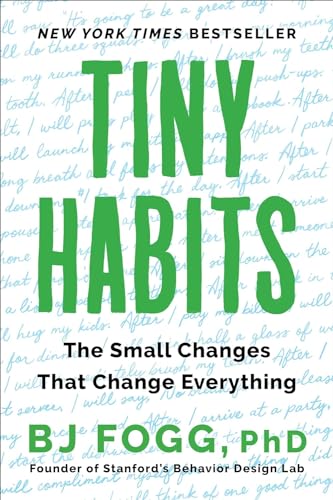
  1. Tiny Habits3

    Tiny Habits

    by BJ Fogg

    A gentler third step for readers who found the first two books too intense. Fogg argues that motivation is unreliable and the real lever is making the desired behaviour tiny enough that it requires almost no effort to begin. Particularly useful if previous attempts at organisation have failed.

    Key takeaway

    Start with behaviours so small they feel trivial. "Floss one tooth" beats "floss every day". Anchor new habits to existing routines ("After I pour my coffee, I will...") and let them grow naturally.

  2. Getting Things Done4

    Getting Things Done

    by David Allen

    Switch from habits to external systems. Allen provides the classic methodology for getting every commitment out of your head and into a trusted system. The book is dense and the full system is complex, but even partial adoption transforms how you handle incoming demands.

    Key takeaway

    Your mind is for having ideas, not holding them. Capture everything into an external system, clarify next actions, and review weekly. The "two-minute rule": if something takes less than two minutes, do it now.

Phase 3: Deciding What Is Worth Organising

The biggest risk of getting organised is spending your energy on the wrong things more efficiently. These final books force you to question your priorities before optimising them.

  1. Essentialism5

    Essentialism

    by Greg McKeown

    A counterweight to all the system-building. McKeown argues that the disciplined pursuit of less is the path to making your highest contribution. Read this when your newly organised life starts filling up with tasks that feel productive but are not important.

    Key takeaway

    Almost everything is noise. The job of an essentialist is not to get more things done but to get the right things done. Learn to say no to the merely good so you can say yes to the truly great.

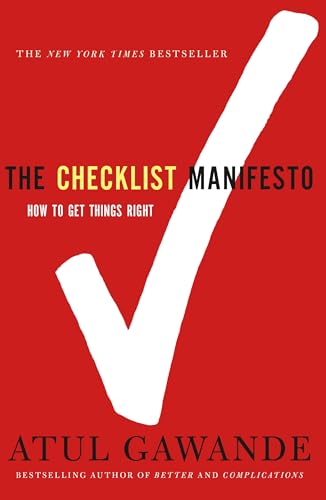
  2. The Checklist Manifesto6

    The Checklist Manifesto

    by Atul Gawande

    A short, practical capstone. Gawande shows how a simple tool (the checklist) can rescue even the most skilled professionals from preventable errors. It reframes organisation not as ambition but as humility: acknowledging that our memories and attention are fallible.

    Key takeaway

    Checklists work not because people are stupid but because the world is complex. Even experts benefit from a pause-and-verify step at critical moments. Build checklists for your most important recurring tasks.

Common mistakes to avoid

  • Trying to adopt every system at once. Pick one book, implement one framework, and live with it for a month before adding more.

  • Confusing the feeling of being organised with actually making progress. A beautifully colour-coded task list is worthless if the tasks are not the right ones.

  • Skipping the essentialism step. Most organisational failure is not a systems problem but a priority problem. You are doing too many things, not doing them badly.

  • Expecting perfection. Every system breaks down. The skill is not maintaining a perfect system but recovering quickly when it falls apart.

How to work through this guide

Worked through in order, this guide moves you from individual habits to broader systems and then to the question of priority. The books overlap deliberately. If a concept lands in one and not another, that is the point. Pick one tool from each phase and ignore the rest. The goal is not to become a productivity expert but to free up enough mental space to do the work that actually matters to you.

BookGraph is an Amazon Associate. If you buy through the links above we may earn a small commission at no extra cost to you. All book selections and editorial reasoning are our own.

Other Reading Guides