Reading Guide

Think More Clearly

Outsmart your own brain by learning its favourite tricks

Your brain is not a truth finding machine; it is a pattern matching engine optimised for survival, not accuracy. This reading path starts with the foundational research on cognitive biases, then moves into how those biases play out in real world judgements, and finally equips you with practical frameworks for making better decisions. The sequence matters because you need to see the problems clearly before the solutions will stick.

Who is this for

This guide is for anyone who suspects their own thinking is less reliable than it feels. It suits professionals making high stakes decisions, investors trying to separate signal from noise, and curious readers who want to understand why smart people consistently make predictable errors.

Time to complete

About 7 weeks at one book per week

Prerequisites

None

Phase 1: See the Bugs in Your Mental Software

Before you can think better, you need to understand exactly how your thinking goes wrong. These books map out the systematic errors that affect everyone, not just careless thinkers.

  1. Thinking, Fast and Slow1

    Thinking, Fast and Slow

    by Daniel Kahneman

    Kahneman's masterwork is the single best introduction to the two systems that drive all human thought. It draws on decades of original research and remains the definitive text on cognitive biases. Every other book in this guide builds on concepts introduced here, so it belongs first.

    Key takeaway

    Your intuitive System 1 is fast but riddled with predictable errors; your deliberate System 2 is lazy and rarely intervenes unless you force it to.

  2. Predictably Irrational2

    Predictably Irrational

    by Dan Ariely

    Ariely takes the academic framework Kahneman established and shows it operating in everyday commercial and personal decisions. His experiments are ingenious and often funny, which makes the lessons memorable. Reading this second reinforces the theory through entirely different examples.

    Key takeaway

    Humans are not just irrational; they are predictably irrational, which means you can anticipate and counteract specific errors once you know the patterns.

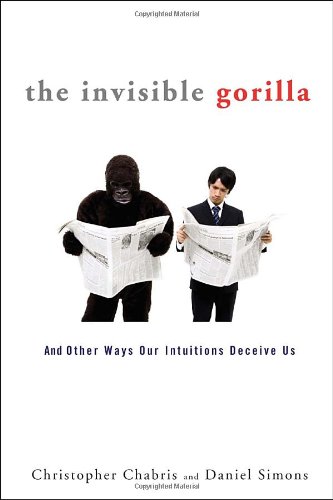
  3. The Invisible Gorilla: And Other Ways Our Intuitions Deceive Us3

    The Invisible Gorilla: And Other Ways Our Intuitions Deceive Us

    by Christopher Chabris and Daniel Simons

    Chabris and Simons wrote the definitive book on inattentional blindness and the illusions of memory, confidence, and knowledge. It is shorter and punchier than the first two books, and it covers blind spots those books skip. It rounds out the foundations by showing how much we miss even when we think we are paying attention.

    Key takeaway

    Your confidence in your own perceptions, memories, and abilities is consistently inflated, and recognising this gap is the first step toward intellectual humility.

Phase 2: Understand How Errors Compound in the Real World

Individual biases are one thing, but the real damage happens when they interact with randomness, social pressure, and self justification. These books show how small cognitive errors cascade into large real world consequences.

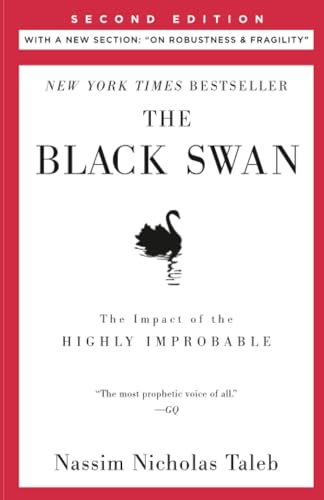
  1. The Black Swan4

    The Black Swan

    by Nassim Nicholas Taleb

    Taleb explains why we radically underestimate the role of rare, high impact events and why our forecasting models are dangerously overconfident. This book permanently changes how you think about risk and uncertainty. It is the essential bridge between understanding individual biases and understanding how those biases distort entire systems.

    Key takeaway

    The events that matter most are precisely the ones we cannot predict, so build your life and decisions around robustness to surprise rather than accuracy of forecasts.

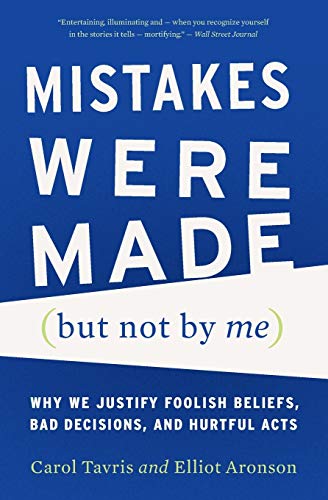
  2. Mistakes Were Made (but Not by Me)5

    Mistakes Were Made (but Not by Me)

    by Carol Tavris

    Tavris and Aronson reveal the psychology of self justification, explaining why people double down on bad decisions rather than admitting error. This is the bias that makes all other biases so persistent and dangerous. It explains why smart, well intentioned people defend positions long after the evidence has turned against them.

    Key takeaway

    Cognitive dissonance creates a self reinforcing spiral where every mistake you justify makes the next justification easier, which is why the best thinkers build systems for catching themselves early.

Phase 3: Build Better Decision Frameworks

Knowing your biases is not enough; you need practical tools for making better choices under uncertainty. These books provide actionable methods, not just warnings.

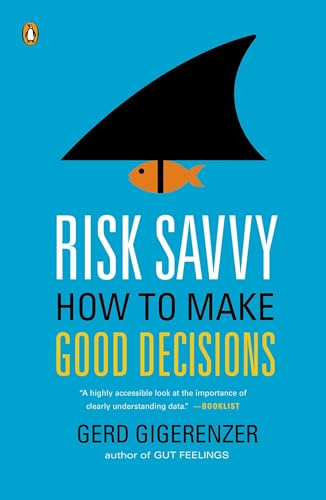
  1. Risk Savvy: How to Make Good Decisions6

    Risk Savvy: How to Make Good Decisions

    by Gerd Gigerenzer

    Gigerenzer offers the essential counterpoint to Kahneman by arguing that simple heuristics often outperform complex analysis, especially when data is scarce. This is not anti intellectual; it is about matching decision strategies to the structure of the environment. Reading this after the bias literature prevents you from overcorrecting into analysis paralysis.

    Key takeaway

    Simple rules of thumb, used in the right context, can beat sophisticated models because they are robust to noise and do not overfit to irrelevant data.

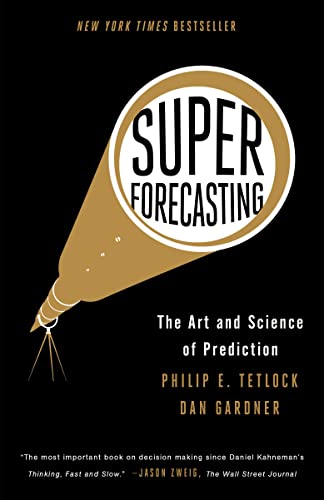
  2. Superforecasting7

    Superforecasting

    by Philip Tetlock

    Tetlock's research on superforecasters is the most rigorous study of what actually makes people better at predicting the future. It provides concrete, learnable techniques rather than vague advice about being open minded. The book also introduces the concept of calibrating your confidence, which is one of the most practical skills in the entire guide.

    Key takeaway

    The best forecasters are not geniuses; they are people who update their beliefs frequently, think in probabilities rather than certainties, and actively seek out disconfirming evidence.

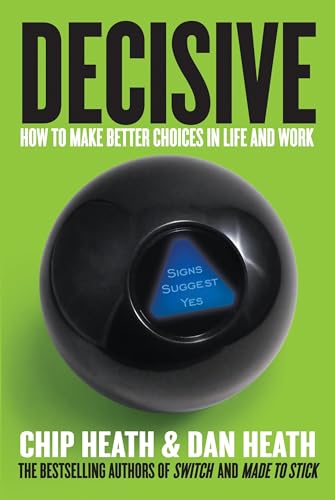
  3. Decisive8

    Decisive

    by Chip Heath

    The Heaths distil decision science into a four step framework (WRAP) that directly addresses the biases covered earlier in the guide. It is the most actionable book here, full of specific techniques for widening your options, reality testing your assumptions, attaining distance, and preparing to be wrong. It works best read last because you will recognise every bias it counteracts.

    Key takeaway

    Most bad decisions share the same structural flaws: narrow framing, confirmation bias, short term emotion, and overconfidence. A simple checklist can neutralise all four.

Common mistakes to avoid

  • Learning about biases can make you worse, not better, if you only spot them in other people\'s thinking and never apply the lens to your own decisions.

  • Do not fall into the trap of believing that awareness alone fixes the problem; biases persist even when you know about them, which is why you need decision frameworks and checklists.

  • Avoid the temptation to read Kahneman and Gigerenzer as contradicting each other; they are answering different questions about different types of environments.

  • Reading too many bias books in a row can induce a paralysing distrust of all intuition; the goal is calibration, not elimination of gut feeling.

  • Do not skip the self justification material (Tavris); it is less famous than the Kahneman work but arguably more important for sustained improvement.

How to work through this guide

If you only read two books from this guide, make them Thinking, Fast and Slow and Decisive. The first gives you the map of the problem; the second gives you the tools to navigate it. You can safely read the Phase 1 books in any order, but save the Phase 3 books for after you have internalised the problems, otherwise the solutions will feel abstract. The minimum effective dose is understanding that your brain has systematic blind spots, that confidence is not a reliable signal of accuracy, and that simple decision processes consistently beat unaided intuition.

BookGraph is an Amazon Associate. If you buy through the links above we may earn a small commission at no extra cost to you. All book selections and editorial reasoning are our own.

Other Reading Guides