Reading Guide

Become a Better Manager

The practical toolkit for managing people, teams, and yourself

Management is a skill, not a promotion. Most people get promoted into management because they were good at their previous job, which has almost nothing to do with being good at this one. This guide starts with the fundamental mindset shifts, moves into the daily practices of effective management, and finishes with building and leading teams at scale. The order is deliberate: you need to sort out your own head before you can help anyone else.

Who is this for

This guide is for new managers who just inherited a team and have no idea what to do, experienced managers who sense they could be much better, and individual contributors considering the leap into management. It is especially useful for people in technology companies, but the principles apply everywhere. If you have ever thought 'nobody taught me how to do this,' these books are the curriculum you never got.

Time to complete

About 7 weeks at one book per week

Prerequisites

None, though having managed at least one person (even informally) will make the books land harder

Phase 1: The Management Mindset

Before you can manage others, you need to understand what management actually is and what it is not. These books will challenge your assumptions about authority, output, and your role in the organisation.

  1. High Output Management1

    High Output Management

    by Andrew Grove

    Andy Grove ran Intel during its most consequential years and distilled everything he learned into this slim, dense masterpiece. He treats management as a production system where your output equals the output of your team. Starting here is essential because Grove gives you the mental model: management is about leverage, not effort. Every other book in this guide builds on this foundation.

    Key takeaway

    A manager's output is the output of the organisations under their supervision and influence. Your job is to increase the leverage of everything you do.
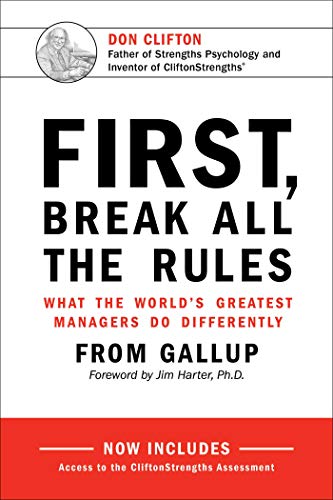
  2. First, Break All the Rules: What the World's Greatest Managers Do Differently2

    First, Break All the Rules: What the World's Greatest Managers Do Differently

    by Marcus Buckingham and Curt Coffman

    Buckingham and Coffman analysed Gallup's massive database of employee engagement surveys and discovered that great managers do the opposite of what most training programmes teach. They do not try to fix weaknesses; they build on strengths. They do not treat everyone the same; they individualise. Reading this after Grove gives you the empirical evidence for what effective management actually looks like on the ground.

    Key takeaway

    People do not change that much. Stop trying to put in what was left out. Instead, try to draw out what was left in.

Phase 2: The Daily Practice

Mindset without practice is useless. These books give you the specific conversations, feedback methods, and relationship building techniques you need every single day as a manager.

  1. Radical Candor3

    Radical Candor

    by Kim Scott

    Kim Scott's framework for feedback is the most useful one published in the last two decades. She argues that great managers combine personal caring with direct challenging, and she gives you the language and the courage to have conversations you have been avoiding. After Grove and Buckingham set up the 'what' of management, Scott gives you the 'how' of the hardest part: telling people the truth.

    Key takeaway

    Caring personally while challenging directly is not cruel. Withholding honest feedback because you want to be nice is the truly unkind thing.

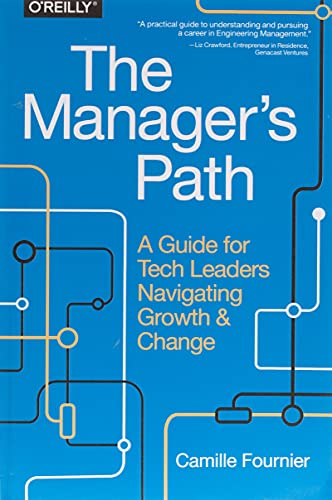
  2. The Manager's Path: A Guide for Tech Leaders Navigating Growth and Change4

    The Manager's Path: A Guide for Tech Leaders Navigating Growth and Change

    by Camille Fournier

    Camille Fournier wrote the management book that the technology industry desperately needed. She maps the entire journey from tech lead to CTO, with specific advice for each stage. If you work in software, this is essential. Even if you do not, the progression she describes (managing individuals, managing managers, managing organisations) applies broadly. It slots in here because by now you understand the principles; Fournier shows you how they change as you grow.

    Key takeaway

    The skills that make you a good manager of five people are different from the skills that make you a good manager of fifty. You must deliberately evolve at each stage.

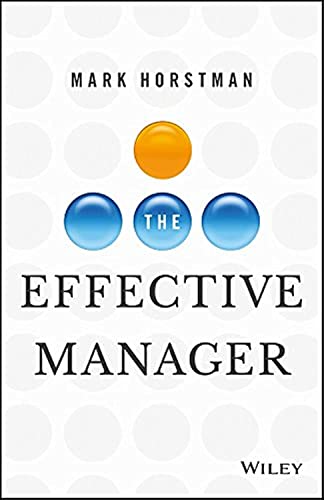
  3. The Effective Manager5

    The Effective Manager

    by Mark Horstman

    Mark Horstman, co founder of Manager Tools, wrote the most tactical management book in existence. It covers one on ones, feedback, coaching, and delegation with step by step instructions. Where Scott gives you the philosophy of feedback and Fournier gives you the career map, Horstman gives you the exact meeting agendas and scripts. Read it when you want someone to tell you precisely what to do on Monday morning.

    Key takeaway

    Effective management comes down to four behaviours done consistently: getting to know your people, communicating about performance, asking for more, and pushing work down.

Phase 3: Building the Team

Individual management skills matter, but eventually you need to build something larger than a set of one on one relationships. These books show you how to create the conditions where teams perform at their best.

  1. The Five Dysfunctions of a Team6

    The Five Dysfunctions of a Team

    by Patrick Lencioni

    Patrick Lencioni uses a simple fable to illustrate the five interrelated dysfunctions that destroy teams: absence of trust, fear of conflict, lack of commitment, avoidance of accountability, and inattention to results. The model is memorable, practical, and diagnostic. After learning to manage individuals in Phase 2, you now learn to see the team as a system with its own failure modes.

    Key takeaway

    Trust is the foundation of everything. Without it, people will not engage in honest conflict, and without honest conflict, you get artificial harmony and bad decisions.

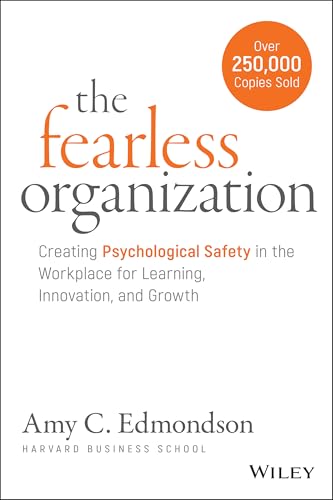
  2. The Fearless Organization7

    The Fearless Organization

    by Amy Edmondson

    Amy Edmondson's research on psychological safety is the most important organisational research of the last thirty years. She proved that teams where people feel safe to speak up, make mistakes, and challenge each other dramatically outperform teams that punish those behaviours. This is the scientific complement to Lencioni's model and the capstone of your management education: creating the environment where everything else you have learned can actually work.

    Key takeaway

    Psychological safety is not about being nice. It is about creating an environment where candour is expected, mistakes are learning opportunities, and no one is punished for asking a question.

Common mistakes to avoid

  • Assuming that being liked and being respected are the same thing. Effective managers are often uncomfortable to work for because they hold high standards and give honest feedback.

  • Skipping one on ones or treating them as status updates. The one on one is your most important management tool, and it belongs to your direct report, not to you.

  • Trying to fix every performance problem with more feedback. Some problems are structural: wrong role, wrong team, wrong company. Recognise the difference early.

  • Reading management books without actually practising the techniques. Pick one concept (e.g., Kim Scott\'s feedback model) and use it in a real conversation this week before reading the next book.

  • Believing that you need to have all the answers. Your job is to create the conditions for your team to find the answers. The best managers ask far more questions than they give directives.

How to work through this guide

If you are a brand new manager, read High Output Management first. It will reshape how you think about the role. If you are struggling with difficult conversations right now, jump to Radical Candor immediately. The Effective Manager by Horstman is the one to read when you want zero ambiguity about what to do in specific situations. Lencioni and Edmondson are best read together because they approach team dynamics from complementary angles. The minimum effective dose is High Output Management plus Radical Candor; those two books will make you noticeably better within a month.

BookGraph is an Amazon Associate. If you buy through the links above we may earn a small commission at no extra cost to you. All book selections and editorial reasoning are our own.

Other Reading Guides