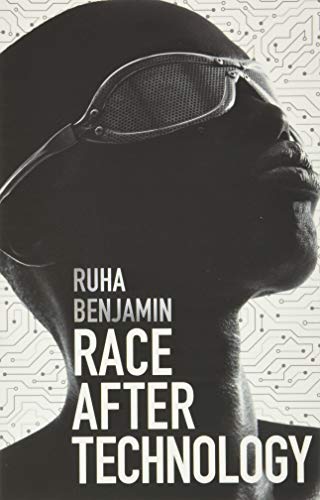
Race After Technology: Abolitionist Tools for the New Jim Code

Race After Technology: Abolitionist Tools for the New Jim Code

by Ruha Benjamin

star4.3

Sociologist Ruha Benjamin coins the term the New Jim Code to describe how emerging technologies encode racial hierarchies under the guise of innovation, from biased facial recognition to discriminatory hiring algorithms to predictive policing tools that target Black communities. She draws on case studies, historical analysis, and speculative design to argue for abolitionist approaches to technology that dismantle rather than reform discriminatory systems.

Published:
Pages:
172
Buy on Amazon

In the Conversation

In this collection, Race After Technology: Abolitionist Tools for the New Jim Code references 4 other books.

It draws on The New Jim Crow: Mass Incarceration in the Age of Colorblindness, How to Be an Antiracist and The Age of Surveillance Capitalism.

Scroll down to read the exact passages where other authors reference this book and what they say about it.

What This Book Draws On

4

The books Benjamin references and why each one mattered to the argument.

Engages with Kendi's How to Be an Antiracist framework to argue that technology design must be actively antiracist rather than merely race-neutral, since neutral design defaults to encoding existing racial hierarchies

How to Be an Antiracist

References

How to Be an Antiracist

by Ibram X. Kendi

Buy

Builds on Zuboff's The Age of Surveillance Capitalism analysis of data extraction to show how surveillance capitalism disproportionately targets communities of color through predictive policing and credit scoring algorithms

The Age of Surveillance Capitalism

References

The Age of Surveillance Capitalism

by Shoshana Zuboff

Buy

Extends Norman's The Design of Everyday Things concept of affordances to argue that technological affordances are racialized, with design choices systematically enabling surveillance of Black and Brown communities while protecting white ones

The Design of Everyday Things

References

The Design of Everyday Things

by Don Norman

Buy

What Other Authors Say About It

No books citing this title yet.

Intellectual Lineage

How ideas flow through the citation network. Ancestors are books this title builds on; descendants are books that build on it.

Unexpected Connections

Books from completely different categories that share citation overlap with this one. These are the reads you would not find by browsing a single shelf.

If you liked this, try

Books with the highest citation overlap within the same categories.

Citation Network

This book and its direct connections. Hover a node to see its title, click to visit.

Books this book cites
Books that cite this book
Larger dot = more connections
The Design of Everyday T…

Hover a node to highlight its connections. Click to open the book page. Node size reflects total citation links.