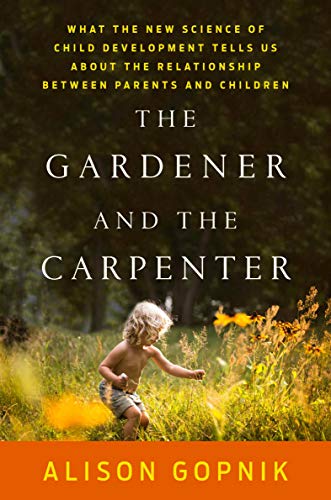
The Gardener and the Carpenter: What the New Science of Child Development Tells Us About the Relationship Between Parents and Children

The Gardener and the Carpenter: What the New Science of Child Development Tells Us About the Relationship Between Parents and Children

by Alison Gopnik

star3.78

Gopnik, a leading developmental psychologist at UC Berkeley, argues that the modern concept of goal-directed parenting is misguided, using the metaphor of a carpenter who builds a product versus a gardener who cultivates an ecosystem. Drawing on evolutionary biology, cognitive science, and her own research on children's learning, she demonstrates that children are designed by evolution to explore, play, and learn through variability rather than be shaped toward predetermined outcomes.

Published:
Pages:
320
Buy on Amazon

In the Conversation

In this collection, The Gardener and the Carpenter: What the New Science of Child Development Tells Us About the Relationship Between Parents and Children references 3 other books.

It draws on How the Mind Works, The Blank Slate and Flow.

Scroll down to read the exact passages where other authors reference this book and what they say about it.

What This Book Draws On

3

The books Gopnik references and why each one mattered to the argument.

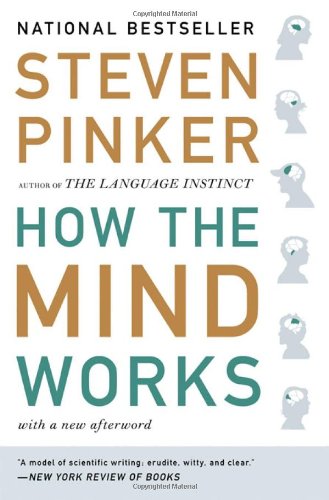
Gopnik engages extensively with Pinker's How the Mind Works on the evolutionary psychology of childhood, while challenging his nativist emphasis by showing how children's brains are specifically designed for flexible learning through exploration and play

How the Mind Works

References

How the Mind Works

by Steven Pinker

Buy

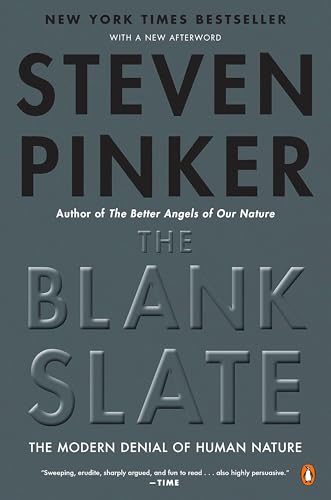
Gopnik responds to Pinker's Blank Slate argument about nature versus nurture, offering a third way: children are neither blank slates nor rigidly programmed, but evolved learning systems whose development depends on the rich, variable environments that caregiving provides

The Blank Slate

References

The Blank Slate

by Steven Pinker

Buy

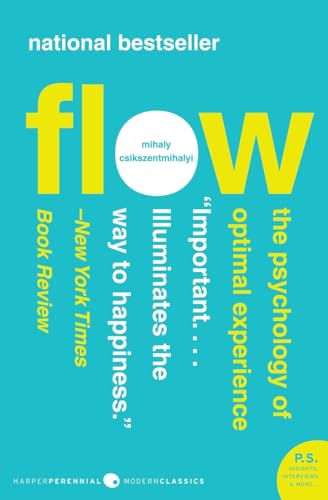
Gopnik draws on Csikszentmihalyi's flow research to explain how children's free play produces states of deep exploratory engagement that are essential for developing cognitive flexibility and creative problem-solving

Flow

References

Flow

by Mihaly Csikszentmihalyi

Buy

What Other Authors Say About It

No books citing this title yet.

Intellectual Lineage

How ideas flow through the citation network. Ancestors are books this title builds on; descendants are books that build on it.

Unexpected Connections

Books from completely different categories that share citation overlap with this one. These are the reads you would not find by browsing a single shelf.

If you liked this, try

Books with the highest citation overlap within the same categories.

Citation Network

This book and its direct connections. Hover a node to see its title, click to visit.

Books this book cites
Books that cite this book
Larger dot = more connections
Flow

Hover a node to highlight its connections. Click to open the book page. Node size reflects total citation links.