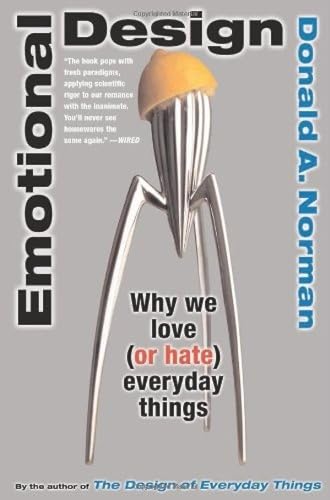
Emotional Design: Why We Love (or Hate) Everyday Things

Emotional Design: Why We Love (or Hate) Everyday Things

by Don Norman

star3.96

In his follow-up to The Design of Everyday Things, Don Norman argues that attractive things actually work better because positive emotions broaden cognition and foster creative problem-solving. He introduces a three-level framework of emotional processing, visceral, behavioural, and reflective, that explains why users develop deep attachments to certain products. The book bridges cognitive science and design practice, showing why aesthetics and emotion are not luxuries but essential components of good design.

Published:
Pages:
272
Buy on Amazon

In the Conversation

In this collection, Emotional Design: Why We Love (or Hate) Everyday Things references 3 other books.

It draws on The Design of Everyday Things, Flow and Emotional Intelligence.

Scroll down to read the exact passages where other authors reference this book and what they say about it.

What This Book Draws On

3

The books Norman references and why each one mattered to the argument.

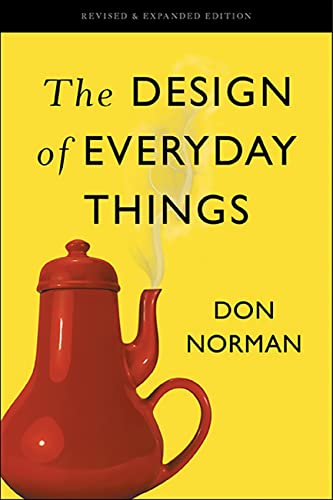
Norman explicitly extends his own work from The Design of Everyday Things, arguing that while usability is necessary it is insufficient, emotional response is equally critical to good design

The Design of Everyday Things

References

The Design of Everyday Things

by Don Norman

Buy

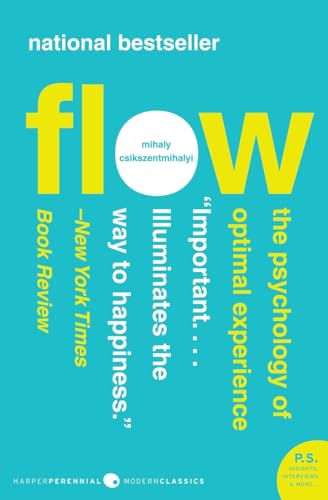
Norman references Csikszentmihalyi's Flow theory to explain how the behavioural level of emotional processing relates to the enjoyment users experience during well-designed interactions

Flow

References

Flow

by Mihaly Csikszentmihalyi

Buy

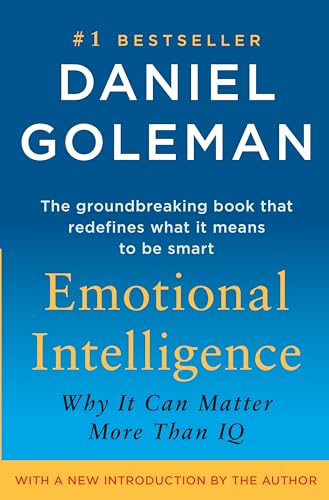
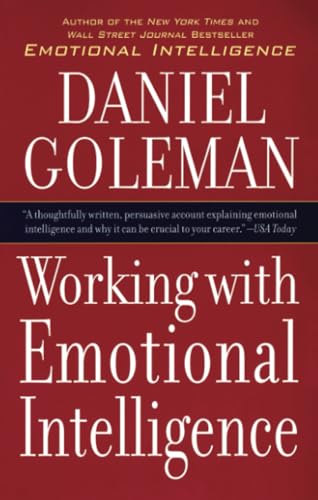
The book draws on Goleman's Emotional Intelligence framework when discussing how emotions are not separate from cognition but integral to how people evaluate and interact with designed objects

Emotional Intelligence

References

Emotional Intelligence

by Daniel Goleman

Buy

What Other Authors Say About It

No books citing this title yet.

Intellectual Lineage

How ideas flow through the citation network. Ancestors are books this title builds on; descendants are books that build on it.

Unexpected Connections

Books from completely different categories that share citation overlap with this one. These are the reads you would not find by browsing a single shelf.

If you liked this, try

Books with the highest citation overlap within the same categories.

Citation Network

This book and its direct connections. Hover a node to see its title, click to visit.

Books this book cites
Books that cite this book
Larger dot = more connections
FlowEmotional Intelligence

Hover a node to highlight its connections. Click to open the book page. Node size reflects total citation links.