Reading Guide

Master Your Health

The science of sleep, nutrition, stress, and lasting vitality

Your body is not a machine you can ignore while your brain does the 'real' work. Every cognitive function you value, including focus, creativity, emotional regulation, and decision making, depends on your physical health. This guide starts with the foundations (sleep and stress), moves into nutrition and exercise, and finishes with the body's deeper systems. The order is deliberate: sleep is the highest leverage intervention, so you fix that first.

Who is this for

This guide is for knowledge workers, founders, and busy professionals who have been neglecting their bodies while optimising everything else. It suits anyone who suspects that their energy, focus, and mood are being undermined by poor sleep, bad food, or chronic stress. You do not need a science background; these books are written for general audiences and backed by rigorous research.

Time to complete

About 7 weeks at one book per week

Prerequisites

None

Phase 1: Sleep and Stress

These are the two foundations. Get sleep wrong and nothing else matters; let stress run unchecked and your body starts breaking down in ways you will not notice until the damage is serious. Fix these first.

  1. Why We Sleep1

    Why We Sleep

    by Matthew Walker

    Matthew Walker's book on sleep is the most important health book of the last decade. He presents overwhelming evidence that sleep deprivation impairs every system in your body: immune function, memory consolidation, emotional regulation, metabolic health, and cancer risk. Starting here is non negotiable because sleep is the single highest leverage health intervention available, and most people are getting it catastrophically wrong.

    Key takeaway

    Eight hours of sleep is not optional or lazy. It is the foundation on which every other health behaviour depends, and no amount of caffeine or willpower can substitute for it.
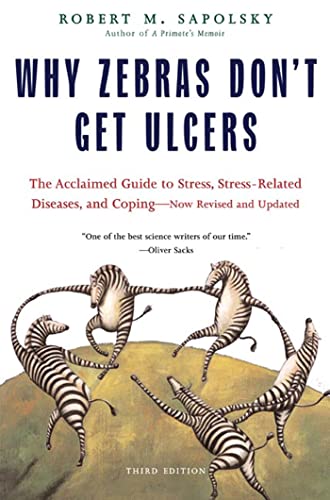
  2. Why Zebras Don't Get Ulcers: The Acclaimed Guide to Stress, Stress-Related Diseases, and Coping2

    Why Zebras Don't Get Ulcers: The Acclaimed Guide to Stress, Stress-Related Diseases, and Coping

    by Robert Sapolsky

    Robert Sapolsky is a Stanford neuroendocrinologist who spent decades studying stress in both baboons and humans. This book explains exactly what chronic stress does to your body: it suppresses your immune system, damages your cardiovascular system, impairs memory, and accelerates ageing. After Walker shows you what sleep deprivation costs, Sapolsky shows you what chronic stress costs. Together they establish the two biggest threats to your health that you are probably ignoring.

    Key takeaway

    Short term stress is adaptive and useful. Chronic psychological stress, the kind most modern humans experience, activates the same physiological response without the physical release, and it is quietly destroying your health.

Phase 2: Nutrition and Movement

With sleep and stress sorted, nutrition and exercise become the next highest leverage interventions. These books cut through the noise of fad diets and fitness trends to give you the evidence based fundamentals.

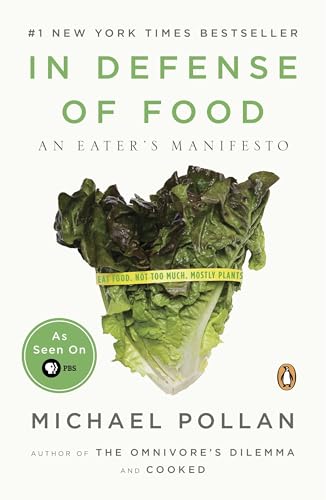
  1. In Defense of Food: An Eater's Manifesto3

    In Defense of Food: An Eater's Manifesto

    by Michael Pollan

    Michael Pollan surveys the wreckage of nutritional science and the food industry and arrives at a devastatingly simple conclusion: eat food, not too much, mostly plants. In a world drowning in conflicting dietary advice, this book is a lifeline of clarity. It comes after the sleep and stress books because once you are sleeping properly and managing stress, nutrition is the next domino.

    Key takeaway

    Do not eat anything your great grandmother would not recognise as food. The Western diet, not any single nutrient, is the problem.

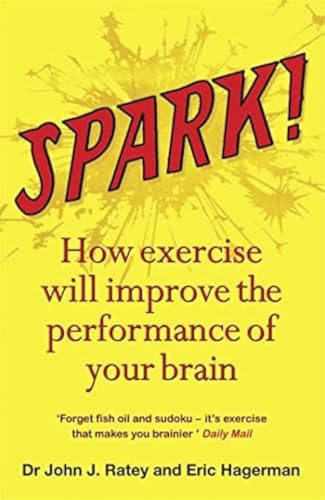
  2. Spark: The Revolutionary New Science of Exercise and the Brain4

    Spark: The Revolutionary New Science of Exercise and the Brain

    by John Ratey

    John Ratey presents the neuroscience case for exercise as the single most powerful tool for brain health. He shows that exercise is not just about fitness; it directly improves learning, memory, mood, and attention. After Pollan fixes what you put in, Ratey shows you why moving your body is not optional for cognitive performance. This book will change how you think about your morning run.

    Key takeaway

    Exercise is the most potent and underutilised antidepressant, anxiolytic, and cognitive enhancer available. Even moderate activity rewires your brain for better function.

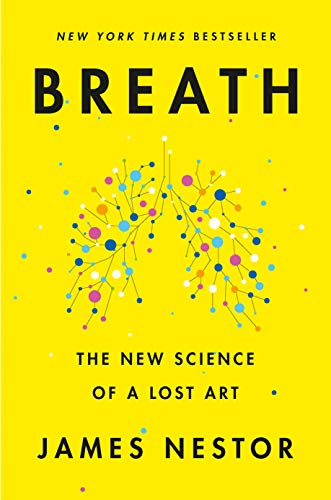
  3. Breath: The New Science of a Lost Art5

    Breath: The New Science of a Lost Art

    by James Nestor

    James Nestor spent years investigating the science and history of breathing, and his findings are startling. How you breathe affects your sleep, your stress response, your energy, and even the structure of your face. It connects beautifully to every book that came before: it improves sleep (Walker), reduces stress (Sapolsky), and enhances exercise performance (Ratey). It is the overlooked intervention that ties everything together.

    Key takeaway

    Breathing through your nose, slowly and deeply, is one of the simplest and most powerful health interventions available, and most people do it wrong all day long.

Phase 3: The Deeper Systems

Once the fundamentals are in place, these books take you deeper into how the body actually works and how to sustain your health over a lifetime. They give you the conceptual framework to evaluate any new health claim that comes along.

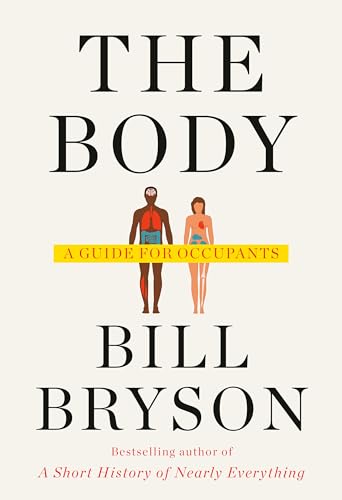
  1. The Body: A Guide for Occupants6

    The Body: A Guide for Occupants

    by Bill Bryson

    Bill Bryson takes you on a guided tour of the human body, from the brain to the gut to the immune system, with his trademark wit and clarity. This is the book that ties together everything you have learned about sleep, stress, nutrition, and exercise by showing you the astonishing system they all serve. Reading it here gives you the big picture context that makes all the specific advice from earlier books click into place.

    Key takeaway

    Your body is vastly more complex and more resilient than you think. Understanding even the basics of how it works makes you a better steward of your own health.

  2. The Circadian Code: Lose Weight, Supercharge Your Energy, and Transform Your Health from Morning to Midnight7

    The Circadian Code: Lose Weight, Supercharge Your Energy, and Transform Your Health from Morning to Midnight

    by Satchin Panda

    Satchin Panda's research on circadian rhythms reveals that when you eat, sleep, and exercise matters almost as much as what you eat and how you move. This book is the perfect capstone because it integrates sleep science (Walker), nutrition (Pollan), and exercise (Ratey) into a single time based framework. It gives you the scheduling architecture for all the habits you have been building.

    Key takeaway

    Your body runs on a clock. Aligning your eating, sleeping, and activity to your circadian rhythm amplifies every other health intervention you make.

Common mistakes to avoid

  • Optimising supplements and biohacks before you have fixed sleep, nutrition, and exercise. The basics account for 90% of the benefit; do not skip them in pursuit of marginal gains.

  • Reading Why We Sleep and then feeling anxious about not sleeping enough, which ironically makes sleep worse. Use the information to adjust your habits, not to catastrophise.

  • Treating nutrition as a religion. Pollan\'s framework is deliberately flexible because rigidity around food creates its own problems. Eat real food, do not obsess over macros.

  • Exercising intensely without recovering properly. Ratey\'s book makes a case for exercise, not for overtraining. Rest days and sleep are part of the programme.

  • Assuming that one intervention (like breathing exercises or fasting windows) will compensate for ignoring the fundamentals. Health is a system; each element supports the others.

How to work through this guide

If you change nothing else, fix your sleep. Read Walker's book and implement his advice for two weeks before touching anything else. The returns on proper sleep are so dramatic that they make every subsequent change easier. Pollan and Ratey can be read in either order depending on whether nutrition or exercise feels more urgent to you. Nestor's book on breathing is short and immediately actionable; it pairs well with the stress chapter in Sapolsky. The Bryson and Panda books at the end are best read once you have the foundations in place, as they deepen your understanding rather than introducing new habits. The minimum effective dose is Walker plus Pollan plus Ratey.

BookGraph is an Amazon Associate. If you buy through the links above we may earn a small commission at no extra cost to you. All book selections and editorial reasoning are our own.

Other Reading Guides