Reading Guide

Find Meaning & Purpose

Ancient wisdom and modern insight for the question that won't go away

The question of meaning is the oldest and most persistent question humans ask. This guide does not pretend to answer it for you, but it gives you the best frameworks for working it out yourself. It begins with the Western tradition of examining your own life, moves through Stoic and existentialist perspectives, and finishes with Eastern approaches that challenge the very self doing the searching. The reading order is designed so that each book complicates and deepens the one before it.

Who is this for

This guide is for anyone who has achieved some external success but feels a quiet hollowness underneath. It suits people in career transitions, existential funks, or simply those who want to think more carefully about what a good life actually looks like. You do not need any background in philosophy; you just need the willingness to sit with uncomfortable questions.

Time to complete

About 7 weeks at one book per week

Prerequisites

None

Phase 1: Examine Your Life

Before you can find meaning, you need to see clearly. These books strip away assumptions and force you to confront what you actually value, not what you have been told to value.

  1. Man's Search for Meaning1

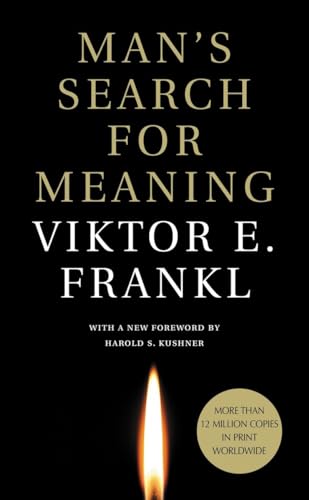
    Man's Search for Meaning

    by Viktor Frankl

    Viktor Frankl survived Auschwitz and wrote this book in nine days. It is the most direct, experiential answer to the question of meaning ever published. Starting here grounds the entire guide in lived reality rather than abstraction. You cannot read Frankl and stay in your head.

    Key takeaway

    Meaning is not something you find; it is something you create through your response to whatever life throws at you.

  2. Four Thousand Weeks2

    Four Thousand Weeks

    by Oliver Burkeman

    Oliver Burkeman takes the modern obsession with productivity and time management and turns it inside out. He argues that accepting your radical finitude is the starting point for a meaningful life, not an obstacle to one. After Frankl's intensity, Burkeman provides a gentler but equally honest look at how most of us avoid the question of meaning by staying busy.

    Key takeaway

    You will never get everything done. The sooner you accept that, the sooner you can choose what actually matters.

Phase 2: Build Inner Resilience

Once you see what matters, you need the psychological architecture to pursue it through difficulty, setback, and distraction. The Stoics wrote the best operating manual for this, and their advice is shockingly practical two thousand years later.

  1. Meditations3

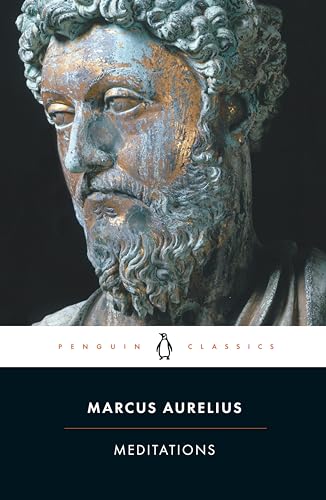
    Meditations

    by Marcus Aurelius

    Marcus Aurelius was the most powerful man in the world when he wrote these private journal entries. He never intended them for publication, which is exactly why they are so honest. Reading a Roman emperor wrestle with ego, anger, and mortality makes you realise these struggles are universal. This belongs after Frankl because both men faced extreme circumstances and both chose meaning over despair.

    Key takeaway

    You cannot control what happens to you, but you have absolute authority over how you interpret and respond to it.

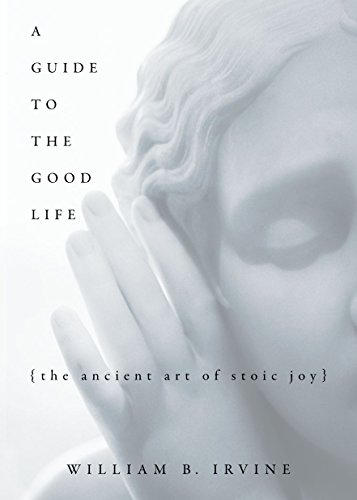
  2. A Guide to the Good Life4

    A Guide to the Good Life

    by William Irvine

    William Irvine translates Stoic philosophy into a practical programme you can actually follow. Where Marcus Aurelius gives you the raw journal, Irvine gives you the structured approach: negative visualisation, the trichotomy of control, and voluntary discomfort. It is the best modern bridge between ancient Stoicism and daily life.

    Key takeaway

    Practising gratitude for what you have and preparing for what you might lose is not pessimism; it is the foundation of tranquillity.

Phase 3: Expand the Frame

Western philosophy tends to strengthen the self. Eastern traditions ask whether that self is even real. This phase introduces perspectives that can dissolve problems the earlier books tried to solve, offering a fundamentally different relationship with meaning.

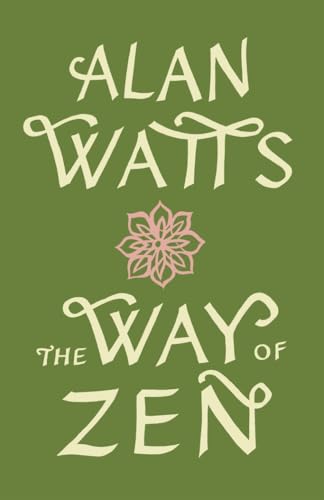
  1. The Way of Zen5

    The Way of Zen

    by Alan Watts

    Alan Watts was the great translator of Eastern philosophy for Western audiences. The Way of Zen is his masterwork, explaining both the history and the practice of Zen Buddhism without dumbing it down or mystifying it. After two phases of building a stronger self, Watts invites you to question whether that project is the point at all.

    Key takeaway

    The relentless pursuit of self improvement can itself become the obstacle. Sometimes the answer is to stop grasping.

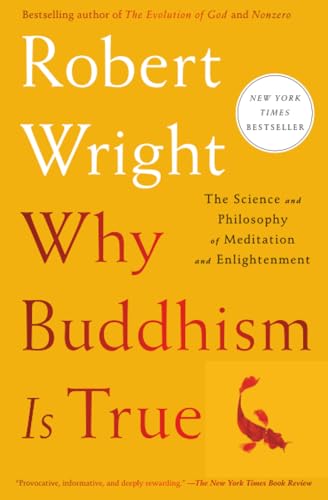
  2. Why Buddhism Is True: The Science and Philosophy of Meditation and Enlightenment6

    Why Buddhism Is True: The Science and Philosophy of Meditation and Enlightenment

    by Robert Wright

    Robert Wright brings evolutionary psychology and neuroscience to bear on Buddhist claims about the nature of the self and suffering. If Watts opened the door to Eastern thinking, Wright gives you the scientific case for walking through it. This book is especially valuable for sceptical, analytically minded readers who want evidence alongside insight.

    Key takeaway

    The feelings and impulses you think of as 'you' are products of natural selection, not reliable guides to truth. Meditation helps you see this directly.

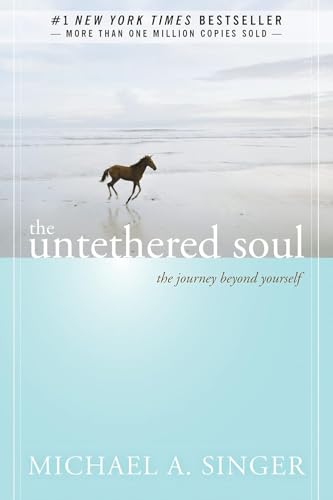
  3. The Untethered Soul: The Journey Beyond Yourself7

    The Untethered Soul: The Journey Beyond Yourself

    by Michael A. Singer

    Michael Singer approaches the same territory from a more personal, experiential angle. The Untethered Soul teaches you to observe your own mental chatter without identifying with it. It is the most accessible book on inner freedom in this guide and serves as a practical capstone to the philosophical journey you have taken.

    Key takeaway

    You are not your thoughts. Learning to step back and watch them without reacting is the beginning of genuine inner freedom.

Common mistakes to avoid

  • Treating philosophy as an intellectual hobby rather than a practice. Reading about Stoicism without actually doing the exercises is like reading about exercise without moving your body.

  • Assuming that meaning must come from your career. Frankl found meaning in a concentration camp. The source matters far less than the commitment.

  • Bouncing between traditions so quickly that none of them have time to change you. Spend at least a month with each perspective before moving on.

  • Using philosophical reading as another form of procrastination, endlessly preparing to live instead of actually living.

  • Dismissing Eastern philosophy because it sounds \'unscientific.\' Wright\'s book exists precisely to address that objection with rigorous evidence.

How to work through this guide

If you are in crisis or transition, start with Frankl. If you are more in a reflective mood, start with Burkeman. The Stoic books in Phase 2 are probably the most immediately applicable to daily life, so if you want quick returns, you could read those first and circle back. The Eastern books in Phase 3 are best appreciated after you have spent time with the Western perspective; they land harder when you have something to contrast them against. The minimum effective dose is Frankl plus one Stoic book plus Watts.

BookGraph is an Amazon Associate. If you buy through the links above we may earn a small commission at no extra cost to you. All book selections and editorial reasoning are our own.

Other Reading Guides