Reading Guide

Build Great Products

From user insight to shipped product, the complete reading path

Most product failures are not failures of execution; they are failures of understanding. You built the wrong thing, or you built the right thing in a way nobody could use. This guide starts with how to discover what customers actually need, moves into how to design for real human behaviour, and finishes with how to ship and iterate at speed. The order matters because each phase builds on the thinking from the one before it.

Who is this for

This guide is for product managers, designers, and founders who want to build things people actually use. It suits anyone who has shipped something that flopped and wants to understand why, or anyone stepping into a product role for the first time. If you care more about solving real problems than following a process, start here.

Time to complete

About 7 weeks at one book per week

Prerequisites

None

Phase 1: Understand What to Build

Before you write a line of code or sketch a wireframe, you need to know whether anyone actually wants what you are planning. These books teach you how to find real problems, talk to customers without leading them, and validate demand before you commit resources.

  1. Inspired1

    Inspired

    by Marty Cagan

    Marty Cagan spent decades at eBay, HP, and Netscape watching product teams succeed and fail. This book lays out the difference between feature teams (which just build what stakeholders request) and empowered product teams (which solve problems). It is the single best starting point because it reframes what product management actually is.

    Key takeaway

    The job is not to gather requirements and write tickets. The job is to discover a solution that is valuable, usable, feasible, and viable.
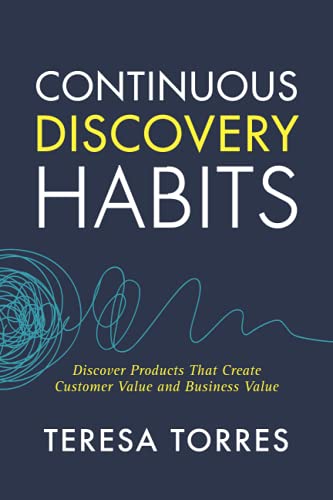
  2. Continuous Discovery Habits: Discover Products that Create Customer Value and Business Value2

    Continuous Discovery Habits: Discover Products that Create Customer Value and Business Value

    by Teresa Torres

    Teresa Torres gives you the weekly habits that keep you connected to customers throughout the entire product lifecycle, not just during a discovery sprint. Where Cagan gives you the philosophy, Torres gives you the repeatable process. Reading this second means you already understand why continuous discovery matters.

    Key takeaway

    Discovery is not a phase; it is a weekly discipline of interviewing, mapping opportunities, and running small experiments.

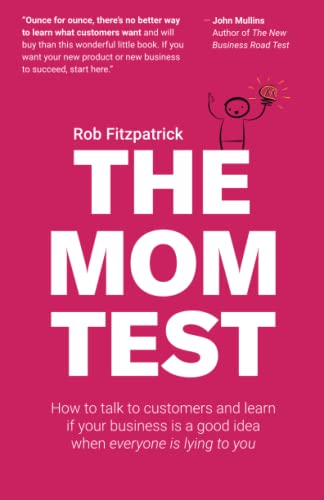
  3. The Mom Test3

    The Mom Test

    by Rob Fitzpatrick

    Rob Fitzpatrick wrote the shortest, most practical guide to customer conversations ever published. Most founders and PMs ask leading questions and get false positives. This tiny book teaches you how to stop pitching and start listening. It pairs perfectly with Continuous Discovery Habits because it sharpens the exact skill Torres assumes you have.

    Key takeaway

    Never ask people if they would use your product. Instead, ask about their life and let the evidence speak for itself.

Phase 2: Design for Humans

Once you know what to build, you need to build it in a way that respects how people actually think, see, and behave. These books bridge the gap between understanding the problem and crafting a solution that feels obvious to the user.

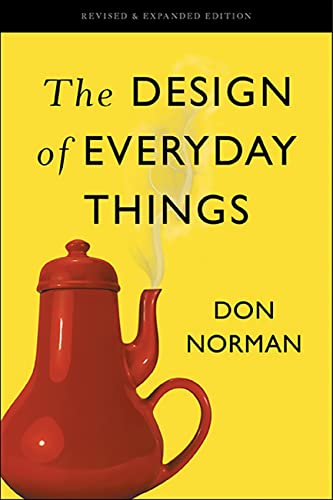
  1. The Design of Everyday Things4

    The Design of Everyday Things

    by Don Norman

    Don Norman's classic is the foundation of user centred design. He explains why doors confuse people and why the fault lies with the designer, not the user. You need this mental model before you touch any design tool because it teaches you to see your own product through a beginner's eyes.

    Key takeaway

    Good design makes the correct action obvious. If users need a manual, the design has failed.

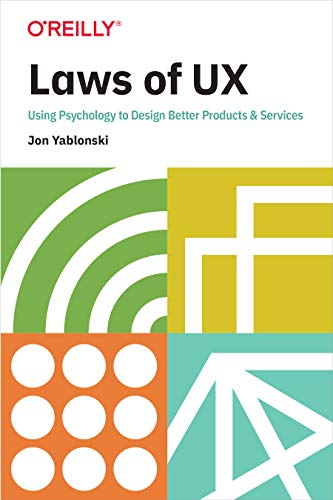
  2. Laws of UX: Using Psychology to Design Better Products & Services5

    Laws of UX: Using Psychology to Design Better Products & Services

    by Jon Yablonski

    Jon Yablonski distils decades of psychological research into concrete laws that govern how people interact with interfaces. Where Norman gives you the philosophy, Yablonski gives you the specific cognitive principles you can apply on Monday morning. Each law is backed by research and illustrated with real product examples.

    Key takeaway

    Users have predictable cognitive limits. Design with those limits, not against them, and your product will feel intuitive.

Phase 3: Ship and Scale

Knowing what to build and how to design it means nothing if you cannot deliver it reliably and learn from what happens next. This phase covers the organisational and operational side of getting products out the door and improving them over time.

  1. Escaping the Build Trap: How Effective Product Management Creates Real Value6

    Escaping the Build Trap: How Effective Product Management Creates Real Value

    by Melissa Perri

    Melissa Perri diagnoses the most common organisational disease in product companies: the build trap, where teams measure success by output (features shipped) rather than outcomes (problems solved). After reading the discovery and design books, you will recognise the trap instantly. This book shows you how to restructure your team's work around outcomes.

    Key takeaway

    Stop measuring progress by the number of features released. Measure it by the customer behaviours that change.

  2. Sprint7

    Sprint

    by Jake Knapp

    Jake Knapp's Sprint method, developed at Google Ventures, gives you a five day process for going from question to tested prototype. It is the most practical book on rapid validation ever written. You read it last because by now you understand discovery, design, and outcomes, so you can see exactly where a sprint fits into your workflow.

    Key takeaway

    You can test almost any idea with a realistic prototype and five target customers in a single week.

Common mistakes to avoid

  • Skipping customer conversations because you think you already know what users want. You almost certainly do not, and the best product managers talk to customers every single week.

  • Treating design as decoration that happens after the \'real\' product decisions are made. Design is the product decision.

  • Falling in love with a framework (Jobs to be Done, Design Sprints, OKRs) and applying it rigidly instead of adapting it to your context.

  • Measuring success by velocity or features shipped instead of whether customer behaviour actually changed.

  • Reading all seven books and doing nothing. Pick one technique from one book and try it this week.

How to work through this guide

If you only have time for two books, read Inspired and The Mom Test. Together they give you the philosophy and the fieldwork skill. The design books are essential if you are making interface decisions yourself, but can be deferred if you work alongside a strong designer. Read Sprint last; it is a method book that makes more sense once you have the conceptual foundation. The most important thing is to start talking to real users before you read another page.

BookGraph is an Amazon Associate. If you buy through the links above we may earn a small commission at no extra cost to you. All book selections and editorial reasoning are our own.

Other Reading Guides