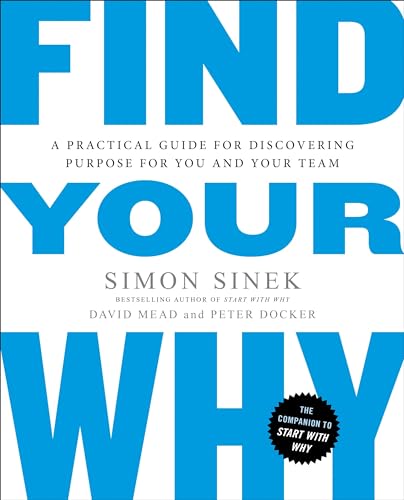
Find Your Why

Find Your Why

by Simon Sinek

star4.5

Co-written with David Mead and Peter Docker, this is Sinek's explicit workbook companion to Start with Why, giving teams and individuals a step-by-step process to uncover their purpose through story-mining exercises. Sinek argues that purpose is not invented but discovered by pattern-matching the moments that already moved you.

Published:
Pages:
256
Buy on Amazon

In the Conversation

In this collection, Find Your Why references 3 other books.

It draws on Start with Why, The Five Dysfunctions of a Team and Good to Great.

Scroll down to read the exact passages where other authors reference this book and what they say about it.

What Find Your Why Draws On

3

The books Sinek references and why each one mattered to the argument.

Positioned explicitly as the practical sequel to Sinek's Start with Why, applying the Golden Circle to individuals and teams who want to articulate their own why

Start with Why

References

Start with Why

by Simon Sinek

Buy

Builds on Lencioni's Five Dysfunctions framework, noting that trust is the prerequisite for the vulnerable storytelling that surfaces a team's why

The Five Dysfunctions of a Team

References

The Five Dysfunctions of a Team

by Patrick Lencioni

Buy

References Collins' Good to Great hedgehog concept when guiding readers to articulate a why that sits at the intersection of passion, skill, and service

Good to Great

References

Good to Great

by Jim Collins

Buy

What Other Authors Say About It

No books citing this title yet.

Intellectual Lineage

How ideas flow through the citation network. Ancestors are books this title builds on; descendants are books that build on it.

If you liked this, try

Books with the highest citation overlap within the same categories.

Citation Network

This book and its direct connections. Hover a node to see its title, click to visit.

Books this book cites
Books that cite this book
Larger dot = more connections
Good to Great

Hover a node to highlight its connections. Click to open the book page. Node size reflects total citation links.