Robert Sapolsky

Robert Sapolsky

Neuroscientist, Primatologist

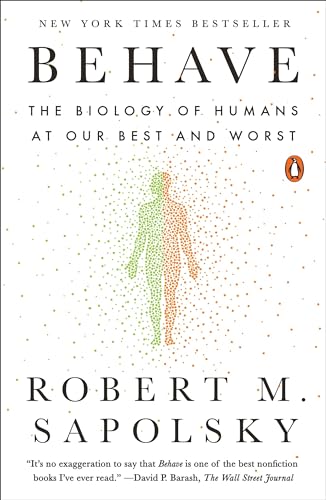
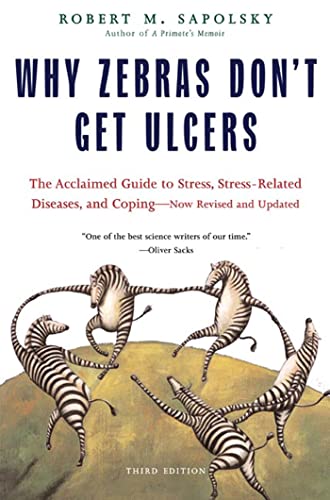
Robert Sapolsky is an American neuroendocrinologist and professor of biology and neurology at Stanford University, renowned for his research on stress and behaviour. His book Behave: The Biology of Humans at Our Best and Worst provided a comprehensive account of why humans act the way they do, spanning neuroscience, genetics, and evolutionary biology. His earlier book Why Zebras Don't Get Ulcers became a classic guide to understanding stress and its effects on the body.

2
Books Written
7
Books Recommended

Books by Robert Sapolsky

Behave by Robert Sapolsky

Behave

by Robert Sapolsky

star4.4

Sapolsky traces every human behaviour, from aggression to empathy, through biology, from the millisecond before an act back to evolutionary pressures millions of years ago.

sciencepsychology
Why Zebras Don't Get Ulcers: The Acclaimed Guide to Stress, Stress-Related Diseases, and Coping by Robert Sapolsky

Why Zebras Don't Get Ulcers: The Acclaimed Guide to Stress, Stress-Related Diseases, and Coping

by Robert Sapolsky

star4.6

Sapolsky argues that humans uniquely suffer stress-related disease because we activate the fight-or-flight response over chronic psychological threats that zebras never face. He traces how sustained glucocorticoid elevation damages the cardiovascular, immune, reproductive, and nervous systems.

healthscience

Most Recommended by Robert

The books Robert Sapolsky references, cites, and recommends most frequently.

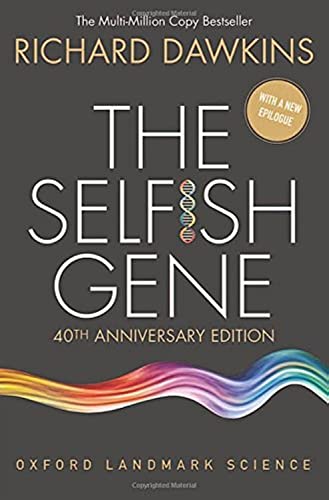
The Selfish Gene by Richard Dawkins

The Selfish Gene

by Richard Dawkins

star4.2

Dawkins reframes evolution from the organism's perspective to the gene's. Bodies are survival machines built by genes competing to replicate - a view that transformed modern biology.

science
Thinking, Fast and Slow by Daniel Kahneman

Thinking, Fast and Slow

by Daniel Kahneman

star4.2

Kahneman reveals that our minds run on two systems: fast intuition and slow deliberation. Most errors in judgement come from trusting System 1 when the situation demands System 2's careful analysis.

psychology
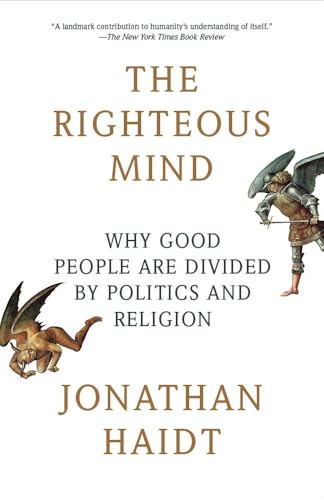
The Righteous Mind by Jonathan Haidt

The Righteous Mind

by Jonathan Haidt

star4.2

Haidt argues that moral judgements are driven by intuition, not reason. We are fundamentally groupish, and understanding our innate moral foundations explains why good people disagree politically.

psychologyphilosophy
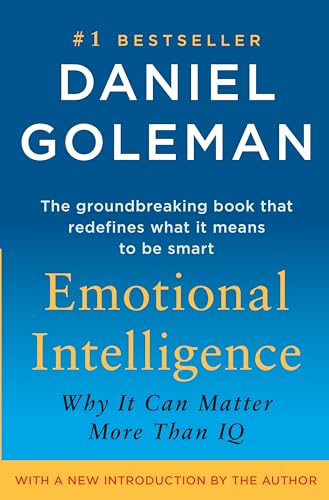
Emotional Intelligence by Daniel Goleman

Emotional Intelligence

by Daniel Goleman

star4

Goleman argues that EQ matters more than IQ for success. Self-awareness, empathy, and emotional regulation are skills that can be developed and that predict real-world outcomes.

psychologyself-help
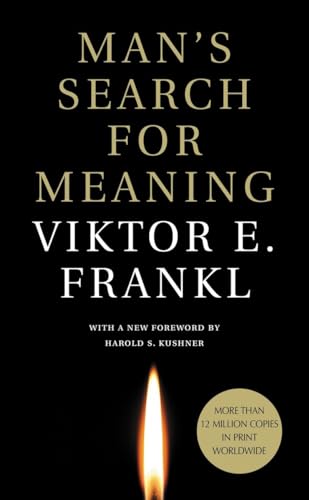
Man's Search for Meaning by Viktor Frankl

Man's Search for Meaning

by Viktor Frankl

star4.7

Frankl survived Auschwitz and concluded that meaning, not pleasure or power, sustains us through suffering. His logotherapy argues we can find purpose in any circumstance.

psychologyphilosophy
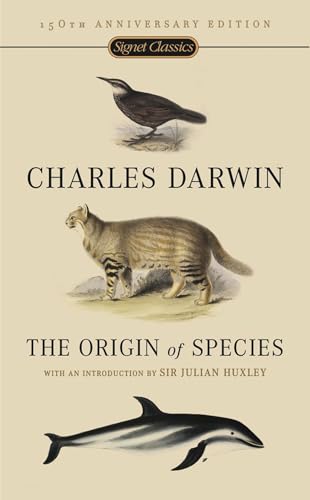
The Origin of Species by Charles Darwin

The Origin of Species

by Charles Darwin

star4

Darwin lays out the evidence that species evolve through natural selection, where small heritable variations accumulate over generations. The theory unified biology and changed how we understand life.

science
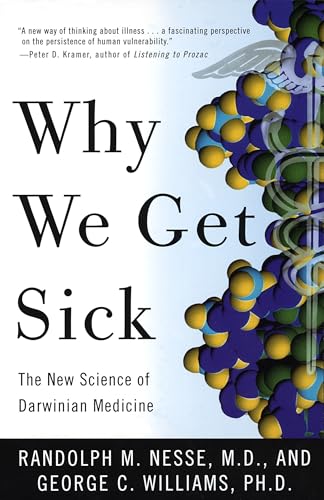
Why We Get Sick by Randolph M. Nesse

Why We Get Sick

by Randolph M. Nesse

star4.1

Nesse applies Darwinian thinking to medicine, arguing symptoms like fever and anxiety are evolved defenses, not malfunctions. Evolution explains why we're vulnerable to disease.

science

Influence Map

Who Robert draws from, and who draws from Robert — aggregated across every book in this collection. Counts show the number of citation links, not the depth of each one.

Robert cites most often

  1. 2 links
  2. 1 link
  3. 1 link
  4. 1 link
  5. 1 link
  6. 1 link
  7. 1 link

Authors who cite Robert most often

  1. 1 link
  2. 1 link
  3. 1 link
  4. 1 link
  5. 1 link
  6. 1 link
  7. 1 link
  8. 1 link