Reading Guide

Learn Faster

Evidence-based methods for acquiring hard skills

Everything here draws on the same underlying research about how adults actually acquire expertise. The authors disagree less about the "how" and more about the framing. Read them in order: mindset first (because without it, nothing else sticks), then the research on deliberate practice, then practical application, and finally the important counterarguments about specialisation.

Who is this for

Anyone trying to learn a new skill: a programming language, an instrument, a sport, a language, or a professional discipline. Also useful for teachers, coaches, and anyone who trains others. These books explain the science of how adults actually acquire expertise.

Time to complete

About 5 weeks. Each book covers a different facet of learning.

Prerequisites

None, though readers who have already struggled with learning something hard will get more from the research.

The Mindset Foundation

The biggest barrier to learning is not technique but belief. If you believe talent is fixed, you will give up at the first sign of difficulty. Start here.

  1. Mindset1

    Mindset

    by Carol Dweck

    Start with the mindset prerequisite. Dweck's research shows that people who believe ability is developed through effort (growth mindset) consistently outperform those who believe ability is innate (fixed mindset). Without this reframe, the techniques in the rest of the list will not stick because you will interpret struggle as evidence of inability rather than as the process of learning.

    Key takeaway

    Talent is not fixed. The belief that it is fixed causes people to avoid challenges, hide mistakes, and give up when learning gets hard. Adopt a growth mindset: see effort as the path to mastery, not as evidence of inadequacy.
The Science of Practice

Once your mindset is right, learn how experts actually practice. The research is clear: quantity of practice matters less than quality.

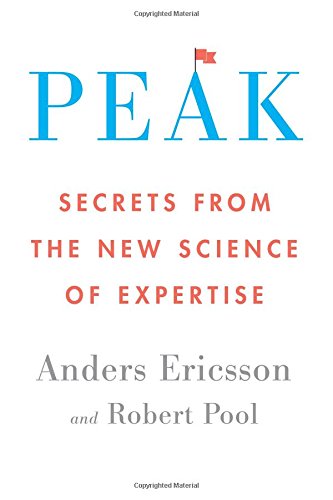
  1. Peak2

    Peak

    by Anders Ericsson

    The book that introduced "deliberate practice" to the popular audience. Ericsson spent decades studying violinists, chess players, and athletes to understand what separates world-class performers from merely good ones. His answer: not talent, not hours, but the quality and structure of practice.

    Key takeaway

    Deliberate practice has four components: a well-defined stretch goal, full concentration, immediate feedback, and frequent repetition with refinement. "Practice" without these elements is just repetition, and repetition alone does not produce improvement.

  2. Ultralearning: Master Hard Skills, Outsmart the Competition, and Accelerate Your Career3

    Ultralearning: Master Hard Skills, Outsmart the Competition, and Accelerate Your Career

    by Scott H. Young

    The most practical guide to teaching yourself a hard skill from scratch. Young documents his own experiments in rapid skill acquisition (the MIT Challenge, learning four languages) and distils them into nine principles. Pairs naturally with Ericsson: same theory, more applied.

    Key takeaway

    Metalearning (learning how to learn a specific subject) is the most underrated step. Before starting, research how experts in this field actually acquired their skills, what the common pitfalls are, and what the optimal practice structure looks like. Ten hours of planning saves a hundred hours of unfocused practice.

The Emotional Journey and the Specialisation Question

Learning is not just cognitive. It is emotional. These books address the lived experience of acquiring mastery, and the provocative question of whether specialisation is always the right path.

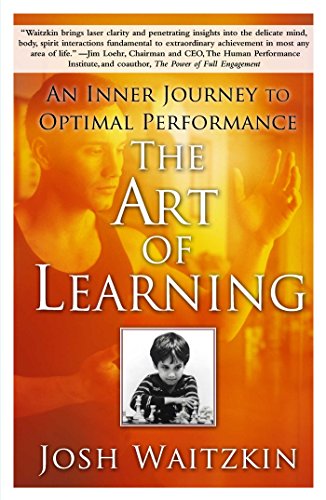
  1. The Art of Learning4

    The Art of Learning

    by Josh Waitzkin

    A more reflective, autobiographical take from someone who became world-class at two unrelated things (chess and martial arts). Waitzkin provides the emotional and philosophical companion to the more scientific books above. Useful for understanding the inner experience of deep practice.

    Key takeaway

    Mastery requires learning to love the process, not the result. The key skill is "making smaller circles": taking a complex skill, isolating its essence, and practising that essence until it becomes intuitive, then expanding outward.

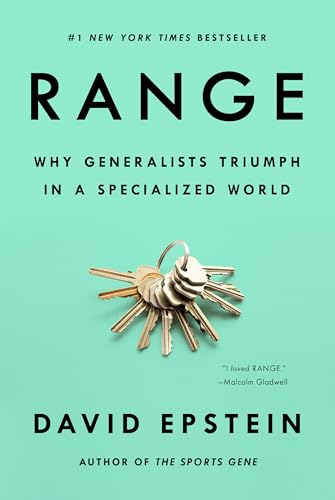
  2. Range5

    Range

    by David Epstein

    A counterargument to the "specialise early" message of the previous books. Epstein presents evidence that late specialisers often outperform early specialisers, especially in complex, unpredictable fields. Read last so you can weigh the trade-off with your eyes open.

    Key takeaway

    In "kind" learning environments (chess, golf) with clear rules and fast feedback, early specialisation works. In "wicked" environments (business, medicine, life) where the rules are unclear, a sampling period of broad exploration before specialising produces better long-term outcomes.

Common mistakes to avoid

  • Skipping the mindset step. If you still believe you are "not a maths person" or "not creative", the practice techniques will not help because you will quit at the first plateau.

  • Confusing deliberate practice with putting in hours. Ten hours of focused, structured practice with feedback produces more improvement than a hundred hours of mindless repetition.

  • Specialising too early in a wicked domain. If you are under 25 and exploring careers, Epstein's book is essential reading. The evidence against early specialisation in complex fields is strong.

  • Ignoring rest and sleep. Learning consolidation happens during sleep. If you practise hard but sleep poorly, you are wasting most of your practice.

How to work through this guide

The first three books are enough to dramatically change how you approach learning a new skill. The last two are useful as correctives: one for the emotional toll of deep practice, one for the question of whether you should be specialising at all. If you only read two, read Dweck and Ericsson. Mindset plus deliberate practice is the minimum effective dose.

BookGraph is an Amazon Associate. If you buy through the links above we may earn a small commission at no extra cost to you. All book selections and editorial reasoning are our own.

Other Reading Guides