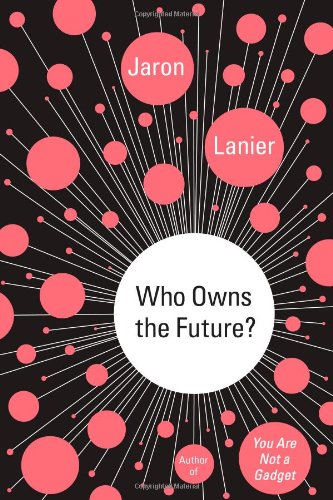
Who Owns the Future?

Who Owns the Future?

by Jaron Lanier

star4.1

Lanier, a computer scientist and early VR pioneer, argues that Silicon Valley's free-services model redistributes wealth upward by monetizing users' data while paying them nothing. The book argues for a micropayments architecture that would restore a middle class by making individuals the owners and sellers of their own digital contributions.

Published:
Pages:
367
Buy on Amazon

In the Conversation

In this collection, Who Owns the Future? references 3 other books and is cited by 1 other book.

It draws on In the Plex: How Google Thinks, Works, and Shapes Our Lives, Steve Jobs and The Master Switch.

It’s picked up by A World Without Email: Reimagining Work in an Age of Communication Overload.

Scroll down to read the exact passages where other authors reference this book and what they say about it.

What This Book Draws On

3

The books Lanier references and why each one mattered to the argument.

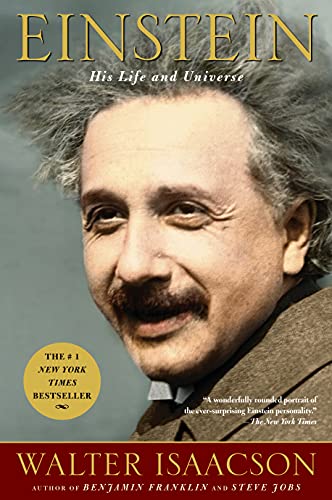
Isaacson's Steve Jobs provides the founder-era context Lanier critiques, contrasting Jobs's product-sales model with the free-services surveillance model that followed

Steve Jobs

References

Steve Jobs

by Walter Isaacson

Buy

Wu's The Master Switch supplies the information-industries cycle theory Lanier extends to argue that platform consolidation recapitulates earlier communications monopolies

The Master Switch

References

The Master Switch

by Tim Wu

Buy

What Other Authors Say About It

1

The exact passages where other authors bring up “Who Owns the Future?” and what they take from it.

Newport traces the origin of this book to encountering Jaron Lanier's Who Owns the Future? at a Barnes & Noble in Bethesda in 2015. "Standing there in the aisle, holding the book, a revelation hit me that all at once seemed to clarify the muddled mass of research and intuitions with which I'd been battling: What if work didn't require email?"

Acknowledgments

Intellectual Lineage

How ideas flow through the citation network. Ancestors are books this title builds on; descendants are books that build on it.

Unexpected Connections

Books from completely different categories that share citation overlap with this one. These are the reads you would not find by browsing a single shelf.

If you liked this, try

Books with the highest citation overlap within the same categories.

Citation Network

This book and its direct connections. Hover a node to see its title, click to visit.

Books this book cites
Books that cite this book
Larger dot = more connections
Steve JobsIn the Plex: How Google …A World Without Email: R…

Hover a node to highlight its connections. Click to open the book page. Node size reflects total citation links.