Reading Guide

Raise Resilient Children

Evidence based parenting that prepares children for the real world

Modern parenting is caught between two failing extremes: the helicopter model that micromanages every risk and the hands off model that provides too little structure. The research points to a third path, one that gives children increasing autonomy within a framework of warmth and clear expectations. This guide starts with the science of child development, moves into practical parenting strategies grounded in neuroscience, and finishes with the broader cultural and technological forces shaping childhood today. The sequence is designed so that each book builds on the conceptual framework established by the ones before it.

Who is this for

This guide is for parents who want to raise capable, emotionally healthy children without veering into overprotection or harsh discipline. It suits new parents looking for a research grounded approach, experienced parents who sense something is not working, and anyone who works with children professionally. You should be open to having your assumptions about parenting challenged by evidence.

Time to complete

About 7 weeks at one book per week

Prerequisites

None

Phase 1: Understand How Children Actually Develop

Before adopting any parenting strategy, you need to understand what the research actually says about how children grow, learn, and build character. These books replace folk wisdom with evidence.

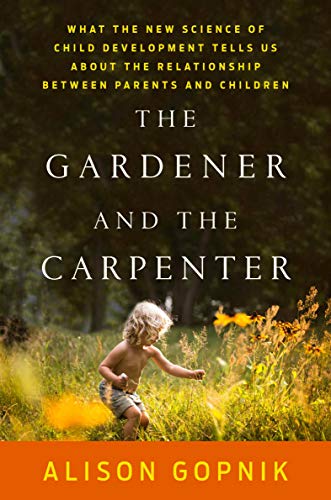
  1. The Gardener and the Carpenter: What the New Science of Child Development Tells Us About the Relationship Between Parents and Children1

    The Gardener and the Carpenter: What the New Science of Child Development Tells Us About the Relationship Between Parents and Children

    by Alison Gopnik

    Gopnik, a developmental psychologist, argues that the modern idea of parenting as a goal directed activity (like carpentry) is fundamentally wrong, and that children develop best when parents act more like gardeners: creating rich environments and then stepping back. This book reframes the entire conversation and belongs first because it challenges the anxious, controlling mindset that so many parents bring to the task. It is both scientifically rigorous and beautifully written.

    Key takeaway

    Children are not raw material to be shaped into a predetermined product; they are living systems that develop best when given a rich environment, secure relationships, and the freedom to explore.
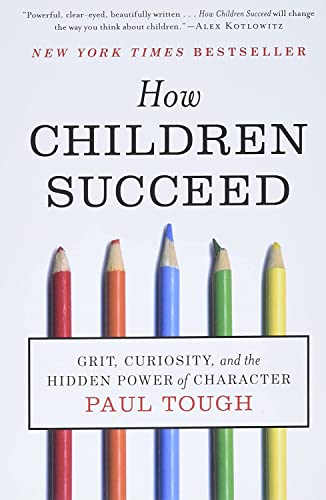
  2. How Children Succeed: Grit, Curiosity, and the Hidden Power of Character2

    How Children Succeed: Grit, Curiosity, and the Hidden Power of Character

    by Paul Tough

    Tough synthesises research from psychology, neuroscience, and education to explain why character traits like persistence, curiosity, and self control matter more than IQ for long term success. It provides the evidence base for why resilience is worth prioritising and what conditions actually produce it. Reading this after Gopnik gives you both the philosophy and the data.

    Key takeaway

    The qualities that matter most for children's long term outcomes, such as grit, conscientiousness, and optimism, are not fixed traits but skills that develop in response to the right combination of stress, support, and autonomy.

Phase 2: Practical Neuroscience Based Strategies

Theory is necessary but not sufficient. These books translate developmental science into specific, daily parenting practices that build emotional regulation, cooperation, and resilience.

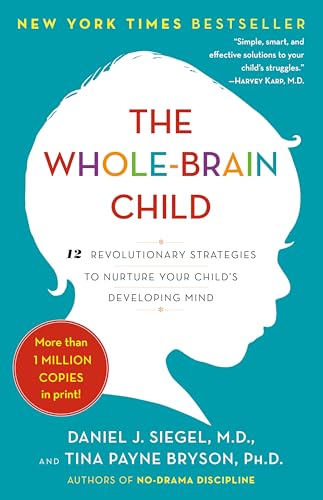
  1. The Whole-Brain Child: 12 Revolutionary Strategies to Nurture Your Child's Developing Mind3

    The Whole-Brain Child: 12 Revolutionary Strategies to Nurture Your Child's Developing Mind

    by Daniel J. Siegel and Tina Payne Bryson

    Siegel and Bryson translate neuroscience into twelve practical strategies for helping children integrate the different parts of their developing brains. It is the most actionable book in this guide, full of scripts, stories, and illustrations that make complex neuroscience accessible to exhausted parents. It bridges the gap between understanding child development and knowing what to actually say during a meltdown.

    Key takeaway

    When children are overwhelmed, they need connection before correction; engaging the emotional brain first (through empathy and co regulation) is what makes the rational brain accessible for learning.

  2. No-Drama Discipline: The Whole-Brain Way to Calm the Chaos and Nurture Your Child's Developing Mind4

    No-Drama Discipline: The Whole-Brain Way to Calm the Chaos and Nurture Your Child's Developing Mind

    by Daniel J. Siegel and Tina Payne Bryson

    This companion volume to The Whole Brain Child focuses specifically on discipline, reframing it as a teaching opportunity rather than a punishment exercise. It provides concrete language and techniques for setting limits while maintaining the parent child relationship. Reading it immediately after The Whole Brain Child deepens the neuroscience framework and extends it into the territory where most parents struggle most.

    Key takeaway

    Effective discipline is not about controlling behaviour; it is about helping a child's brain build the internal wiring for self regulation, empathy, and good decision making.

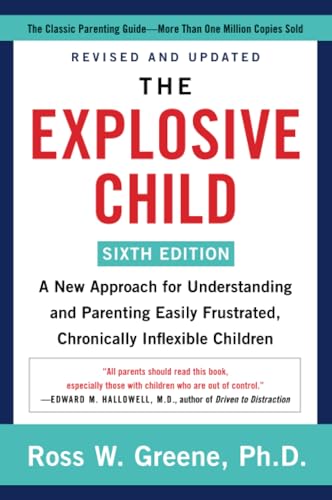
  3. The Explosive Child: A New Approach for Understanding and Parenting Easily Frustrated, Chronically Inflexible Children5

    The Explosive Child: A New Approach for Understanding and Parenting Easily Frustrated, Chronically Inflexible Children

    by Ross W. Greene

    Greene's book is essential for any parent dealing with a child who is inflexible, easily frustrated, or prone to explosive outbursts. His core insight, that children do well when they can, reframes misbehaviour as a skills deficit rather than a character flaw. Even if your child is not particularly explosive, the collaborative problem solving approach he teaches is one of the most useful frameworks in the guide.

    Key takeaway

    Challenging behaviour is almost always a signal that a child lacks the skills to handle a specific demand, not that they lack the will; the solution is to teach the missing skills collaboratively, not to impose consequences.

Phase 3: Autonomy, Culture, and the Modern Threat Landscape

Resilient children need more than good parenting techniques; they need room to grow, fail, and develop independence. These books tackle the cultural forces that make this increasingly difficult.

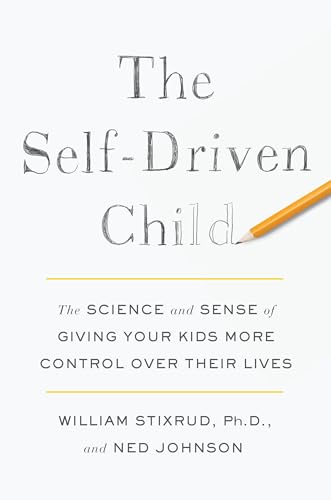
  1. The Self-Driven Child: The Science and Sense of Giving Your Kids More Control Over Their Lives6

    The Self-Driven Child: The Science and Sense of Giving Your Kids More Control Over Their Lives

    by William Stixrud and Ned Johnson

    Stixrud and Johnson make a compelling, research backed case that the most important thing parents can do is give children a sense of control over their own lives. The book covers motivation, sleep, homework, technology, and the epidemic of anxiety and depression in young people. It provides the framework for knowing when to step in and when to step back, which is the central dilemma of modern parenting.

    Key takeaway

    Children who feel a sense of autonomy and control over their own lives develop better stress management, stronger motivation, and healthier brains than those whose every decision is made for them.

  2. The Anxious Generation: How the Great Rewiring of Childhood Is Causing an Epidemic of Mental Illness7

    The Anxious Generation: How the Great Rewiring of Childhood Is Causing an Epidemic of Mental Illness

    by Jonathan Haidt

    Haidt's urgent book examines how smartphones and social media are rewiring childhood, producing record levels of anxiety, depression, and social isolation. It is the most recent book in the guide and provides the data parents need to make informed decisions about technology. It belongs near the end because you need the developmental and neuroscience framework from earlier books to fully appreciate why the digital environment is so harmful to developing brains.

    Key takeaway

    The combination of smartphone based childhood and overprotection in the physical world has created a generation that is oversupervised in the real world and undersupervised online, and reversing this requires collective action, not just individual family rules.

Common mistakes to avoid

  • Do not read parenting books as instruction manuals that must be followed to the letter; every child is different, and the goal is to internalise principles, not memorise scripts.

  • Avoid the guilt trap: learning that you have been doing something suboptimally does not mean you have damaged your child, because children are remarkably resilient and relationships can be repaired at any stage.

  • Do not confuse giving children autonomy with abandoning structure; the research consistently shows that children thrive with warm, high expectation parenting, not with permissiveness.

  • Resist the urge to implement everything at once; pick one book\'s core strategy, practise it for a month, and add the next one only when the first feels natural.

  • Do not ignore the technology question because it feels overwhelming; Haidt\'s evidence is strong enough that delaying action has real costs for children\'s mental health.

How to work through this guide

If you read only two books from this guide, make them The Whole Brain Child and The Self Driven Child. The first gives you the daily toolkit; the second gives you the philosophy of when to let go. The Gardener and the Carpenter is the best book for resetting your entire mindset about what parenting is supposed to be, so start there if you are feeling anxious about whether you are doing enough. Skip No Drama Discipline only if your child rarely tests boundaries (in which case you are either very lucky or not paying attention). The most important takeaway from the entire guide is that resilience is not built by removing obstacles from a child's path but by giving them the skills and support to navigate obstacles themselves.

BookGraph is an Amazon Associate. If you buy through the links above we may earn a small commission at no extra cost to you. All book selections and editorial reasoning are our own.

Other Reading Guides