economics

17 books in this category

Start here

Why Nations Fail

Why Nations Fail

by Daron Acemoglu and James A. Robinson

Cited by 5 other books and connected to 1 more in economics. If you read one book in this category first, the citation network says make it this one.

Foundational Books in economics

Ranked by how often they are cited by other books in the collection. These are the titles later authors keep returning to — read one and you will recognise its fingerprints across the rest of the category.

  1. Why Nations Fail1

    Why Nations Fail

    by Daron Acemoglu and James A. Robinson

    Cited by 5

More books in economics

Too Big to Fail: The Inside Story of How Wall Street and Washington Fought to Save the Financial System by Andrew Ross Sorkin

Too Big to Fail: The Inside Story of How Wall Street and Washington Fought to Save the Financial System

by Andrew Ross Sorkin

star4.6

Sorkin delivers a blow-by-blow reconstruction of the 2008 financial crisis from inside the rooms where Wall Street CEOs and Treasury officials scrambled to prevent systemic collapse. Drawing on hundreds of interviews, he documents the Lehman bankruptcy, the AIG bailout, and the TARP negotiations as a drama of personalities, leverage, and mutual dependence.

businesseconomics
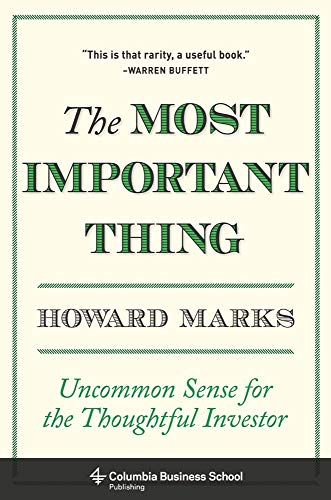
The Most Important Thing: Uncommon Sense for the Thoughtful Investor by Howard Marks

The Most Important Thing: Uncommon Sense for the Thoughtful Investor

by Howard Marks

star4.5

Marks distills his celebrated Oaktree memos into a value-investing manifesto built around 'second-level thinking' - the discipline of anticipating what the consensus gets wrong about price versus value. He argues that successful investing is less about forecasting returns than about manageing risk, understanding cycles, and recognizing the role of luck in outcomes.

businesseconomics
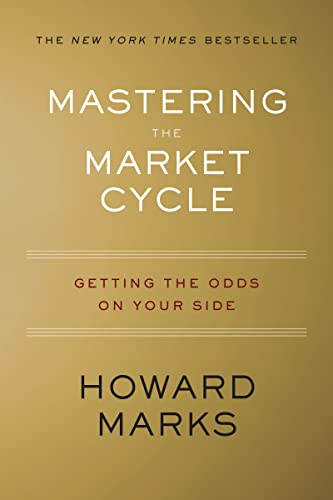
Mastering the Market Cycle: Getting the Odds on Your Side by Howard Marks

Mastering the Market Cycle: Getting the Odds on Your Side

by Howard Marks

star4.5

Marks argues that while markets cannot be forecast, investors can position themselves wisely by reading where we stand within recurring cycles of credit, psychology, and risk attitudes. He draws on decades of memos to show how extremes of optimism and pessimism create the pendulum swings that determine long-run returns.

businesseconomics
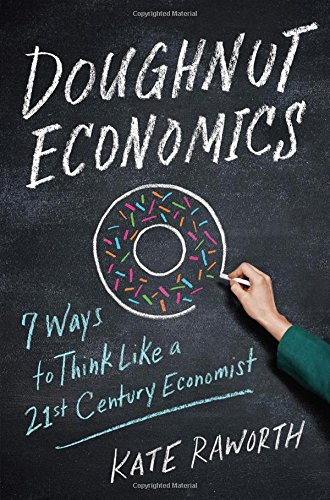
Doughnut Economics: Seven Ways to Think Like a 21st-Century Economist by Kate Raworth

Doughnut Economics: Seven Ways to Think Like a 21st-Century Economist

by Kate Raworth

star4.5

Raworth proposes a new economic model - the 'doughnut' bounded by a social floor and an ecological ceiling - and argues mainstream economics must shed its obsession with GDP growth, rational-actor assumptions, and equilibrium. She synthesizes systems thinking, behavioural economics, and ecological science into seven mindset shifts for a regenerative, distributive economy.

businesseconomics
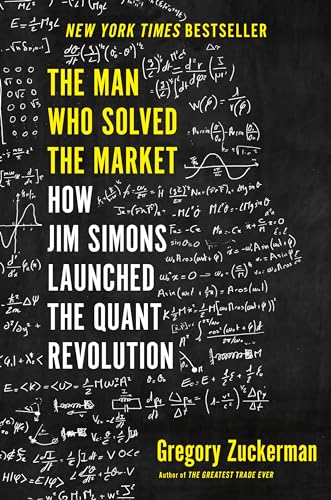
The Man Who Solved the Market: How Jim Simons Launched the Quant Revolution by Gregory Zuckerman

The Man Who Solved the Market: How Jim Simons Launched the Quant Revolution

by Gregory Zuckerman

star4.5

Zuckerman chronicles how mathematician Jim Simons built Renaissance Technologies' Medallion fund into the most successful trading operation in history by replacing human judgement with statistical pattern recognition. Drawing on unprecedented access, he shows how a team of code-breakers and physicists turned market inefficiencies into a machine that generated 66% annual gross returns for three decades.

businesseconomics
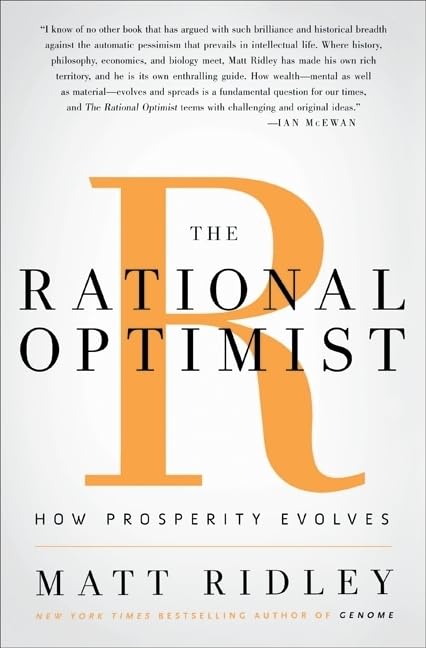
The Rational Optimist by Matt Ridley

The Rational Optimist

by Matt Ridley

star4.3

Ridley argues that prosperity emerges from the exchange and recombination of ideas, which he calls 'ideas having sex,' and that specialization and trade have driven cumulative human improvement since the Stone Age. He uses this framework to mount an empirical case for optimism about future living standards, innovation, and resource use.

historyeconomics
More Than You Know: Finding Financial Wisdom in Unconventional Places by Michael J. Mauboussin

More Than You Know: Finding Financial Wisdom in Unconventional Places

by Michael J. Mauboussin

star4.3

Mauboussin draws on psychology, complexity theory, evolutionary biology, and sports to build a multidisciplinary toolkit for investors. He argues that great investing requires recognizing probabilistic thinking, base rates, feedback loops, and the difference between skill and luck, insights more often found outside finance textbooks than inside them.

businesseconomics
Risk Savvy: How to Make Good Decisions by Gerd Gigerenzer

Risk Savvy: How to Make Good Decisions

by Gerd Gigerenzer

star4.3

Gigerenzer argues that most people are not irrational but risk-illiterate, and that simple rules of thumb plus clear statistics (natural frequencies, not conditional probabilities) can make doctors, investors, and citizens dramatically better decision-makers. He pushes back on the prevailing biases-and-nudges view, championing fast-and-frugal heuristics as the real engine of smart choice under uncertainty.

psychologyeconomics
Priceless: The Myth of Fair Value (and How to Take Advantage of It) by William Poundstone

Priceless: The Myth of Fair Value (and How to Take Advantage of It)

by William Poundstone

star4.2

Poundstone traces the history of psychophysics and prospect theory to show that prices are not rational signals but malleable numbers anchored by context, menus, and decoys. He synthesizes the research of Kahneman, Tversky, and contemporary pricing consultants into a practical tour of how anchoring, coherent arbitrariness, and framing set what you pay.

psychologyeconomics
This Changes Everything: Capitalism vs. The Climate by Naomi Klein

This Changes Everything: Capitalism vs. The Climate

by Naomi Klein

star4.15

Klein argues that the climate crisis cannot be addressed without confronting the logic of deregulated capitalism that created it. Drawing on reporting from around the world, she makes the case that climate action is humanity's best chance to simultaneously fix an economic system that is failing the majority.

politicsenvironment
Risk: The Science and Politics of Fear by Dan Gardner

Risk: The Science and Politics of Fear

by Dan Gardner

star4.1

Gardner, working closely with risk researcher Paul Slovic, shows how the human brain's ancient intuitive 'gut' system systematically misreads statistical risk, and how media, politicians, and advocates exploit those miscalibrations. The book is a field guide to why we fear terrorism over car crashes and how to recalibrate intuition with evidence.

psychologyeconomics
Future Babble: Why Expert Predictions Are Next to Worthless, and You Can Do Better by Dan Gardner

Future Babble: Why Expert Predictions Are Next to Worthless, and You Can Do Better

by Dan Gardner

star4.1

Gardner turns Philip Tetlock's twenty-year study of expert forecasting into narrative non-fiction, showing that confident pundits (hedgehogs) are consistently wrong while equivocating foxes outperform. He catalogs the cognitive reasons we keep believing bad forecasts anyway, from hindsight bias to narrative coherence.

psychologyeconomics
Thinking Strategically by Avinash Dixit

Thinking Strategically

by Avinash Dixit

star4

Dixit introduces game theory as a practical tool for strategic thinking in business and daily life. Understanding how actors anticipate each other's moves turns negotiation from instinct to strategy.

economicsstrategy
Dollars and Sense by Dan Ariely

Dollars and Sense

by Dan Ariely

star3.9

Ariely and Kreisler reveal how biases distort our relationship with money, from mental accounting to the pain of paying. Understanding these irrational patterns is the first step to smarter finances.

psychologyeconomics
Why Information Grows by Cesar Hidalgo

Why Information Grows

by Cesar Hidalgo

star3.9

Hidalgo argues information is physical and grows when embedded in networks of people and firms. Economic development is about a society's capacity to compute, store, and recombine practical knowledge.

scienceeconomics
Phishing for Phools by George Akerlof

Phishing for Phools

by George Akerlof

star3.7

Akerlof and Shiller argue free markets inevitably produce manipulation because profit-seeking exploits psychological weakness. Deceiving people against their interests is a market feature, not a bug.

economicspsychology