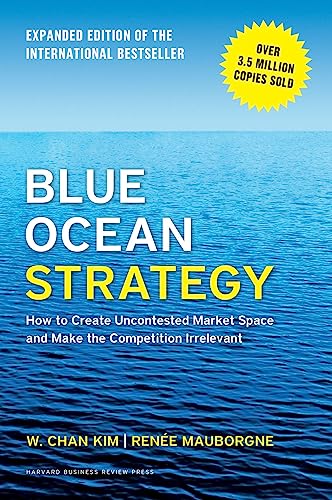
Blue Ocean Strategy
by W. Chan Kim
Kim argues that competing in crowded markets is a losing game. Instead, companies should create uncontested market space, blue oceans, by simultaneously pursuing differentiation and low cost.
- Published:
- Pages:
- 320

by W. Chan Kim
Kim argues that competing in crowded markets is a losing game. Instead, companies should create uncontested market space, blue oceans, by simultaneously pursuing differentiation and low cost.
In this collection, Blue Ocean Strategy references 1 other book and is cited by 2 other books.
It draws on Good to Great.
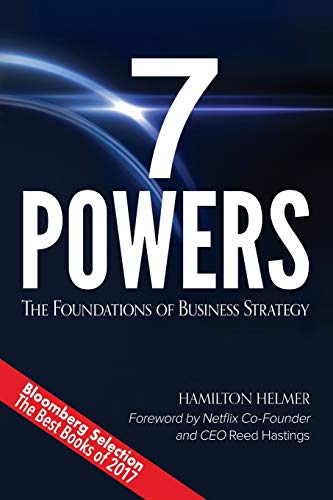
It’s picked up by The Personal MBA and 7 Powers: The Foundations of Business Strategy.
Scroll down to read the exact passages where other authors reference this book and what they say about it.
The books Kim references and why each one mattered to the argument.
Blue Ocean Strategy references Collins's Good to Great.
The exact passages where other authors bring up “Blue Ocean Strategy” and what they take from it.
Kaufman recommends Blue Ocean Strategy for its framework on creating uncontested market space rather than competing in crowded markets with diminishing returns.
References Kim and Mauborgne's Blue Ocean Strategy as a related but distinct approach to creating uncontested market space, positioning his Power framework as the underlying physics of why such positions endure
How ideas flow through the citation network. Ancestors are books this title builds on; descendants are books that build on it.
Directly cites
Directly cited by
Books from completely different categories that share citation overlap with this one. These are the reads you would not find by browsing a single shelf.
Books with the highest citation overlap within the same categories.
This book and its direct connections. Hover a node to see its title, click to visit.
Hover a node to highlight its connections. Click to open the book page. Node size reflects total citation links.