DM

David McRaney

Author, Science Journalist

David McRaney is an American science journalist and two time winner of the William Randolph Hearst Award, best known for his internationally bestselling book You Are Not So Smart and its companion podcast. His work explores cognitive biases, logical fallacies, and the ways in which human thinking goes astray. His most recent book, How Minds Change, examines the science of belief, opinion, and persuasion.

2
Books Written
6
Books Recommended

Books by David McRaney

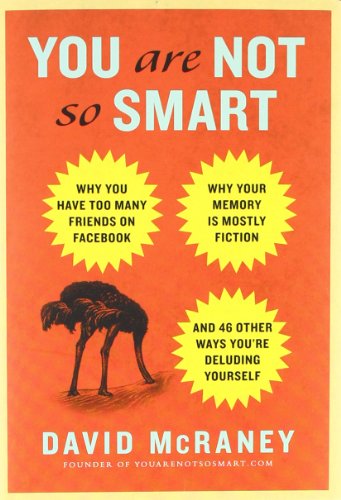
You Are Not So Smart by David McRaney

You Are Not So Smart

by David McRaney

star4.2

McRaney catalogs forty-eight cognitive biases, heuristics, and logical fallacies (confirmation bias, the Dunning-Kruger effect, hindsight bias, the Texas sharpshooter fallacy) in short, pop-culture-rich chapters. By the last page, readers are meant to leave thoroughly disabused of the idea that they are reliable narrators of their own minds.

psychologycognitive science
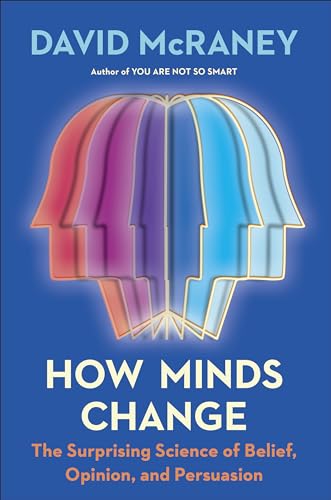
How Minds Change: The Surprising Science of Belief, Opinion, and Persuasion by David McRaney

How Minds Change: The Surprising Science of Belief, Opinion, and Persuasion

by David McRaney

star4.4

McRaney investigates deep canvassing, street epistemology, and motivational interviewing to show that people rarely change their minds through argument but often do through nonjudgemental dialogue that surfaces the reasons behind their beliefs. He weaves neuroscience, former cult members, and persuasion researchers into a playbook for durable attitude change.

psychologycognitive science

Most Recommended by David

The books David McRaney references, cites, and recommends most frequently.

Thinking, Fast and Slow by Daniel Kahneman

Thinking, Fast and Slow

by Daniel Kahneman

star4.2

Kahneman reveals that our minds run on two systems: fast intuition and slow deliberation. Most errors in judgement come from trusting System 1 when the situation demands System 2's careful analysis.

psychology
Predictably Irrational by Dan Ariely

Predictably Irrational

by Dan Ariely

star4.3

Ariely demonstrates through experiments that human irrationality is not random but systematic and predictable. Understanding these patterns reveals why we make the same costly mistakes repeatedly.

psychology
Influence by Robert Cialdini

Influence

by Robert Cialdini

star4.7

Cialdini identifies six universal principles of persuasion: reciprocity, commitment, social proof, authority, liking, and scarcity. Understanding these triggers explains why we say yes, and how others get us to comply.

psychologybusiness
Stumbling on Happiness by Daniel Gilbert

Stumbling on Happiness

by Daniel Gilbert

star3.9

Gilbert reveals that humans are remarkably poor at predicting what will make them happy. Our psychological immune system distorts future expectations in systematic, measurable ways.

psychology
Think Again by Adam Grant

Think Again

by Adam Grant

star4.2

Grant argues the ability to rethink and unlearn beats raw intelligence in a changing world. The best thinkers treat their own opinions with a scientist's curiosity, not a preacher's conviction.

psychologybusiness
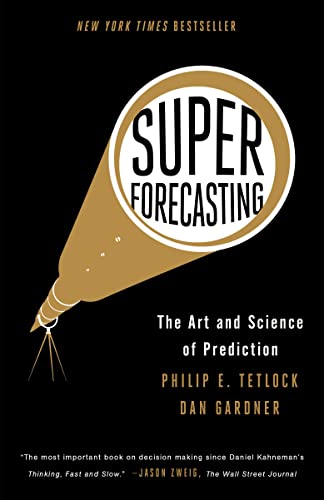
Superforecasting by Philip Tetlock

Superforecasting

by Philip Tetlock

star4.1

Tetlock shows forecasting accuracy depends less on intelligence than on cognitive style. The best forecasters are humble, numerate, and constantly update beliefs, foxes outperform hedgehog experts.

psychologyscience

Influence Map

Who David draws from, and who draws from David — aggregated across every book in this collection. Counts show the number of citation links, not the depth of each one.

David cites most often

  1. 2 links
  2. 2 links
  3. 1 link
  4. 1 link
  5. 1 link
  6. 1 link