Kate Raworth

Kate Raworth

Economist and Author

Kate Raworth is an English economist and senior associate at Oxford University's Environmental Change Institute known for developing the doughnut economics model. Her book Doughnut Economics proposes a framework that balances essential human needs with planetary boundaries.

1
Books Written
4
Books Recommended

Books by Kate Raworth

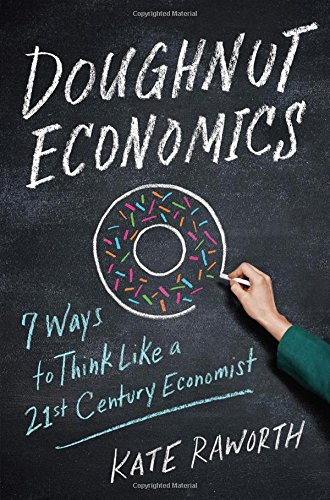
Doughnut Economics: Seven Ways to Think Like a 21st-Century Economist by Kate Raworth

Doughnut Economics: Seven Ways to Think Like a 21st-Century Economist

by Kate Raworth

star4.5

Raworth proposes a new economic model - the 'doughnut' bounded by a social floor and an ecological ceiling - and argues mainstream economics must shed its obsession with GDP growth, rational-actor assumptions, and equilibrium. She synthesizes systems thinking, behavioural economics, and ecological science into seven mindset shifts for a regenerative, distributive economy.

businesseconomics

Most Recommended by Kate

The books Kate Raworth references, cites, and recommends most frequently.

Thinking in Systems by Donella Meadows

Thinking in Systems

by Donella Meadows

star4.5

Meadows explains how systems, from economies to ecosystems, behave through feedback loops, stocks, and flows. Most interventions fail because we address symptoms rather than the underlying structure driving the problem.

sciencebusiness
Thinking, Fast and Slow by Daniel Kahneman

Thinking, Fast and Slow

by Daniel Kahneman

star4.2

Kahneman reveals that our minds run on two systems: fast intuition and slow deliberation. Most errors in judgement come from trusting System 1 when the situation demands System 2's careful analysis.

psychology
Nudge by Richard Thaler

Nudge

by Richard Thaler

star3.9

Thaler and Sunstein argue that small changes in how choices are presented, nudges, can dramatically improve decisions without restricting freedom. Choice architecture is a powerful tool for public policy and beyond.

psychologybusiness
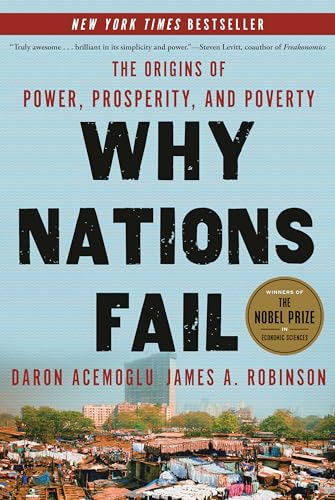
Why Nations Fail by Daron Acemoglu and James A. Robinson

Why Nations Fail

by Daron Acemoglu and James A. Robinson

star4.5

Acemoglu and Robinson argue that the stark prosperity gap between nations is driven not by geography, culture, or ignorance but by the distinction between inclusive and extractive political and economic institutions. Their sweeping comparative history, built on pairs like Nogales Arizona/Sonora and North/South Korea, claims that elites who monopolize power lock in poverty while pluralistic institutions create self-reinforcing prosperity.

historyeconomics

Influence Map

Who Kate draws from, and who draws from Kate — aggregated across every book in this collection. Counts show the number of citation links, not the depth of each one.