Gerd Gigerenzer

Gerd Gigerenzer

Psychologist, Researcher

Gerd Gigerenzer is a German psychologist and director emeritus of the Centre for Adaptive Behaviour and Cognition at the Max Planck Institute for Human Development in Berlin. His research demonstrates that simple heuristics can often outperform complex statistical models, challenging prevailing views on cognitive bias and rationality. His accessible books Risk Savvy and Gut Feelings have brought the science of decision making under uncertainty to a broad audience.

2
Books Written
7
Books Recommended

Books by Gerd Gigerenzer

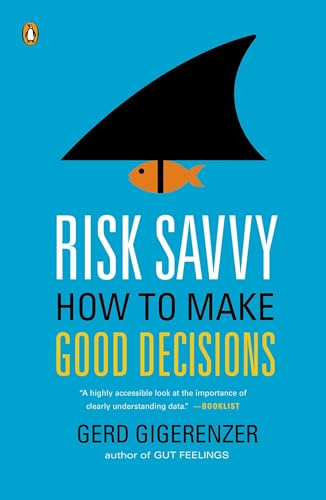
Risk Savvy: How to Make Good Decisions by Gerd Gigerenzer

Risk Savvy: How to Make Good Decisions

by Gerd Gigerenzer

star4.3

Gigerenzer argues that most people are not irrational but risk-illiterate, and that simple rules of thumb plus clear statistics (natural frequencies, not conditional probabilities) can make doctors, investors, and citizens dramatically better decision-makers. He pushes back on the prevailing biases-and-nudges view, championing fast-and-frugal heuristics as the real engine of smart choice under uncertainty.

psychologyeconomics
Gut Feelings: The Intelligence of the Unconscious by Gerd Gigerenzer

Gut Feelings: The Intelligence of the Unconscious

by Gerd Gigerenzer

star4.1

Gigerenzer makes the case that gut feelings are not irrational leaps but the product of fast-and-frugal heuristics exquisitely tuned to real environments, often outperforming complex models. He walks through examples (the recognition heuristic, take-the-best, 1/N investing) where using less information and ignoring cues beats optimization.

psychologycognitive science

Most Recommended by Gerd

The books Gerd Gigerenzer references, cites, and recommends most frequently.

Thinking, Fast and Slow by Daniel Kahneman

Thinking, Fast and Slow

by Daniel Kahneman

star4.2

Kahneman reveals that our minds run on two systems: fast intuition and slow deliberation. Most errors in judgement come from trusting System 1 when the situation demands System 2's careful analysis.

psychology
Nudge by Richard Thaler

Nudge

by Richard Thaler

star3.9

Thaler and Sunstein argue that small changes in how choices are presented, nudges, can dramatically improve decisions without restricting freedom. Choice architecture is a powerful tool for public policy and beyond.

psychologybusiness
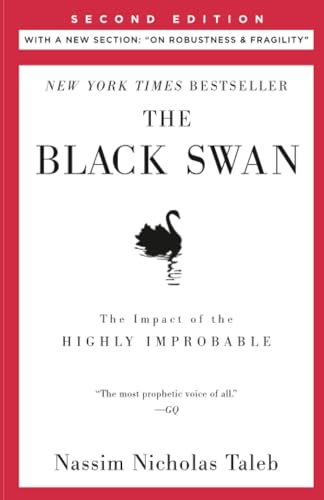
The Black Swan by Nassim Nicholas Taleb

The Black Swan

by Nassim Nicholas Taleb

star4.3

Taleb argues that rare, unpredictable events drive history far more than gradual trends. Our models systematically underestimate extreme outcomes, with devastating consequences.

philosophypsychology
Predictably Irrational by Dan Ariely

Predictably Irrational

by Dan Ariely

star4.3

Ariely demonstrates through experiments that human irrationality is not random but systematic and predictable. Understanding these patterns reveals why we make the same costly mistakes repeatedly.

psychology
Sources of Power by Gary Klein

Sources of Power

by Gary Klein

star4.1

Klein studies how experts, firefighters, nurses, commanders, make fast decisions under pressure without formal analysis. Expert intuition works through pattern recognition and mental simulation.

psychologydecision-making
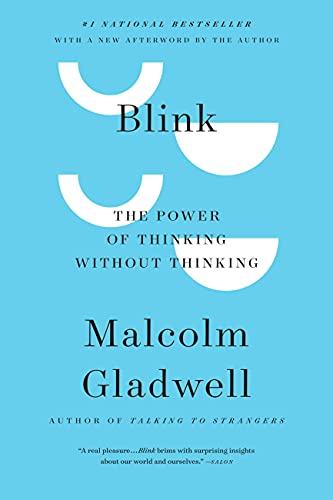
Blink by Malcolm Gladwell

Blink

by Malcolm Gladwell

star4

Gladwell explores the power and peril of snap judgements - the instant conclusions our unconscious mind reaches. Thin-slicing can be remarkably accurate, but it's also vulnerable to bias and information overload.

psychology
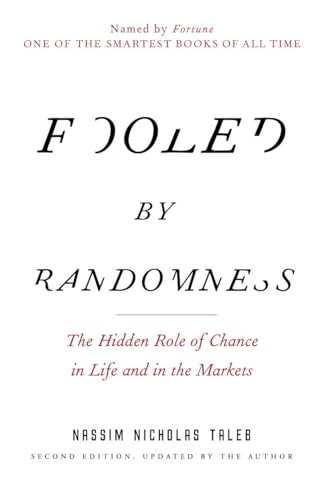
Fooled by Randomness by Nassim Nicholas Taleb

Fooled by Randomness

by Nassim Nicholas Taleb

star4.1

Taleb exposes how we underestimate luck in life and markets, mistaking random outcomes for skill. Survivorship bias and narrative fallacy lead us to build false stories around chance events.

psychologybusiness

Influence Map

Who Gerd draws from, and who draws from Gerd — aggregated across every book in this collection. Counts show the number of citation links, not the depth of each one.

Gerd cites most often

  1. 2 links
  2. 1 link
  3. 1 link
  4. 1 link
  5. 1 link
  6. 1 link