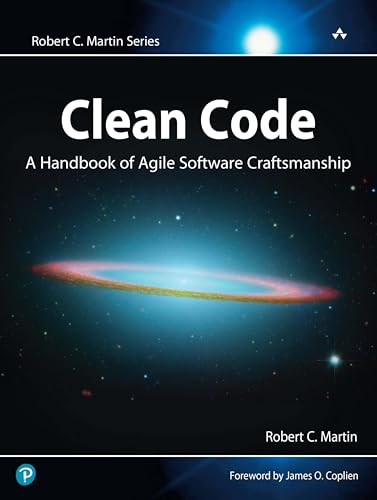
Clean Code
by Robert C. Martin
star4.3
Martin argues that code is read far more often than written. Clean code, with clear names, small functions, and minimal dependencies, is a professional responsibility, not a luxury.
- Published:
- Pages:
- 464
by Robert C. Martin
Martin argues that code is read far more often than written. Clean code, with clear names, small functions, and minimal dependencies, is a professional responsibility, not a luxury.
In this collection, Clean Code references 3 other books and is cited by 5 other books.
It draws on The Pragmatic Programmer, Refactoring and The Mythical Man-Month.
It’s picked up by Continuous Delivery, Designing Data-Intensive Applications and A Philosophy of Software Design and 2 others.
Scroll down to read the exact passages where other authors reference this book and what they say about it.
Clean Code is treated as required reading in the software engineering world, regularly cited by authors writing about everything from deployment pipelines to distributed systems. Jez Humble references it in Continuous Delivery as foundational for reliable software releases, Martin Kleppmann draws on it in Designing Data-Intensive Applications for maintainability, and John Ousterhout engages with it directly in A Philosophy of Software Design.
Martin Fowler's updated Refactoring also nods to Martin's work on writing maintainable code. Readers appreciate the concrete, opinionated guidance on naming, function size, and dependencies, though some find Martin's style preachy and his Java-centric examples less relevant to modern polyglot development.
The books Martin references and why each one mattered to the argument.
Martin references The Pragmatic Programmer for craftsmanship.
Clean Code references Fowler's Refactoring as companion.
Martin references Brooks's Mythical Man-Month.
The exact passages where other authors bring up “Clean Code” and what they take from it.
Humble references Martin's Clean Code for reliable delivery.
Kleppmann references Martin's Clean Code for maintainable distributed systems.
Ousterhout references Martin's Clean Code on software design.
Winters references Martin's Clean Code.
Refactoring 2nd edition (2018) references Martin's Clean Code on writing maintainable code
How ideas flow through the citation network. Ancestors are books this title builds on; descendants are books that build on it.
Directly cited by
Books from completely different categories that share citation overlap with this one. These are the reads you would not find by browsing a single shelf.
Books with the highest citation overlap within the same categories.

The Mythical Man-Month
Frederick Brooks
5 shared citations
Refactoring
Martin Fowler
4 shared citations
The Pragmatic Programmer
David Thomas
3 shared citations
Continuous Delivery
Jez Humble
3 shared citations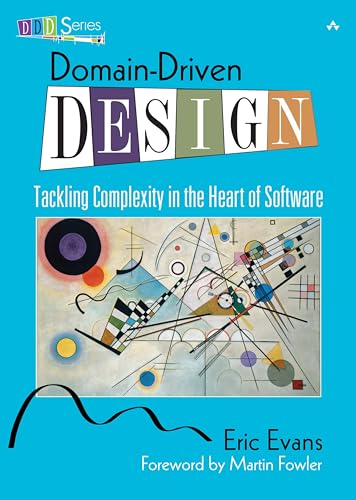
Domain-Driven Design: Tackling Complexity in the Heart of Software
Eric Evans
3 shared citations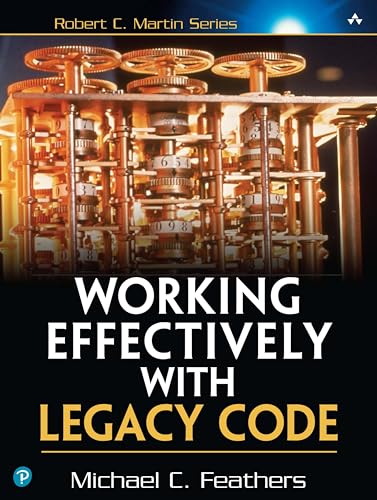
Working Effectively with Legacy Code
Michael Feathers
3 shared citationsThis book and its direct connections. Hover a node to see its title, click to visit.
Hover a node to highlight its connections. Click to open the book page. Node size reflects total citation links.