productivity

14 books in this category

Start here

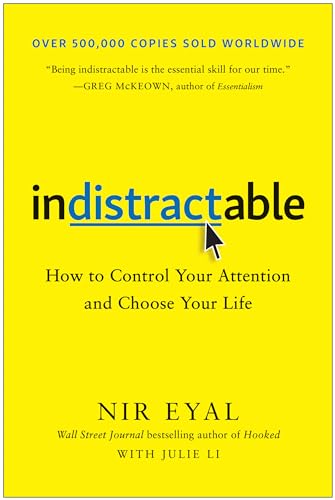
Indistractable

Indistractable

by Nir Eyal

Cited by 1 other books and connected to 0 more in productivity. If you read one book in this category first, the citation network says make it this one.

Foundational Books in productivity

Ranked by how often they are cited by other books in the collection. These are the titles later authors keep returning to — read one and you will recognise its fingerprints across the rest of the category.

  1. Indistractable1

    Indistractable

    by Nir Eyal

    Cited by 1
  2. Focus2

    Focus

    by Daniel Goleman

    Cited by 1

More books in productivity

Free to Focus: A Total Productivity System to Achieve More by Doing Less by Michael Hyatt

Free to Focus: A Total Productivity System to Achieve More by Doing Less

by Michael Hyatt

star4.5

Hyatt presents a three-step productivity system. Stop, Cut, Act, that begins with defining what productivity should produce (freedom to focus, not more output), then ruthlessly eliminates, automates, and delegates non-desire-zone work, and finally installs weekly and daily rituals to protect the remaining high-value work. The explicit frame is that productivity should serve life goals, not consume them.

productivitybusiness
A World Without Email: Reimagining Work in an Age of Communication Overload by Cal Newport

A World Without Email: Reimagining Work in an Age of Communication Overload

by Cal Newport

star4.4

Newport argues that the modern knowledge-work default of constant ad hoc email and chat, what he calls the hyperactive hive mind, is a historical accident that has destroyed our capacity for sustained thought and is the real cause of the productivity crisis in brain work. He proposes replacing ambient messageing with explicit processes, protocols, and specialization so that attention becomes the scarce resource workflows are designed around.

productivitybusiness
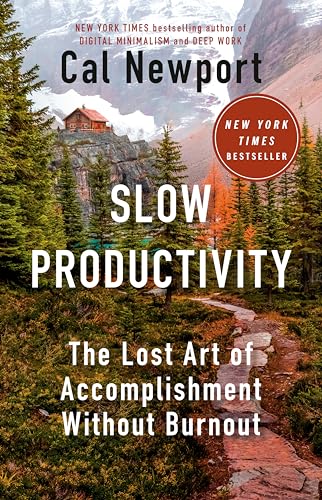
Slow Productivity: The Lost Art of Accomplishment Without Burnout by Cal Newport

Slow Productivity: The Lost Art of Accomplishment Without Burnout

by Cal Newport

star4.4

Newport attacks pseudo-productivity - the industrial-era habit of using visible busyness as a proxy for value - and proposes three alternative principles drawn from the working lives of historical creators like John McPhee, Jane Austen, and Georgia O'Keeffe: do fewer things, work at a natural pace, and obsess over quality. He argues that sustained meaningful output comes from subtraction and seasonal variation, not from cramming more activity into every hour.

productivityself-help
Ultralearning: Master Hard Skills, Outsmart the Competition, and Accelerate Your Career by Scott H. Young

Ultralearning: Master Hard Skills, Outsmart the Competition, and Accelerate Your Career

by Scott H. Young

star4.4

Young distills nine principles of aggressive self-directed learning from case studies of figures like Benjamin Franklin, Richard Feynman, and polyglot Benny Lewis, plus his own MIT Challenge in which he completed the undergraduate computer science curriculum in a year. The argument is that intense, deliberate, project-based learning can compress years of conventional study and is a crucial strategy in an economy where skill acquisition determines career options.

productivityself-help
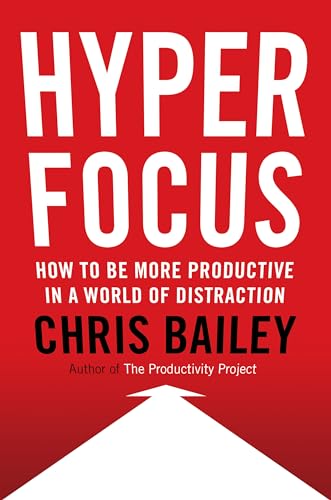
Hyperfocus: How to Be More Productive in a World of Distraction by Chris Bailey

Hyperfocus: How to Be More Productive in a World of Distraction

by Chris Bailey

star4.4

Bailey synthesizes attention research to argue that human productivity depends on skillfully toggling between two modes: hyperfocus, where attention is deliberately narrowed onto one intention, and scatterfocus, the mind-wandering mode where the brain consolidates memory and generates insight. He provides specific protocols for expanding attentional space, manageing distractions, and scheduling both modes.

productivitypsychology
The Productivity Project: Accomplishing More by Managing Your Time, Attention, and Energy by Chris Bailey

The Productivity Project: Accomplishing More by Managing Your Time, Attention, and Energy

by Chris Bailey

star4.4

Bailey reports on a year-long self-experiment in which he tested productivity techniques on himself, from meditating 35 hours a week to working 90-hour weeks to watching 296 TED talks in a month, and interviewed leading productivity thinkers. His conclusion is that productivity is not about time management at all but about the joint management of time, attention, and energy, with three being the critical number of daily priorities.

productivityself-help
Make Time: How to Focus on What Matters Every Day by Jake Knapp and John Zeratsky

Make Time: How to Focus on What Matters Every Day

by Jake Knapp and John Zeratsky

star4.4

The former Google Ventures designers present a four-step daily framework. Highlight, Laser, Energize, Reflect, for escaping what they call the Busy Bandwagon and the Infinity Pools of endless digital feeds. Instead of optimizing every minute, they argue you should pick one 60-90 minute highlight each day and defend it against the default distractions engineered by modern software.

productivityself-help
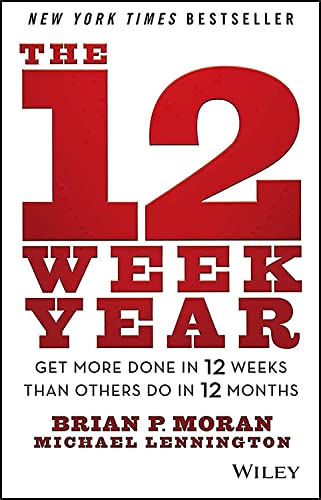
The 12 Week Year: Get More Done in 12 Weeks than Others Do in 12 Months by Brian P. Moran and Michael Lennington

The 12 Week Year: Get More Done in 12 Weeks than Others Do in 12 Months

by Brian P. Moran and Michael Lennington

star4.3

Moran and Lennington argue that annualized thinking breeds procrastination, a full year feels long enough to defer everything to later, so they propose shrinking the planning horizon to twelve weeks, treating each quarter as a complete year with its own goals, tactics, and weekly scorekeeping. The system pairs short-horizon urgency with explicit weekly execution routines and accountability.

productivitybusiness
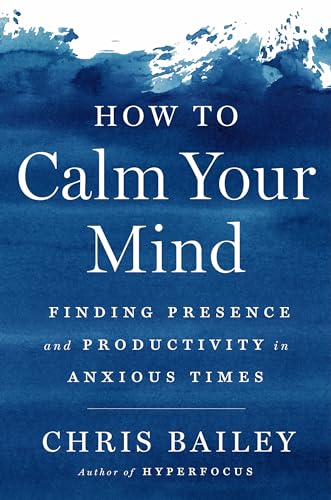
How to Calm Your Mind: Finding Presence and Productivity in Anxious Times by Chris Bailey

How to Calm Your Mind: Finding Presence and Productivity in Anxious Times

by Chris Bailey

star4.2

Bailey recounts his own burnout onstage and makes the case that chronic busyness is a stimulation addiction, modern work environments flood us with dopamine-hit tasks that raise our stimulation baseline and make calm impossible. He prescribes deliberately lowering stimulation through analog hobbies, savoring, and stimulation fasts, arguing that calm is not the opposite of productivity but its foundation.

productivitypsychology
168 Hours: You Have More Time Than You Think by Laura Vanderkam

168 Hours: You Have More Time Than You Think

by Laura Vanderkam

star4.2

Vanderkam uses detailed time logs from hundreds of working professionals to argue that the familiar complaint of 'I don't have time' is almost always false - everyone gets 168 hours a week, and the real question is whether you fill that time with your core competencies or let it drain into obligation and habit. She presents time as a blank slate to be designed around strengths, not a resource being stolen.

productivityself-help
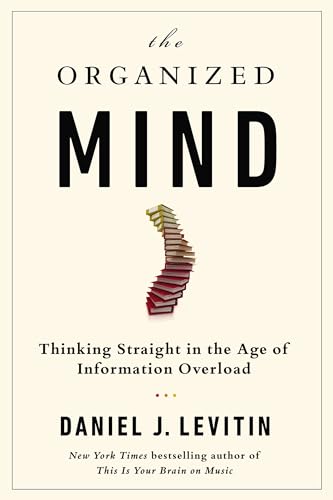
The Organized Mind by Daniel Levitin

The Organized Mind

by Daniel Levitin

star4

Levitin explains how the brain's attention systems are overwhelmed by modern information overload. Externalizing information and building organisational systems frees cognition for real thinking.

psychologyproductivity
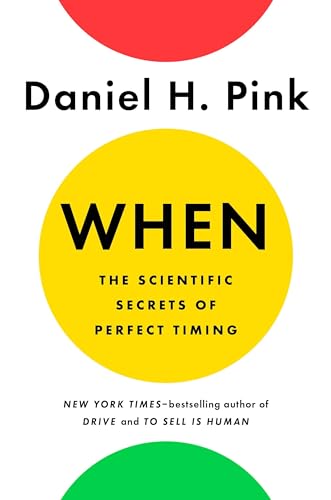
When by Daniel Pink

When

by Daniel Pink

star4

Pink reveals that timing is a science, our cognitive abilities shift predictably throughout the day. Mornings favor analytics, while insight peaks during our non-optimal hours.

psychologyproductivity