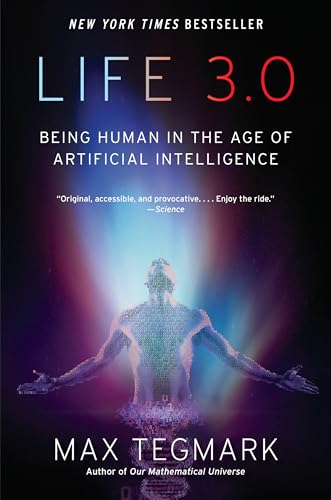
Life 3.0
by Max Tegmark
star4.1
Tegmark explores how artificial superintelligence could reshape civilisation. The central question is not whether AI will surpass us, but whether we can steer it towards beneficial outcomes.
- Published:
- Pages:
- 384
by Max Tegmark
Tegmark explores how artificial superintelligence could reshape civilisation. The central question is not whether AI will surpass us, but whether we can steer it towards beneficial outcomes.
In this collection, Life 3.0 references 2 other books and is cited by 4 other books.
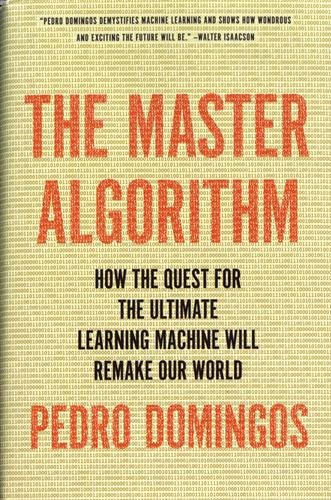
It draws on Superintelligence and The Master Algorithm.
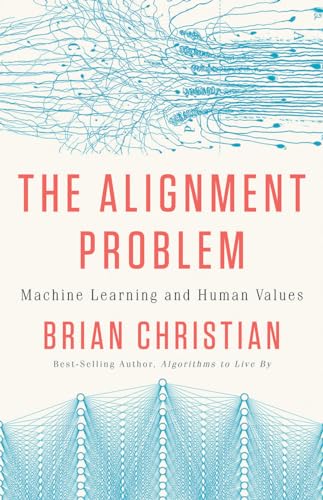
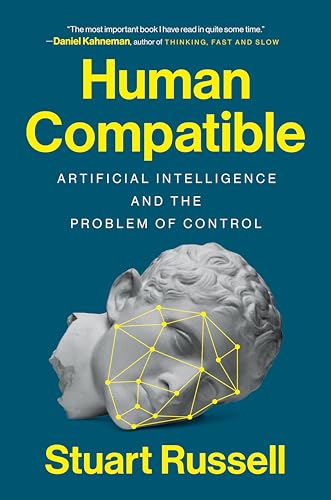
It’s picked up by AI Superpowers: China, Silicon Valley, and the New World Order, The Alignment Problem: Machine Learning and Human Values and Human Compatible: Artificial Intelligence and the Problem of Control and 1 others.
Scroll down to read the exact passages where other authors reference this book and what they say about it.
Life 3.0 is widely cited as one of the most accessible and thought-provoking introductions to the long-term implications of artificial intelligence. Stuart Russell engages with Tegmark's scenario taxonomy while proposing his own technical path forward for AI safety, and Mustafa Suleyman builds on Tegmark's analysis to argue that several concerning scenarios are becoming plausible within decades rather than centuries.
Brian Christian and Kai-Fu Lee both use Tegmark's framework for distinguishing between near-term narrow AI and longer-term superintelligence risks. Readers value the book for making AI futures feel concrete and urgent without descending into either hype or doom, though some critics find Tegmark's optimism about alignment research insufficiently grounded in the technical challenges involved.
The books Tegmark references and why each one mattered to the argument.
Tegmark directly engages with Bostrom's superintelligence scenarios, including the famous paperclip maximiser thought experiment. He builds on Bostrom's concerns while offering a more optimistic framework for AI alignment.
Tegmark references Domingos's Master Algorithm.
The exact passages where other authors bring up “Life 3.0” and what they take from it.
References Tegmark's Life 3.0 scenario taxonomy when distinguishing between near-term narrow AI applications driving the US-China race and longer-term artificial general intelligence concerns
Discusses Tegmark's Life 3.0 taxonomy of AI futures when analyzing how different alignment failure modes map to different scenario categories for artificial general intelligence
Engages with Tegmark's Life 3.0 discussion of superintelligent AI scenarios, endorsing the urgency of the safety research agenda while proposing his three-principle approach as a concrete technical path forward
References Tegmark's Life 3.0 in his bibliography and builds on Tegmark's scenario analysis to argue that the coming wave makes several of the most concerning scenarios increasingly plausible within decades rather than centuries
Cited in
The Coming Wave: Technology, Power, and the Twenty-first Century's Greatest Dilemmaby Mustafa Suleyman
How ideas flow through the citation network. Ancestors are books this title builds on; descendants are books that build on it.
Directly cites
2 steps back
Books from completely different categories that share citation overlap with this one. These are the reads you would not find by browsing a single shelf.
Books with the highest citation overlap within the same categories.

Superintelligence
Nick Bostrom
4 shared citations
The Precipice
Toby Ord
3 shared citations
Homo Deus
Yuval Noah Harari
2 shared citations
The Second Machine Age
Erik Brynjolfsson
2 shared citations
Thinking, Fast and Slow
Daniel Kahneman
2 shared citations
The Age of Surveillance Capitalism
Shoshana Zuboff
1 shared citationThis book and its direct connections. Hover a node to see its title, click to visit.
Hover a node to highlight its connections. Click to open the book page. Node size reflects total citation links.